понедельник, 8 марта 2021 г.

Глава ООН призвал обеспечить правовую защиту людей в киберпространстве

  
Фото ООН
В Киото стартовала 14-я сессия Конгресса ООН по предупреждению преступности.
    
7 марта 2021

Ежедневно миллионы людей становятся жертвами киберпреступности. В период пандемии, когда для совершения покупок или оплаты коммунальных услуг люди все чаще используют интернет, значительно участились хищения личных сведений или данных о кредитных картах. Это – одна из тем 14-й сессии Конгресса ООН по предупреждению преступности. Обращаясь к ее участникам, Генеральный секретарь ООН Антониу Гутерриш призвал пресекать злодеяния, совершаемые во Всемирной паутине.

«Преступники используют новые технологии для осуществления своей незаконной деятельности, в том числе в виртуальном пространстве. Отсутствие правового регулирования в киберпространстве привело к росту масштабов совершаемых там преступных действий», – заявил Антониу Гутерриш. Он добавил, что законодатели должны учитывать новые реалии и создавать механизмы правовой защиты людей в интернете, как от махинаций и хищений, так и от дезинформации и оскорблений. 

Конгресс ООН по предупреждению преступности стартовал в воскресенье в Киото. Такие конгрессы проводятся раз в пять лет. 14-я сессия должна была пройти в 2020 году, однако она была отложена из-за пандемии. 

Делегаты нынешней встречи приняли Киотскую декларацию, в которой говорится о конкретных мерах по предупреждению преступности и об укреплении международного сотрудничества в этой сфере.  Глава ООН приветствовал их готовность обсуждать состояние правосудия в привязке к Целям устойчивого развития и к теме растущего неравенства в мире.  

Он подчеркнул, что в ходе восстановления после пандемии COVID-19 необходимо бороться с неравенством. «Высокий уровень неравенства связан с экономической нестабильностью, коррупцией, финансовыми кризисами, ростом преступности и плохим физическим и психическим здоровьем. Предупреждение преступности, уголовное правосудие и верховенство права играют ключевую роль в обновлении общественного договора между государствами и их населением», – подчеркнул Генеральный секретарь ООН.  

Преступники используют новые технологии для осуществления своей незаконной деятельности, в том числе в виртуальном пространстве

Отметив, что пандемия COVID-19 и вызванный ею кризис привели к росту преступности по всему миру, глава ООН призвал пресекать попытки криминалитета наживаться на человеческом горе.  

«Сегодня сбои, вызванные кризисом COVID-19, предоставляют преступникам новые возможности для эксплуатации маргинализированных и подверженных риску людей», – сказал Гутерриш. 

Он подчеркнул, что соблюдение принципа верховенства права способствует устойчивому социальному, политическому и экономическому развитию. «Людям нужна инклюзивная, не допускающая дискриминации система правосудия, которая должны действовать в интересах всех людей», – заявил Генсек, добавив, что восстановление доверия к институтам власти и укрепление законности и доступа к правосудию необходимы для предотвращения коррупции, сдерживания незаконных финансовых потоков и защиты уязвимых людей от организованной преступности, насилия, торговли людьми, онлайн-эксплуатации и радикализации.  

Глава настоятельно рекомендовал делегатам Конгресса воспользоваться этой возможностью для того, чтобы оживить международное сотрудничество и проложить путь к миру, справедливости и взаимопониманию. 

Конгресс ООН по предупреждению преступности — это крупнейший в мире форум представителей правительств, гражданского общества, академических кругов и экспертов в области уголовного правосудия. Эти встречи способствуют укреплению международного сотрудничества в борьбе с всемирной угрозой транснациональной организованной преступности. В ходе нынешнего форума в Киото пройдет целый ряд тематических заседаний, в том числе посвященных борьбе с коррупцией в спорте и противодействию незаконной торговле предметами дикой природы.  


https://news.un.org/ru/story/2021/03/1398122
https://creativecommons.org/licenses/by/3.0/legalcode

суббота, 6 марта 2021 г.

В ООН осудили убийство водителей грузовиков с топливом в Иране


Фото ООН
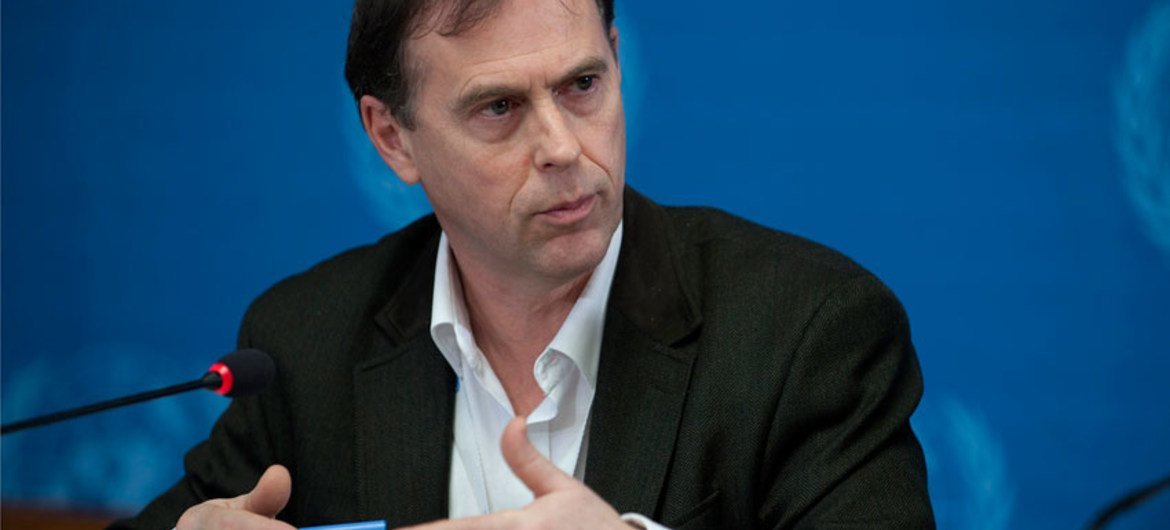
Руперт Колвилл
5 марта 2021

В Управлении ООН по правам человека осудили применение силы иранскими Стражами исламской революции против невооруженных водителей грузовиков с топливом и участников акций протеста в провинции Систан и Белуджистан, где компактно проживает иранское этническое меньшинство – белуджи. Согласно имеющимся данным, погибли 12 человек, включая двух несовершеннолетних. 

Беспорядки в иранской провинции Систан и Белуджистан, расположенной на границе с Пакистаном, начались 22 февраля, после того как власти в рамках борьбы с контрабандой расстреляли десятерых водителей транспортной колонны с топливом. Об этом на брифинге в Женеве сообщил представитель Управления ООН по правам человека Руперт Колвилл. 

Установить точное число погибших сложно из-за ограничений работы мобильной связи

Убийства вызвали в нескольких городах провинции массовые акции протеста, которые Стражи исламской революции разгоняли с применением боевого оружия. «Согласно оценкам, которые мы не можем подтвердить, погибли 23 человека, – отметил Колвилл. – Установить точное число погибших сложно из-за ограничений работы мобильной связи». Представитель ООН также выразил глубокую обеспокоенность в связи с тем, что в нескольких городах провинции закрыт доступ к интернету. Он напомнил, что подобные действия расцениваются как ограничение свободы выражения и являются нарушением международного права. 

В ООН отмечают, что иранские пограничники систематически и целенаправленно применяют боевое оружие, особенно против представителей этнических меньшинств, курдов и белуджи, которые осуществляют трансграничные перевозки. «Мы призываем немедленно положить конец безнаказанности, которая позволяет продолжать эту практику», – отметил Колвилл. 

Он сообщил, что в течение прошлого года иранские пограничники убили 59 курдов на северо-западе Ирана. В ООН требуют немедленно провести расследование этих случаев и привлечь к ответственности виновных. «Семьи пострадавших имеют право на правду и на компенсацию», – добавил представитель Управления. 

Он напомнил, что, согласно международному праву, огнестрельное оружие можно применять только в случае неминуемой угрозы смерти или серьезного ранения. 


https://news.un.org/feed/view/ru/story/2021/03/1398072
https://creativecommons.org/licenses/by/3.0/legalcode

Hopes for UN Security Council action against Myanmar military coup ‘waning’ fast, warns Special Envoy


UN Photo/Loey Felipe
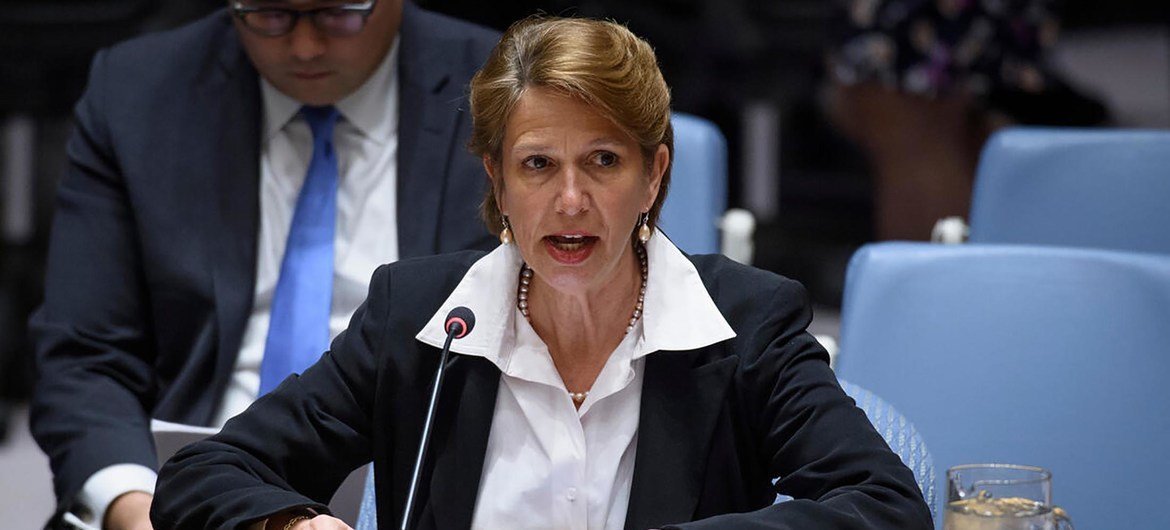
Christine Schraner Burgener, Special Envoy for Myanmar (file photo).
5 March 2021

Hopes placed in the UN and the Member States that serve on the Security Council to take action against leaders of Myanmar’s military coup, are waning fast, the UN Special Envoy for the country warned on Friday.

Christine Schraner Burgener welcomed the fact that the Council was meeting behind closed doors on Friday to discuss the rising death toll on the streets as daily protests continue but told Ambassadors that “your unity is needed more than ever on Myanmar”.

Power to veto any Security Council statements or resolutions, rests with the five Permanent Members, China, France, Russia, the United Kingdom, and the United States.

‘Real heroes’

The Special Envoy said she had been in close contact with people across various communities since the 1 February military takeover, noting that “they, including committed civil servants, are the real heroes and protectors of the nation’s democratic progress.”

But, she added, “the hope they have placed in the United Nations and its membership is waning and I have heard directly the desperate pleas – from mothers, students and the elderly. I receive every day around 2,000 messages, for international action to reverse a clear assault on the will of the people of Myanmar and democratic principles.”

She urged the Council to push further to end the violence, and restore democratic institutions, denouncing the actions by the military, “which continues to severely undermine the principles of this Organization and ignores our clear signals to uphold them.”

At least 50 killed, hundreds jailed

The military in Myanmar has been called on by the UN to end the harassment and intimidation of workers by security forces. , by ILO Photo/Marcel Crozet

The envoy noted that around 50 “innocent and peaceful” protesters had now been killed, with scores more injured, with evidence mounting of killings and maiming by military snipers, in contravention of international human rights law.

As of 2 March, she said the UN human rights office OHCHR was reporting that around 1,000 are either detained or unaccounted for, having been arbitrarily taken from the streets.

“The Secretary-General, who remains closely engaged, continues to speak out and has strongly condemned the violent crackdown”, she said, adding: “The repression must stop.”

Be 'resolute and coherent'

“It is critical that this Council is resolute and coherent in putting the security forces on notice and standing with the people of Myanmar firmly, in support of the clear November election results” she said, which overwhelmingly returned the party of jailed leader Aung San Suu Kyi to power.

She praised the stand taken by Myanmar’s ambassador to the UN, Kyaw Moe Tun, who a week ago publicly sided with the protesters against the coup, and has remained in post, despite the efforts of the Burmese military to remove him. He “needs your full support”, she told the Council.

Ms. Schraner Burgener said she had continued to communicate the UN’s “strong dismay and condemnation” for its failure to protect the Burmese people, and said she would continue to engage, with all actors during the crisis.

She declared that “there is an urgency for collective action. How much more can we allow the Myanmar military to get away with?”

COVID prevention, economy in freefall

Besides the violence and oppression, the Special Envoy told ambassadors that the country’s expanded immunization programme against the march of COVID-19, together with other routine immunizations, “have essentially stopped functioning since early February.”

There is an urgency for collective action. How much more can we allow the Myanmar military to get away with? - UN Special Envoy for Myanmar

“This is likely to build up rapidly into increased risks for multiple health emergencies”, she warned.

And the economic growth and integration of the past decade was also at immediate risk, she said. “The ongoing crisis adversely affects the workers, producers, business owners, domestic and international investors, in an unprecedented manner.

“People are rushing to the ATMs to withdraw their savings for an imminent fear of a banking collapse…International remittances have also been held up and the bank accounts of a number of UN agencies are frozen”, she added.

Humanitarian needs remain acute, she said, “with more than one million people in need, with many of those living in areas currently or previously subject to conflict with the military, like Rakhine.”

'Collective obligation'

In conclusion, the Special Envoy reminded ambassadors that “it is our collective obligation to defend the defenceless. In support of the Secretary-General’s leadership, I will continue my efforts in solidarity with the people of Myanmar. Their hope, will depend on unified support and action from the Council.”


https://news.un.org/feed/view/en/story/2021/03/1086572
https://creativecommons.org/licenses/by/3.0/legalcode

пятница, 5 марта 2021 г.

Amidst ‘conflict, blanket denials and finger-pointing’, UN rights chief calls for probe in Ethiopia’s Tigray

 
© UNICEF/Zerihun Sewunet
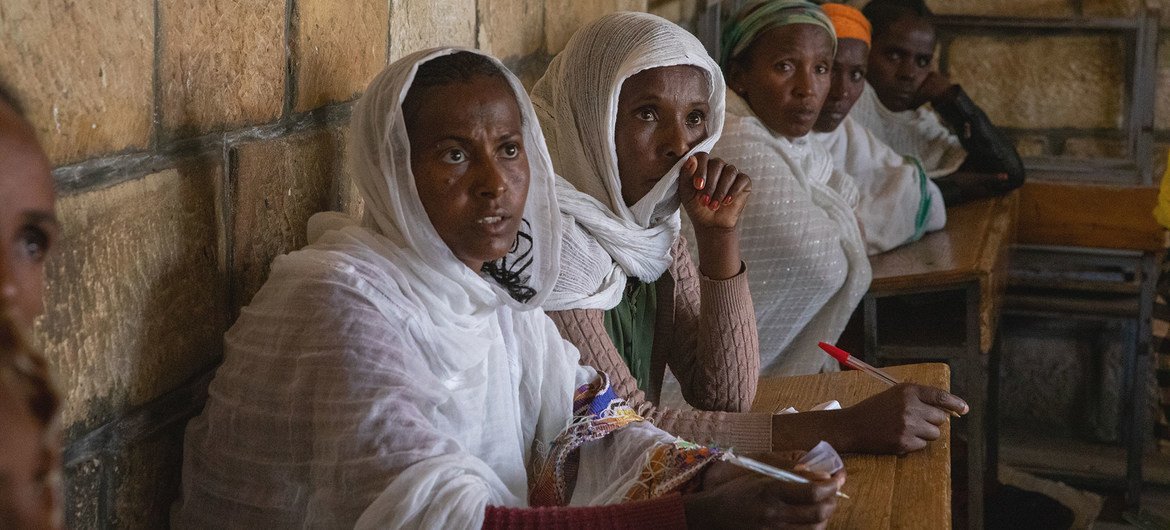
Displaced people in Adigrat town, in the Tigray region of northern Ethiopia.
4 March 2021

Given the persistent reports of serious human rights violations and abuses in the Tigray region of Ethiopia, the UN rights chief on Thursday stressed the urgent need for an objective, independent assessment of the facts.

“Deeply distressing reports of sexual and gender-based violence, extrajudicial killings, widespread destruction and looting of public and private property by all parties continue to be shared with us, as well as reports of continued fighting in central Tigray in particular”, said the High Commissioner for Human Rights, Michelle Bachelet. 

“Credible information also continues to emerge about serious violations of international human rights law and humanitarian law by all parties to the conflict in Tigray in November last year”, she added. 

The conflict between the Ethiopian Government and regional forces of the Tigray People’s Liberation Front (TPLF) began in early November, when the Prime Minister ordered a military offensive after rebels attacked a federal army base. Government forces reported that the region had been secured at the end of November, but TPLF resistance has continued amid accusations of extrajudicial killings and rights abuses.  

Verifying information 

Reliable sources have shared information about the killing of eight protestors by security forces in Adigrat, Mekelle, Shire and Wukro, in the east of the northern region, between 9 and 10 February.  

And between December and January, more than 136 cases of rape have also been reported in hospitals there, with indications that many more such cases remain unreported.  

The Government has said investigations are underway into the cases of sexual violence. 

Meanwhile, the UN human rights office, OHCHR, has managed to corroborate information about some of the incidents that occurred last November, which indicate indiscriminate shelling in Mekelle, Humera and Adigrat towns in Tigray region, and reports of grave human rights violations and abuses in Axum, and in Dengelat in central Tigray by Eritrean armed forces, including mass killings. 

A preliminary analysis of the information signals that serious violations of international law, which may amount to war crimes and crimes against humanity, may have been committed by multiple parties to the conflict.  

OHCHR named the Ethiopian National Defence Forces, the Tigray People’s Liberation Front, Eritrean armed forces, and Amhara Regional Forces and affiliated militia as culprits.  

Independent probe essential 

“With multiple actors in the conflict, blanket denials and finger-pointing, there is a clear need for an objective, independent assessment of these reports – victims and survivors of these violations must not be denied their rights to the truth and to justice”, said the High Commissioner, urging the Government to grant OHCHR and other independent monitors access to the region, to establish the facts and contribute to accountability, “regardless of the affiliation of perpetrators”.  

Ms. Bachelet also raised concerns over detentions in Tigray of journalists and translators working for local and international media.  

While they have now been released, there have been worrying remarks by a Government official that those responsible for “misleading international media” would be held responsible. 

“Victims and witnesses of human rights violations and abuses must not be hindered from sharing their testimony for fear of reprisals”, she said. 

Translate promises into action 

While welcoming recent Government statements on accountability and measures taken on access for humanitarian actors, Ms. Bachelet urged the authorities to ensure that those commitments are translated into reality. 

She stressed that OHCHR stands ready to support efforts at advancing human rights, including efforts by the Ethiopian Human Rights Commission aimed at ensuring accountability.

 
https://news.un.org/feed/view/en/story/2021/03/1086472
https://creativecommons.org/licenses/by/3.0/legalcode

‘Limited’ progress in closing Syria chemical weapons file, UN Disarmament Chief tells Security Council


© UNICEF/Khaled Akacha
A child living in an IDP camp in northwestern Syria.
4 March 2021

Seven years after the Security Council mandated the destruction of Syria’s chemical weapons programme, there have been only “limited developments” in the implementation of resolution 2118, passed unanimously in 2013 to bring the country into compliance with its global obligations, the UN disarmament chief said on Thursday. 

“At this stage, the declaration submitted by [Syria] cannot be considered accurate and complete,” Izumi Nakamitsu, UN High Representative for Disarmament Affairs told the Security Council in her monthly briefing, owing to “identified gaps, inconsistencies and discrepancies that remain unresolved”. 

Detailing the latest developments, she said her Office received information from the Permanent Mission of Syria, which it carefully studied and forwarded to the Technical Secretariat of the Organisation for the Prohibition of Chemical Weapons (OPCW), the world body overseeing implementation of the Chemical Weapons Convention. 

Assessment Team deploys 

While the pandemic continues to impact OPCW’s ability to deploy to Syria, she said its Technical Secretariat nonetheless has continued with its mandated activities related to the elimination of Syria’s chemical weapons programme.   

Importantly, she said the OPCW Declaration Assessment Team - set up in 2014 to establish facts surrounding claims of toxic chemicals use in Syria for hostile purposes - deployed to the country from 7 to 25 February 2021 for the twenty-fourth round of consultations.  The findings will be reported to the OPCW Executive Council “in due course”, Ms. Nakamitsu explained. 

Recalling that 19 declaration-related issues remain outstanding, she said one of them pertains to a chemical weapons production facility declared by the Syrian National Authority as never having been used for the production of chemical weapons.   

However, analysis of all the information and other materials gathered by the Declaration Assessment Team since 2014 indicates that production and/or weaponization of chemical warfare nerve agents did, in fact, take place at this facility.   

Syria has yet to respond to OPCW’s request that it declare the exact types and quantities of chemical agents produced and/or weaponized at this site.  

Issues pending since 2014 

“I would like to remind Council members that efforts to resolve these outstanding issues have now been ongoing since 2014”, she said, adding that “the confidence of the international community in the complete elimination of Syria’s chemical weapons programme depends upon these issues being finalized.” She also reiterated the call on Syria to cooperate fully with the OPCW Technical Secretariat.  

Among other developments, she said samples collected during the seventh round of OPCW inspections at the Barzah and Jamrayah facilities of the Syrian Scientific Studies and Research Centre, between 8 and 13 November 2020, were split at the OPCW Laboratory in the presence of a representative of Syria, and sent to designated laboratories for analysis.  “I look forward to the findings of this round of inspections,” she said.   

There is no justification for the use of chemical weapons by anyone, anywhere and under any circumstances -- UN disarmament chief

Technical information, explanations needed 

She also outlined her understanding that Syria has yet to provide sufficient technical information or explanations that would enable the OPCW Technical Secretariat to close the issue related to the finding of a Schedule 2 chemical detected at the Research Centre’s Barzah facilities during the third round of inspections in 2018. 

The OPCW Fact-Finding Mission, meanwhile, is studying all available information related to the alleged use of chemical weapons in Syria, engaging with Syrian authorities and other States Parties to the Chemical Weapons Convention on a “variety of incidents”, she said. 

The Investigation and Identification Team likewise continues its research into incidents in which the Fact-Finding Mission has determined that chemical weapons were used or likely used, she said, and will issue further reports “in due course”.

A call for accountability 

With that, she affirmed that the use of chemical weapons is a profound threat to peace and security, as well as to the disarmament and non-proliferation architecture that was so painstakingly constructed over past decades.  “There is no justification for the use of chemical weapons by anyone, anywhere and under any circumstances,” she stressed.  “Those who have used them must be identified and held to account.”

https://news.un.org/feed/view/en/story/2021/03/1086462
https://creativecommons.org/licenses/by/3.0/legalcode

четверг, 4 марта 2021 г.

‘Stability of the region’ hangs on Myanmar, UN Special Envoy says


Unsplash/Zuyet Awarmatik
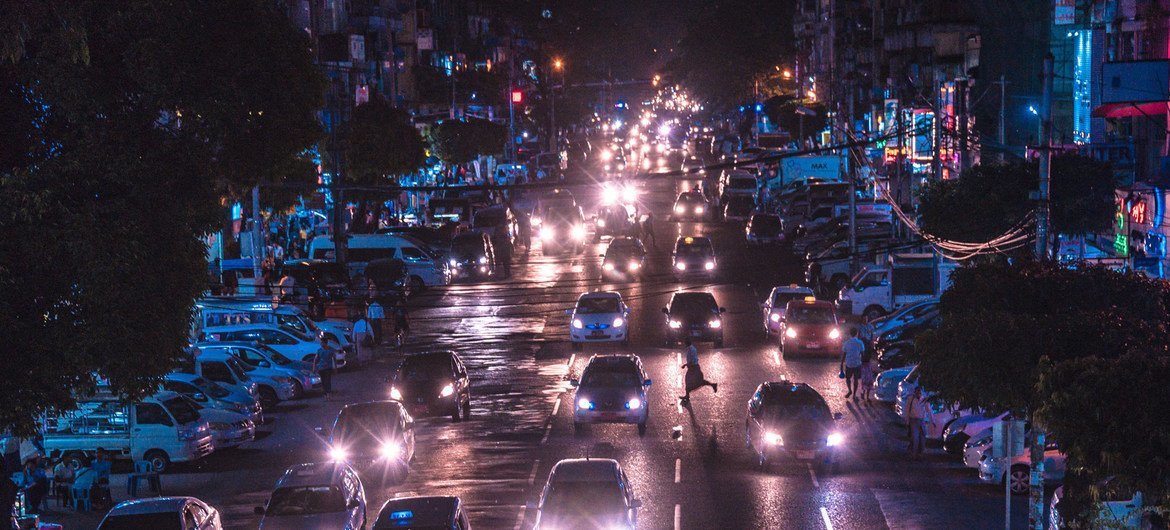
Anawrahta Road in Yangon Myanmar pictured before recent events. (file)
3 March 2021

UN Special Envoy for Myanmar Christine Schraner Burgener warned on Wednesday that the situation in the country challenges “the stability of the region” and could lead to a “real war”. 

Speaking at a virtual press conference, Ms. Burgener said the news out of Myanmar was shocking and, with the death of 38 people, marked the bloodiest day since the start of the coup on 1 Februray. 

More than 1,200 people are under detention and many families do not know where their loved ones are or what condition they are in.  

Ms. Schraner Burgener said that in discussions with the army, she warned that UN Member States and the Security Council might take “strong measures”, to which they responded: “We are used to sanctions and we survived the sanctions time in the past”. 

She continued, “I also warned they will go in an isolation”, to which they said, “we have to learn to walk with only few friends”.  

Chaos continues 

Myanmar has been in turmoil since the army seized power and detained elected government leader Aung San Suu Kyi and much of her National League for Democracy (NLD) leadership, who won a November election in a landslide, which the military said was fraudulent.  

However, the election commission said the vote was fair. 

The UN envoy said she remained in contact with the Committee Representing Pyidaungsu Hluttaw (CRPH), which represents the elected parliamentarians, and with all regional stakeholders, including leaders from the Association of Southeast Asian Nations (ASEAN).  

She noted that the Secretary-General condemned the coup and urged an end to the violence. 

Stressing that every tool available was now needed to end the situation, she spelled out that the unity of the international community was essential. 

Under discussion

While the Special Representative continues to keep dialogue open, she urged Member States to “take very strong measures”.  

“I think we can only stop this in a dialogue”, she said, adding that if not, judging from the past the army “unfortunately” uses its own roadmap. 

The Special Envoy said that the Myanmar army’s Deputy Commander-in-Chief Soe Win told her the military had a five-point roadmap which would be implemented by the recently established State Administration Council, to include the reconstitution of the Union Election Commission, COVID-19 prevention and restoring the peace. 

Ms. Schraner Burgener observed that COVID-19 prevention would be a disaster with regional implications, given that the country has no tests or vaccines, and restoring peace would be very difficult with 10 of the 21 ethnic armed organizations making strong statements against the coup and threatening violence if the army attacks civilians. 

Textbook plays 

The Special Envoy expressed her observation that the Myanmar military, also known as the Tatmadow, wanted to imprison NLD members for election fraud and treason, and eventually ban the party prior to the proposed elections. 

She noted that the army’s “textbook” actions would not work, saying that while they were successful in 1988, 2007 and 2008, “today, we have young people who lived in freedom for 10 years”.  

“They have social media, and…[are] well organized and very determined. They don't want to go back in a dictatorship and in isolation. So, I think the army is surprised, and maybe we have to help them to come out of this situation”, detailed Ms. Schraner Burgener. 

Preemptive warning 

Ms. Burgener said that she had always warned of a possible coup as the Tatmadow had the real power in the country, adding that Daw Aung San Suu Kyi wanted to make real reforms for a true federal democracy but was unable to do so.  

The Special Envoy said she had agreed to support Suu Kyi in her efforts to make reforms after the November elections, in which the NLD had won more than 82 per cent of the seats. 

Working together 

The Security Council had also voiced concern over the state of emergency but Russia and China prevented it from condemning the coup viewing it as a sovereign affair.  

Ms. Burgener expressed her hope that these countries recognize this as a situation that “hits the stability of the region…so, I hope that China will realize that it will be important to work together, but also for Russia”. 


https://news.un.org/feed/view/en/story/2021/03/1086332
https://creativecommons.org/licenses/by/3.0/legalcode

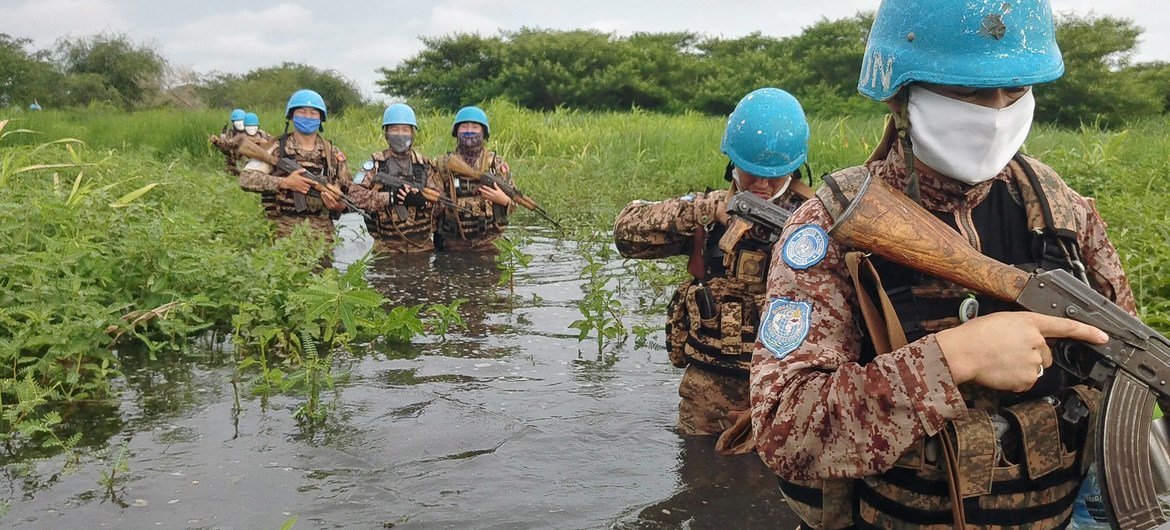
South Sudan’s transition from conflict to recovery ‘inching forward’ – UN envoy

 
3 March 2021

South Sudan’s transformation from conflict to recovery is underway, but much needs to be done before securing “a peaceful and prosperous future”, the UN Special Representative to the country told the Security Council on Tuesday. 

“Because of the collective efforts of so many…South Sudan is in a better state”, the head of the UN Mission in South Sudan (UNMISS), David Shearer, said in his last briefing, after serving as Special Representative for four years. 

However, he stated that “it is inching forward – frustratingly slowly – with still so much to do”. 

Despite recently marking the one-year anniversary of the transitional government, progress is lagging – including in reconstituting a Transitional National Legislature, constitution-making, transitional justice, and economic reform, according to Mr. Shearer, who also pointed out that troops that have yet to be unified. 

“Slow implementation comes at a cost. The power vacuum at a local level has opened opportunities for spoilers and national actors who have exploited local tensions and fueled violence”, he said. 

The UNMISS head also noted “a worrying surge in violence” between various heavily armed community militia in Warrap, in the Bahr el Ghazal region, while highlighting that despite the deaths of nine aid workers last year, humanitarian agencies continue to provide “critical assistance”. 

Four years later 

Reflecting on how far the nascent State has come since 2018, Mr. Shearer spotlighted a ceasefire, a peace deal, improved political security, a transitional government, a presidency, council of ministers, governors and local leadership, which is “slowly being installed”.  

Moreover, political violence had reduced “by a power of 10” compared to those who were dying or displaced from widespread conflict in 2016, he informed the Ambassadors. 

UNMISS: ‘Stabilizing force’  

“A caveat is our concern about the upsurge in armed community militia seemingly in open defiance of state forces”, said the UN official, adding that UNMISS is making “a real difference in lowering the level of this kind of violence and bringing diverse communities together”.  

He called the mission “a stabilizing force that extends well beyond our physical presence – and which is welcomed by nearly 80 percent of South Sudanese who we have independently surveyed”.  

Mr. Shearer updated the Council that UNMISS continues to push the peace process forward by working closely with all political parties, in coordination with regional and international partners. 

‘Extremely fragile’ peace 

However, he underscored that “the peace process remains extremely fragile”, noting that many citizens question the political will and fear the collapse of progress.  

“It is for those people that we, the international community, must remain united and committed to pushing the peace process forward”, said the Special Representative. 

“We can’t sit on the sidelines as spectators…That’s what failure looks like”, he spelled out. 

UNMISS
Briefing Security Council, David Shearer, Head of the UN Mission in South Sudan (UNMISS), noted the upcoming mandate renewal will guide a change in approach so the mission is “fit-for-purpose” going forward.

Challenges ahead 

The UNMISS head highlighted the need for a financial system that works for the South Sudanese. 

“The wealth of this country – from oil and elsewhere – bypasses its people, siphoned off in secrecy with no public accountability for how it is spent”, he said, posing the “obvious question: Why would key decision-makers benefiting from their current positions hold an election that could put their access to power and resources at risk?”. 

Struck by the “immense pride” of the South Sudanese in their country, Mr. Shearer explained that “true sovereignty” means being responsible and genuinely caring for the nation’s 12 million citizens.  

“It also means independence”, he said.  

Yet the UN envoy referred to the country as “perhaps one of the most dependent nations in history”, drawing attention to education and health systems, roads and infrastructure “provided by outsiders”.  

“We have too eagerly stepped in…[and] added to their dependency – and, in doing so, undermined their dignity”, he said.  

Mr. Shearer maintained that the Government must also step up, saying, “State-building is a finely tuned endeavour that constantly needs to be re-evaluated and questioned”.  

Fond farewell 

The Special Representative praised the South Sudanese as “without doubt, the toughest, most resilient people I’ve ever met”.  

Despite hardship, he said “they can sit, discuss, and…laugh in the face of huge adversity”. 

Mr. Shearer expressed admiration for their “seemingly endless patience and hope as they fight against huge odds to achieve the much brighter future they deserve”. 

“I will miss this young country and I wish it well from the bottom of my heart”, concluded the outgoing UN envoy. 

 
https://news.un.org/feed/view/en/story/2021/03/1086272
https://creativecommons.org/licenses/by/3.0/legalcode