четверг, 4 марта 2021 г.

Nigeria: Traumatized, abducted schoolchildren need rehabilitation – independent rights experts

 
World Bank/Arne Hoel
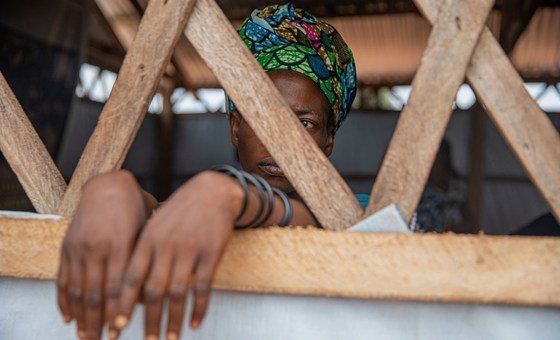
Children in Nigeria are traumatized by abduction and need support, the UN says.
3 March 2021

In Nigeria, too little is being done to help teenagers left traumatized by the recent spate of attacks on schools and mass abductions, UN-appointed independent rights experts said on Wednesday. 

In an alert issued on the sidelines of the Human Rights Council’s 46th session in Geneva, more than a dozen UN-appointed independent experts said that without assistance, victims who have been released were “at [an] increased risk of exploitation, trafficking, sexual and gender-based violence and other forms of violence”. 

No news on criminal probe 

The experts criticized the lack of an effective investigation into an attack on a boarding school in Kankara, Katsina State, when nearly 350 boys were abducted and released days later in December, as well as a lack of action to prevent a repeat of such outrages.  

There has been a “total lack of transparency” about progress with the criminal probe almost three months later, the experts maintained.  

Neither has there been specialized rehabilitation for the victims since their release, they added, before urging the authorities to implement long-term measures that would restore their physical and mental well-being, and to help them overcome the stigma that is often associated with such abductions. 

The experts also raised their concerns for the 279 schoolgirls who were set free on Tuesday, after being taken last week in the northwest state of Zamfara.  

These incidents are usually perpetrated by bandits hoping to make quick cash by forcing the families and authorities to pay ransom to free the hostages, according to UN Children’s Fund UNICEF. They often target institutions just out of reach of State control and usually in rural areas. 

An end to education 

Because of such attacks, “many children have not returned to class and some schools have already closed down in the border areas out of fear of reoccurrence”, the experts said. “This may mean an end to education for these children.”   

Among other recent attacks on schools and abductions, on 17 February 2021 at least 27 students, three staff and 12 others were taken from a college in Niger State and released 10 days later.  

“We are alarmed at reports that an unknown number of women and girls have been abducted in recent years, and subjected to domestic servitude, forced labour, sexual slavery through forced marriages, forced and unwanted pregnancies”, the experts said.  

In a direct appeal to the Nigerian authorities, the experts reiterated the recommendations that followed a visit by the Special Rapporteurs to the country in 2016 on the right of everyone to the enjoyment of the highest attainable standard of physical and mental health, the sale of children, child prostitution, child pornography and contemporary forms of slavery. 

These included the promotion and expansion of community-based programmes to support the care, rehabilitation and reintegration of girls and women.  

“These programmes should include psychosocial support and counselling, including to families”, the UN-appointed independent experts said in their report, which followed a 2014 attack by extremist group Boko Haram – whose name is usually translated as “western education is forbidden" – who took 276 girls from their school in Chibok in northeast Nigeria. Many of them remain missing.    

 
https://news.un.org/feed/view/en/story/2021/03/1086242
https://creativecommons.org/licenses/by/3.0/legalcode

среда, 3 марта 2021 г.

Abducted girls released in northwest Nigeria, as fresh attacks rock country’s northeast


UNICEF/KC Nwakalor
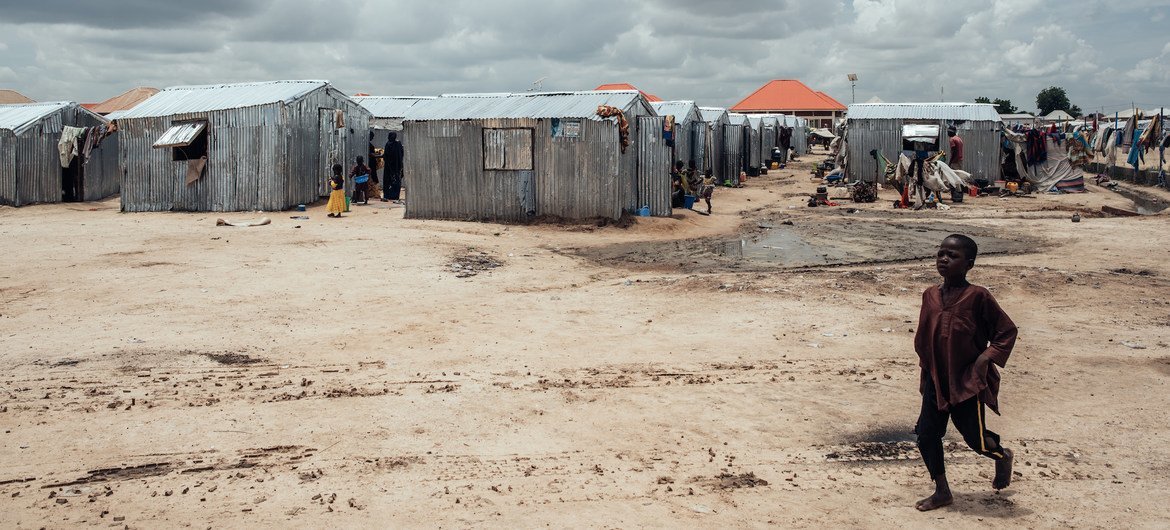
A child walks in front of shelters at an IDP camp in Maiduguri, the capital of Borno state in north-east Nigeria.
2 March 2021

While the release of more than 200 girls abducted from their school on Friday in northwest Nigeria is a welcome development said senior UN officials there on Tuesday, civilians and aid facilities have come under attack in the country’s northeast, highlighting the plight of civilians who have suffered years of conflict and insecurity.  

Edward Kallon, UN Resident and Humanitarian Coordinator in Nigeria, denounced the attack, in Dikwa, in restive Borno state, which started late on Monday (local time). 

“As information is still coming through, I am outraged to hear the premises of several aid agencies and a hospital were reportedly set ablaze or sustained damage”, he said in a statement on Tuesday. 

Stop the violence 

“Civilians and aid workers, their facilities and assets should never be a target. They must be protected and respected at all times”, Mr. Kallon added, calling on all armed groups to immediately stop the violence. 

The UN official also voiced deep concerns for the safety and security of thousands of residents of Dikwa, including internally displaced persons living inside and outside camps as well as those who had returned to the community to rebuild their lives after years in displacement. 

The town of Dikwa, which is about 90 kilometres (56 miles) from the provincial capital Maiduguri, is a key transit location, serving as a gateway to Bama, Ngala, Mafa and Marte local government areas.  

“The attack will affect the support provided to nearly 100,000 people who are desperately in need of humanitarian assistance and protection, particularly as the COVID-19 pandemic risks spreading in Borno state”, he added. 

Northern Nigeria has been in the grip of a Boko Haram extremist insurgency for over a decade, which has led to widespread displacement as well as skyrocketing levels of hunger and malnutrition.    

UNICEF/Andrew Esiebo
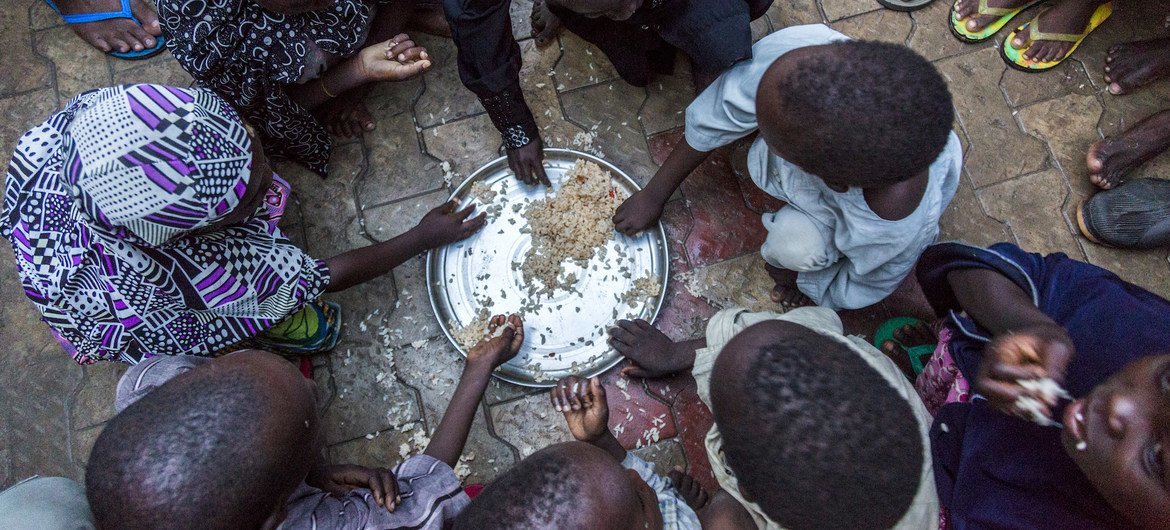
Internally displaced children from Dikwa in Borno state, Nigeria, having their evening meal at the house of their host. (file photo)

News of release of schoolgirls, ‘a relief’: UNICEF 

Also on Tuesday, the UN Children’s Fund (UNICEF) expressed relief at the reported release of over 200 girls abducted in an attack on their school in Jangebe in Zamfara state, northwest Nigeria, in the early hours of Friday. 

“While we rejoice at the release of the schoolgirls and look forward to their safe return to their families, we reiterate that attacks on students and schools are not only reprehensible but a violation of the right of children to an education”, Peter Hawkins, UNICEF Nigeria Representative, said in a statement. 

“It is a right that any society can ill-afford to violate”, he stressed. 

Mr. Hawkins called on the authorities to “take all measures” to protect schools in the country so that children will not be fearful of going to school, and parents afraid of sending their children to class. 

Displacement continues in northwest: UNHCR 

Meanwhile, violence continues to drive fresh displacement in Nigeria’s northwest, including thousands who fled to neighbouring Niger, into areas where violence is also on the rise, the UN refugee agency (UNHCR) reported on Tuesday 

“UNHCR teams in Niger have recorded a spike in deadly violence inside Maradi itself, with more casualties and serious incidents reported in January and February 2021 than in the second half 2020”, Boris Cheshirkov, UNHCR spokesperson, said at a regular media briefing in Geneva. 

Over 7,660 Nigerian refugees arrived in Niger’s Maradi this year, bringing the total to nearly 100,000 displaced, including Niger citizens displaced within their country, he added. 

Those fleeing described “gruesome murders, kidnappings for ransom, and looted villages”, Mr. Cheshirkov said, noting that many were also caught up in clashes between farmers and herders, as well as vigilantism, with self-defence groups set up in most villages. 

“People fleeing are in urgent need of water, food, shelter, and health services. Most have fled empty handed in the rush to save their lives”, he added. 

Responding to the situation, UNHCR is providing life-saving assistance and protection and has scaled up border monitoring activities. The agency has also supported relocation of over 11,000 refugees away from the border to villages, with better facilities such as water, health and sanitation. 


https://news.un.org/feed/view/en/story/2021/03/1086112

https://creativecommons.org/licenses/by/3.0/legalcode

вторник, 2 марта 2021 г.

Bangladesh: UN rights chief urges transparent probe into writer’s death, review of law under which he was charged


UN Photo/Laura Jarriel
United Nations High Commissioner for Human Rights Michelle Bachelet (file).
1 March 2021

The UN's top human rights official on Monday called for transparent investigation into the death in custody of a writer in Bangladesh, who was held in pre-trial detention for nine months for publishing an article and sharing social media posts critical of the Government’s COVID-19 response. 

Writer Mushtaq Ahmed died on 25 February after he was transferred to a prison hospital for treatment. The authorities have announced they will investigate his death, according to a news release by the UN human rights office (OHCHR). 

“The Government must ensure that its investigation into Ahmed’s death is prompt, transparent and independent”, Michelle Bachelet, UN High Commissioner for Human Rights, said. 

She urged the authorities to conduct a review of the Digital Security Act, under which Mr. Ahmed was charged; suspend its application; and release all those detained under it for exercising their rights to freedom of expression and opinion. 

“Various UN human rights bodies have long raised concerns about the ill-defined, overly broad provisions of the Digital Security Act that have been used to punish criticism of the Government”, the High Commissioner said. 

Ms. Bachelet also voiced concerns at reports that police allegedly used excessive force during protests demanding justice over Mr. Mushtaq’s death, with reports that 35 people were injured and seven arrested. 

Several arrested under the Act 

The High Commissioner also expressed serious concern at allegations that another man detained on similar charges as Mr. Ahmed, cartoonist Ahmed Kishore, was subjected to torture or other ill treatment.  

She reminded the authorities of their obligation to promptly and effectively investigate the claims and to ensure his safety and well-being. 

According to OHCHR, Mr. Ahmed and Mr. Kishore were among 11 individuals arrested in May last year for allegedly spreading misinformation about COVID-19 or criticizing the Government response.  

The men were repeatedly denied bail and remained in pre-trial detention for nearly nine months before they were officially charged on 20 January this year for posting “propaganda, false or offensive information, and information that could destroy communal harmony and create unrest”, the Office noted.  

They were brought before a court on Tuesday last week, where Mr. Kishore alleged that he had been subjected to torture by two Rapid Action Battalion officers, the Office added. According to reports, he appeared visibly injured. 

Allegations of abuses ‘a long-standing concern’ 

The UN rights office also said that allegations of torture and ill-treatment by the Rapid Action Battalion have been a long-standing concern.  

The Committee Against Torture, an independent body monitoring the implementation of the Convention against Torture and Other Cruel, Inhuman or Degrading Treatment or Punishment, in 2019 recommended the Government of Bangladesh commission an independent inquiry into allegations that members of the unit have carried out torture and other rights abuses, including arbitrary arrests, disappearances and extrajudicial killings “as a matter of routine policy”, OHCHR added. 


https://news.un.org/feed/view/en/story/2021/03/1086002

https://creativecommons.org/licenses/by/3.0/legalcode

понедельник, 1 марта 2021 г.

UNICEF urges repatriation of all children in Syria’s al-Hol camp following deadly fire


© UNICEF/Masoud Hasen
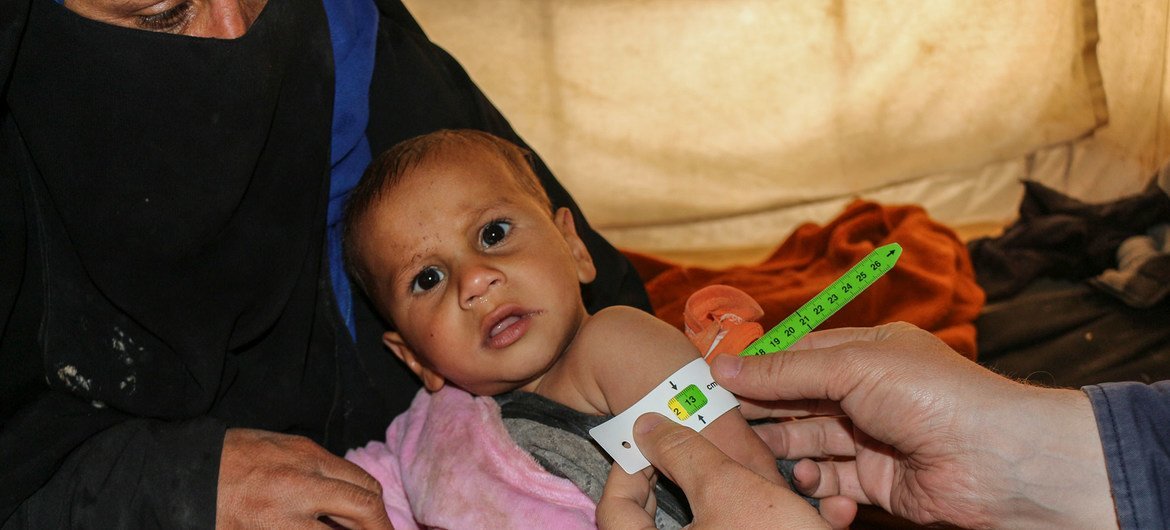
A baby is screened for malnutrition at Al-Hol camp in northern Syria.
28 February 2021

The UN Children’s Fund (UNICEF) on Sunday urged all countries to repatriate and safely reintegrate their young nationals being held at Syria’s largest camp for refugees and internally-displaced, following a deadly weekend fire at Al-Hol camp which saw at least three children die, and another 15 injured.

In and around the notorious camp which has housed many families of alleged extremist fighters since the defeat of ISIL in Syria and neighbouring Iraq, “there are more than 22,000 foreign children of at least 60 nationalities who languish in camps and prisons, in addition to many thousands of Syrian children”, said UNICEF Regional Director for the Middle East and North Africa, Ted Chaiban.

According to the UN, a fire broke out on Saturday evening during a family gathering among displaced Syrian camp residents. One woman reportedly died along with the three children, and at least 11 adults were injured. At least 20 people overall remain in hospital, with six reported to be in critical condition.

No basic services

“Children in Al-Hol are faced not only with the stigma they are living with, but also with very difficult living conditions where basic service are scarce or in some cases unavailable”, said Mr. Chaiban.

“The detention of children is a measure of last resort and should be for the shortest time possible. Children should not be detained based solely on suspected family ties with armed groups or the membership of family members in armed groups.”

Earlier this month, independent UN human rights experts noted that an “unknown number” of foreign nationals had died in the squalid camp of Al-Hol and Roj, in northeast Syria, urging their home countries to repatriate their citizens as soon as possible, dismissing claims that it was too difficult to deal with the non-State groups controlling the local area.

Mr. Chaiban said Member States should do everything possible to reintegrate the children into their own societies and repatriate them in a “safe and dignified way”

“We call on all member states to provide children - who are their citizens or born to their nationals- with civil documentation to prevent statelessness. This is in line with the best interests of the child and in compliance with international standards.

Syria aid chiefs denounce ‘dangerous conditions’

The UN Resident Coordinator and Humanitarian Coordinator for Syria, Imran Riza, and the Regional Humanitarian Coordinator for the Syria Crisis, Mr. Muhannad Hadi, expressed their sorrow over the deadly fire at Al Hol, in a statement also released on Sunday.

They extended their heartfelt sympathy to the affected families and wished those injured a speedy recovery.

“They further emphasize that this distressing event underlines the fact that no one – most of all innocent children – should be living under the challenging and potentially dangerous humanitarian conditions in Al Hol camp.”

Humanitarian partners working at Al-Hol have mobilized to provide urgent assistance, and UN and humanitarian partners provide a “comprehensive range of humanitarian assistance to the camp, including emergency and primary health care; water; shelter; non-food items, food and hygiene distributions; nutrition; and protection”, said the statement.

© UNICEF/Delil Souleiman
A young boy photographed at Al-Hol refugee camp in the northeastern desert of Syria. (July 2019)

Fires not uncommon

With almost 62,000 residents, Al-Hol is the largest camp for displaced people in Syria. More than 80 per cent of the population are women and children.

Accidental fires are not uncommon in the camp, said the senior UN officials, with families often resorting to using cooking stoves inside their tents for warmth, particularly during winter when temperatures regularly drop below freezing.

Mr. Riza and Mr. Hadi expressed concern that unless measures are taken to address the long-term welfare of residents, “more tragic incidents at Al Hol are inevitable.”


https://news.un.org/feed/view/en/story/2021/02/1085982
https://creativecommons.org/licenses/by/3.0/legalcode

Myanmar: UN condemns escalating violence in deadliest day of protests so far


UN WebTV
Permanent Representative of Myanmar to the UN, Ambassador Kyaw Moe Tun ended his General Assembly address on Friday denouncing the 1 February coup, with a three-fingered salute used by protesters.
28 February 2021

In response to the killing of at least 18 protesters demonstrating against Myanmar’s military coup, the UN human rights office (OHCHR) on Sunday together with the UN chief, strongly condemned the “escalating violence” and called for an immediate end to the use of force.

More than 30 demonstrators have been wounded as police and military forces used live rounds together with less-than-lethal force against crowds nationwide protesting the month-long takeover, according to OHCHR, citing “credible information”.

The Secretary-General António Guterres "strongly condemned" the violent weekend crackdown, said a statement issued by his Spokesperson. "He is deeply disturbed by the increase in deaths and serious injuries. The use of lethal force against peaceful protestors and arbitrary arrests are unacceptable."

Mr. Guterres urged the international community "to come together and send a clear signal to the military that it must respect the will of the people of Myanmar as expressed through the election and stop the repression."

The military has claimed, without evidence, that the ruling party of State Counsellor Aung San Suu Kyi – the National League for Democracy (NLD) – fraudulently won parliamentary elections. Arrested on 1 February, she and other leaders have remained in detention and according to news reports she is due in court on Monday.

On Friday, the UN Ambassador to Myanmar denounced the coup in a General Assembly meeting in New York, calling on the international community to take the “strongest possible measures” against the military junta to restore civilian rule. The top diplomat was reportedly fired from his post on Saturday.

Right to peaceful protest

“The people of Myanmar have the right to assemble peacefully and demand the restoration of democracy”, said OHCHR spokesperson, Ravina Shamdasani, in a statement issued on Sunday.

“These fundamental rights must be respected by the military and police, not met with violent and bloody repression.”

The people of Myanmar have the right to assemble peacefully and demand the restoration of democracy. These fundamental rights must be respected by the military and police, not met with violent and bloody repression.

According to OHCHR, police and military confronted peaceful demonstrators using disproportionate force with deaths reported in the largest city Yangon, Dawei, Mandalay, Myiek, Bago and Pokokku. “Tear gas was also reportedly used in various locations as well as flash-bang and stun grenades”, said Ms. Shamdasani.

‘Never justifiable’

“Use of lethal force against non-violent demonstrators is never justifiable under international human rights norms”, she said. “Since the beginning of the coup d’état…the police and security forces have targeted an ever-increasing number of opposition voices and demonstrators by arresting political officials, activists, civil society members, journalists and medical professionals.

“Today alone, police have detained at least 85 medical professionals and students, as well as seven journalists, who were present at the demonstrations. Over 1,000 individuals have been arbitrarily arrested and detained in the last month - some of whom remain unaccounted for – mostly without any form of due process, simply for exercising their human rights to freedom of opinion, expression and peaceful assembly.”

The Spokesperson reiterated OHCHR’s call for the immediate release of all those arbitrarily detained by the military authorities, “including members of the democratically elected government.

“The international community must stand in solidarity with the protestors and all those seeking a return to democracy in Myanmar”, Ms. Shamdasani concluded.

 
https://news.un.org/feed/view/en/story/2021/02/1085972
https://creativecommons.org/licenses/by/3.0/legalcode

воскресенье, 28 февраля 2021 г.

В ООН готовы направить гуманитарную миссию в Нагорный Карабах и другие пострадавшие от конфликта районы


Фото ООН/Ж.-М. Ферре
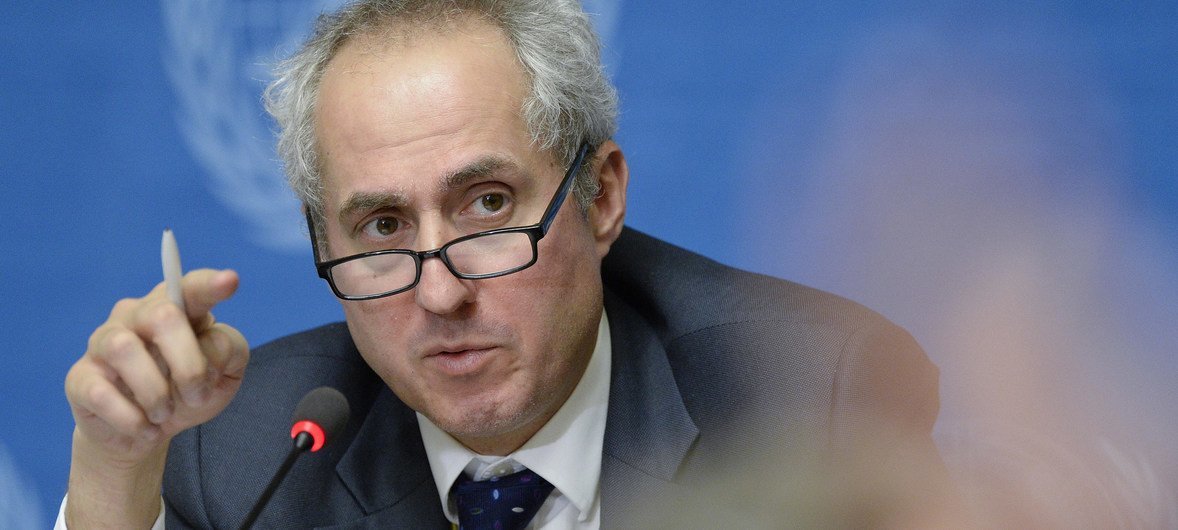
Пресс-секретарь ООН Стефан Дюжаррик
26 февраля 2021

Межведомственная независимая гуманитарная миссия ООН готова при первой возможности отправиться в Нагорный Карабах и близлежащие районы, пострадавшие от конфликта. Об этом заявил на брифинге в Нью-Йорке пресс-секретарь Организации Объединенных Наций Стефан Дюжаррик. 

По его словам, ООН уже передала эту информацию всем заинтересованным сторонам. «Управление по координации гуманитарных вопросов, Управление по делам беженцев и другие учреждения ООН находятся на связи со всеми заинтересованными сторонами для уточнения конкретных параметров планируемой миссии и времени ее проведения, – подчеркнул Дюжаррик. – Последний раз официальная информация по этому поводу была направлена 19 февраля». 
 

Читайте также 
УВКБ: возращение беженцев и внутренних переселенцев в Нагорный Карабах и прилегающие районы должно быть добровольным
 

Представители ООН планируют оценить гуманитарную ситуацию на месте и изучить условия для «безопасного и добровольного возвращения» всех вынужденных переселенцев. «Мы ожидаем ответа на наше последнее официальное уведомление», – отметил пресс-секретарь ООН. 

Он призвал все заинтересованные группы к сотрудничеству, с тем чтобы обеспечить условия для приезда группы представителей учреждений ООН, работа которой будет построена «исключительно на принципах гуманизма, нейтральности, беспристрастности и независимости». 

 
https://news.un.org/feed/view/ru/story/2021/02/1397622
https://creativecommons.org/licenses/by/3.0/legalcode

FROM THE FIELD: Humanitarian crises of concern in 2021


© UNOCHA/Michele Cattani
Displaced women prepare food at an informal camp in Bagoundié, Mali.
27 February 2021

The COVID-19 pandemic has dominated much of the world’s attention over the last 12 months, but many other crises will continue to require the urgent attention of the UN and the international community in 2021.

A woman survivor of gender-based violence in Kalemie, in the Democratic Republic of the Congo. , by UNOCHA/Alioune Ndiaye

Syria and Yemen are probably the best known long-running conflict zones. A decade of fighting in Syria has seen millions of people displaced, many requiring humanitarian assistance. Yemen, meanwhile, remains the scene of the world’s worst humanitarian crises, where the risk of large-scale famine has never been more acute.

Insecurity in the Democratic Republic of the Congo (DRC) has been exacerbated by the pandemic, which has compounded the country’s economic decline, and DRC now has the world’s second highest number of people who are classified as severely food insecure, and the highest number of internally displaced people in Africa. 

And in the Sahel region, which includes Burkina Faso, Chad and Mali, a perfect storm of climate change, weak governance, poverty and chronic underdevelopment have combined to create an unprecedented security and humanitarian crisis. 

Read more here about these, and other crises of major concern.


https://news.un.org/feed/view/en/story/2021/02/1085132
https://creativecommons.org/licenses/by/3.0/legalcode