суббота, 5 сентября 2020 г.

‘I don’t understand why Africa is still hungry’: UN envoy’s plan to transform food systems for all


FAO/Giulio Napolitano
Women of the Batwa community tilling the soil with hoes in preparation for planting potatoes, in Gashikanwa, Burundi.
4 September 2020

Agnes Kalibata, the former Rwandan Minister for Agriculture, has been tasked with leading the first-ever UN Food Systems Summit. In an interview with UN News, she outlined her vision for a transformed international system that is more resilient, fairer, and less harmful to the planet.
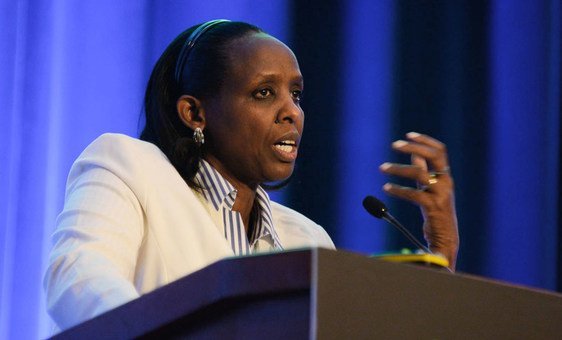
Agnes Kalibata, Special Envoy for 2021 Food Systems Summit., by CIAT/Neil Palmer

Food systems involve all the stages that lead up to the point when we consume food, including the way it is produced, transported, and sold. Launching a policy brief on food security in June, UN chief António Guterres warned of an “impending food emergency”, unless immediate action is taken.

Ms. Kalibata told UN News that her commitment to improving food systems is closely linked to her early life as the daughter of refugees.

“I was born in a refugee camp in Uganda, because my Rwandan parents were forced to leave their home around the time of colonial independence in the early 60s.

Thanks to the UN High Commission for Refugees (UNHCR), were given land, which allowed my parents to farm, buy a few cows, and make enough money to send me and my siblings to school. This allowed me to experience, first-hand, how agriculture, in a functioning food system, can provide huge opportunities for smallholder communities.

I took this appreciation with me when I eventually returned to Rwanda, as Minister for Agriculture, working with smallholders and seeing them grab every opportunity to turn their lives around against all odds. This was probably the most fulfilling period in my life. 
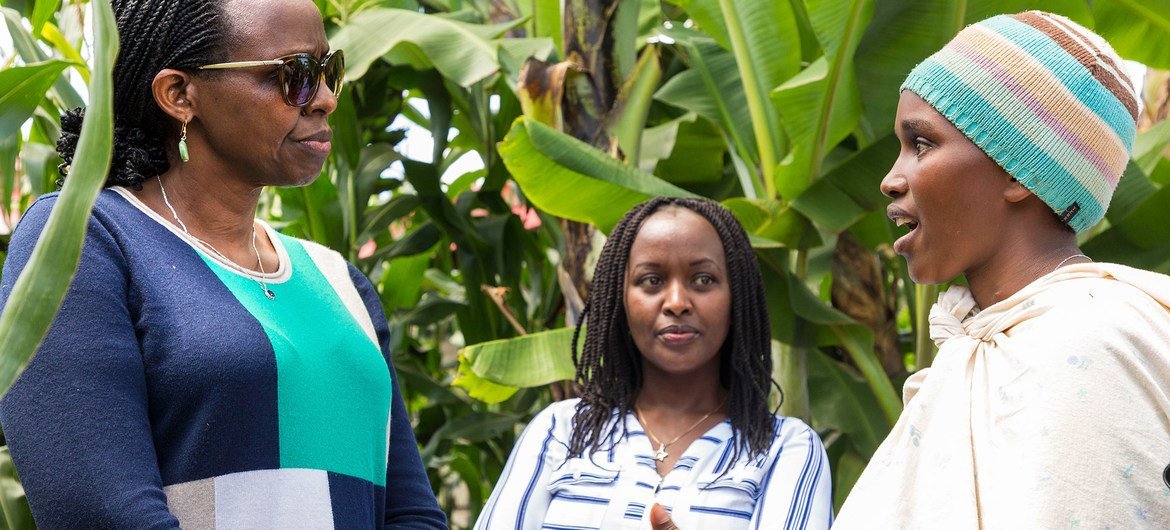
UN Food Systems Summit
Female farmers in discussion with former Rwandan Minister for Agriculture, Agnes Kalibata (far left).

But, I have also seen what can happen when threats like climate change, conflict and even more recently, a pandemic like Covid 19, hit the world's farmers, especially those who are smallholders, like my parents were.

As a daughter of farmers, I understand how much people can suffer, because of systems that are breaking down. I often reflect that I, and other children of farmers my age that made it through school, were the lucky ones because climate change hits small farmers the hardest, destroying their capacities to cope.

My experience has shown me that, when food systems function well, agriculture can provide huge opportunities for smallholder communities. I am a product of functional food systems, and I am fully convinced of the power of food systems to transform lives of smallholder households and communities, and bring about changes to entire economies.  

I’m extremely passionate about ending hunger in our lifetime: I believe it’s a solvable problem. I don’t understand why 690 million people are still going to bed hungry, amidst so much plenty in our world, and with all the knowledge , technology and resources. 

I have made it my mission to understand why this is the case, and how we can overcome the challenges we see along the way. That is why I gladly accepted the offer by the UN Secretary General to be his Special Envoy for the Food Systems Summit.
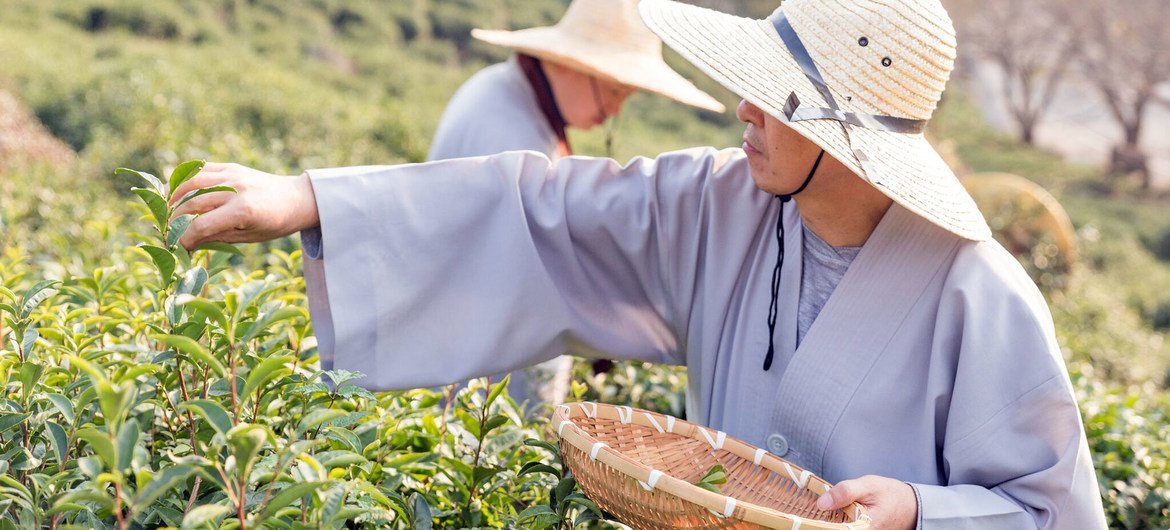
© Hadong County, Republic of Korea
Traditional Hadong Tea Agrosystem in Hwagae-myeon, Korea, cultivate indigenous tea trees around streams and between rocks in hilly areas surrounding temples.

Why food systems need to change

Today’s food systems do not respond to what we need as people. The cause of death for one in three people around the world is related to what they eat. Two billion people are obese, one trillion dollars’ worth of food is wasted every year, yet many millions still go hungry.

Food systems have an impact on the climate. They are responsible for around one third of harmful greenhouse gas emissions that are causing climate change, which is interfering massively in our ability to produce food, upending farmers’ lives, and making the seasons harder to predict. 

We have built up a lot of knowledge around the things that we’re doing wrong, and we have the technology to allow us to do things differently, and better. This isn’t rocket science: it’s mostly a question of mobilizing energy, and securing political commitment for change.

Galvanise and engage

The main impetus behind the Food Summit is the fact that the we are off track with all of the Sustainable Development Goals (SDGs) that relate to food systems, principally ending poverty and hunger, and action on the climate and environment.

We want to use the Summit to galvanise and engage people, raising awareness about the elements that are broken, and what we need to change; to recognize that we’re way off track with the SDGs, and raise our ambitions; and to secure firm commitments to actions that will transform our current food systems for the better.

Pulling together the UN System

The UN system is already doing a lot of work in this area, and we’ve pulled together several agencies and bodies to support the Summit.

We have formed a UN Task Force to channel the existing research, so that nothing falls through the cracks, which will work closely with a core group of experts we have assembled, which is looking at scientific data pooled from institutions all around the world. At the same time, we are examining national food systems, to see what is and isn’t working. 

We are going to pool all the information, evidence and ideas we receive, and create a vision for a future food system that benefits all."

At a briefing on the Food Systems Summit held on Friday, Amina Mohammed, the UN Deputy Secretary-General, noted that a transition to more sustainable systems is already underway, with countries beginning to “take action and change behaviours in support of a new vision of how food arrives on our plate.”

UN Member States, she continued, are increasingly aware that food systems are “one of the most powerful links between humans and the planet”, and bringing about a world that "enhances inclusive economic growth and opportunity, while also safeguarding biodiversity and the global ecosystems that sustain life. "

The Summit objectives

  • The 2021 Food Systems Summit will bring together the UN System, and key leaders in food-related fields, to bring food systems in line with the goals of the 2030 Agenda for Sustainable Development, the UN’s blueprint for a better future for people, and the planet.
  • Ms. Kalibata outlined the main objectives, or action tracks, of the summit, which will launch bold new solutions or strategies to deliver progress on the SDGs. The five tracks look at ensuring safe and nutritious food for all; shifting to sustainable consumption patterns; boosting nature-positive production at sufficient scale; advancing equitable livelihoods and value distribution; and building resilience to vulnerabilities, shocks and stresses.
  • Participants, including experts such as farmers, indigenous peoples and academics, will explore ways to make food systems more resilient to vulnerabilities and shocks, including those linked to climate change.
https://news.un.org/feed/view/en/story/2020/09/1071682

https://creativecommons.org/licenses/by/3.0/legalcode

Трамп считает тему контроля над вооружениями важнее, чем глобальное потепление


05.09.2020 2:23:02
       Вашингтон. 5 сентября. ИНТЕРФАКС - Президент США Дональд Трамп заявил, что тема контроля над вооружениями для него сейчас важнее, чем проблема глобального потепления.
       На пресс-конференции в Белом доме он напомнил, что США ведут переговоры с Россией по этой теме. "Это очень важно... Я считаю, что это важнее, чем глобальное потепление", - заявил Трамп.
       Он добавил, что не теряет надежду на присоединение в будущем Китая к этим переговорам.
       Также Трамп выразил недоумение в связи с тем, что в США уделяют больше внимания инцидентам, связанным с Россией, нежели действиям Китая на мировой арене.
       "Интересно, что все всегда упоминают Россию. Китай в этом случае - это страна, о которой вам следует говорить больше, чем о России", - сказал американский президент, обращаясь к журналистам.
       По его словам, Китай "делал более плохие вещи", нежели Россия.
       В августе Госсекретарь США Майк Помпео выразил надежду, что Вашингтон и Москва смогут до конца 2020 года добиться нового соглашения в сфере контроля над вооружениями.
       "Надеюсь на заключение договора с РФ к концу года", - приводило слова Помпео агентство Bloomberg.
       Помпео отметил, что США тесно работают с Россией для снижения риска применения ядерного оружия в мире.
       "Мы добились настоящих успехов за последние пару недель", - сказал госсекретарь.
       В августе портал Axios со ссылкой на заявление спецпредставителя президента США Маршалла Биллингсли сообщил, что США больше не настаивают на обязательном участии Китая в переговорах Вашингтона и Москвы по контролю над вооружениями.
       "Произошел сдвиг", - признал Биллингсли в разговоре с изданием.
       По его словам, администрация Трампа отказалась от своего требования, чтобы Китай участвовал в переговорах, и сфокусирована на достижении политического соглашения с Россией. После этого Вашингтон рассчитывает, что США и Россия уже вместе смогут оказать давление на Китай и убедить его присоединиться к переговорам и, в конечном итоге, к соглашению. -" https://www.militarynews.ru/story.asp?rid=1&nid=537428&lang=RU
https://creativecommons.org/licenses/by/3.0/legalcode

Министр обороны КНР возложил ответственность за напряженность на границе с Индией на Дели - СМИ


05.09.2020 4:51:30
       Пекин. 5 сентября. ИНТЕРФАКС - Министр обороны КНР Вэй Фэнхэ на встрече в Москве с индийским коллегой Раджантха Сингхом заявил, что ответственность за напряженность на границе между двумя странами в районе Ладакх лежит на Индии, сообщили китайские СМИ в субботу со ссылками на источник в китайской делегации.
       Переговоры министров состоялись накануне в рамках встречи в Москве глав оборонных ведомств стран ШОС, СНГ и ОДКБ.
       "Вэй Фэнхэ сказал, что в последнее время отношения между двумя армиями сильно пострадали из-за пограничных проблем, важно, чтобы оба министра обороны провели откровенный обмен мнениями по этим вопросам. Причины и правда, вызвавшие нынешнюю напряженность на китайско-индийской границе, ясны, ответственность лежит исключительно на индийской стороне", - цитируют СМИ заявление одного из источников.
       Он сообщил, что китайский министр подчеркнул: "Ни один сантиметр территории Китая не может быть потерян, китайская армия полна решимости, способна и уверена в сохранении суверенитета и территориальной целостности страны".
       В то же время он Вэй Фэнхэ сказал, что эта проблема должна быть решена на основе диалога и консультаций.
       Он выразил пожелание, чтобы индийская сторона неукоснительно выполняла ряд договоренностей, достигнутых между сторонами, эффективно укрепляла контроль над своими войсками, не пересекала нынешнюю фактическую линию контроля, не предпринимала никаких действий, которые могли бы спровоцировать обострение ситуации, воздерживалась от распространения негативной информации.
       По сообщениям китайских СМИ, Сингх заявил, что в нынешней ситуации "мир и стабильность на границе имеют решающее значение для двусторонних отношений в целом".
       Он также высказался за диалог на всех уровнях, в том числе военный и дипломатический, для мирного урегулирования проблемы.
       Минобороны Индии по окончании встречи сообщил в твиттере, что она продолжалась 2 часа 20 минут, но не привел деталей.
       Обострение ситуации на линии фактического контроля в Ладакхе началось в мае текущего года, когда, по информации Дели, в столкновении между пограничниками двух стран погибли 20 индийских военных.
       Индия также обвинила Китай в "провокациях" со стороны китайских военных в конце августа. Китай эти сообщения решительно отверг, заявив, что линию контроля пересекли индийские войска.
      
      
 https://www.militarynews.ru/story.asp?rid=1&nid=537430&lang=RU

https://creativecommons.org/licenses/by/3.0/legalcode

пятница, 4 сентября 2020 г.

Afghanistan: Near-record violence risks derailing imminent talks between Government and Taliban


3 September 2020

The UN’s top official in Afghanistan has warned that with the formal launch of direct peace negotiations imminent, near-record violence in the country is creating an atmosphere of mistrust that risks derailing long-sought talks between the Government and the Taliban. 

High stakes 

“The stakes could not be higher”, said Deborah Lyons, Special Representative of the Secretary-General and Head of the UN Assistance Mission in Afghanistan (UNAMA), describing the intra-Afghan talks as a historic moment in the country’s history, as she briefed the Security Council on Thursday.   

The conflict, which has raged for four decades, continues to kill hundreds of people each week and has displaced millions over the years – most of whom have no prospects of return.   

With the negotiations, hosted by Qatar, set to launch, she exhorted parties to place a humanitarian ceasefire atop the agenda, and pressed all countries to amplify this call as the talks begin. 

Thanking Qatar, the United States and Pakistan for their intense diplomacy to bring the parties to this point, she said the pre-talks phase has already raised difficult issues related to prisoner releases, which have taken five months to resolve.   

No battlefield solution 

“Eventually, the negotiations will have to tackle a range of profound questions about the kind of country Afghans want.”  Solutions cannot be found on the battlefield or imposed from the outside. 

At the same time, she said all parties must do their part to ensure the ground is prepared for peace to flourish.  The UN has initiated a dialogue with the two sides on the inclusion of victims’ voices in the peace talks and mechanisms for incorporating victim-centred justice. 

“This is a difficult topic, but an essential one”, she said, stressing that only when victims’ grievances are acknowledged and addressed will true reconciliation be possible.  

Women’s rights a central theme 

Women’s rights are also emerging as among the most difficult issues confronting the parties as they enter negotiations – and one around which any compromises will pose a difficult dilemma for Member States.  “This issue will be more central in the Afghan peace process than we have ever seen in any other peace negotiation in recent memory”, she assured.  

As such, she has initiated meetings with a country-wide network of women who are providing insight into avenues for greater engagement.   

“It is women’s representation at the peace table that offers the best opportunity to ensure their own rights are upheld and their vision for a peaceful Afghanistan is reflected in all aspects of the talks”, she emphasized.  As of now, her Office is not aware of any women’s representation for the Taliban, but she is hopeful negotiators will find a way to include women on the team.  

Media matters 

A vibrant media will also be crucial in fostering an inclusive peace, she said. Next week she will host a meeting with a consortium of national media companies to discuss how to best engage civil society in a dialogue during the negotiations.  

More broadly, she said that by deepening regional relationships in the areas of trade and transit, infrastructure connectivity, counter-narcotics, people movements and knowledge transfer, Afghanistan can realize its enormous untapped potential and take full advantage of its strategic location at the heart of Asia.   

She welcomed the “overwhelming” response to UNAMA’s Ambassadors Working Group meetings by China, Iran, Pakistan, Tajikistan, Turkmenistan and Uzbekistan. 

Trust in public institutions vital 

On the national stage, she welcomed the Government’s formation of its Cabinet last week, as well as appointments to the High Council of National Reconciliation.  Her Office continues to call for a comprehensive anti-corruption strategy and an independent anti-corruption commission. 

The pledging conference in November and intra-Afghan talks will together set the course for the country’s future.  She said UNAMA is engaging regularly with the Taliban to ensure they are well-informed of Afghanistan’s obligations as a member of the global community, notably through discussions on development and governance issues, and an ongoing human rights dialogue. 

With 38,000 COVID-19 cases reported and more than 1,400 deaths attributed to the virus, “I consider this work to be of utmost importance,” she said.  

Keep international partners close 

Saad Mohseni, Chief Executive, MOBY Group, pushed for a continued international presence.  Corruption is an issue at every level and the country is still at war.  But Afghanistan – which, aged 18, is the youngest nation outside of sub-Saharan Africa - is hopeful.  Reintegrating the Taliban into society will require international efforts.   

“There needs to be a strong and consistent line on key issues”, he asserted, stressing that the international position is not coherent, which has only encouraged the Taliban to make further demands and resulted in more loss of life.   

Pointing out that, as a condition of the Doha Agreement with the United States, the Taliban agreed to distance itself from other terrorist organizations, he questioned whether the group has lived up to this pledge, and how any such actions would be monitored. 

At this critical juncture, the Taliban and the Government are mindful of global opinion, he said.  “The international community must be clear and unanimous.”  

This is especially true regarding the Constitution, he said, which the Taliban wants rewritten.   

Protection for women and minorities must stay 

He stressed that this document was drafted in the wake of the Taliban’s human rights abuses and designed to safeguard against future violations.  It contains explicit protections for women and minorities.  “Protection of these existing values must be non-negotiable”, he insisted.    

Citing a survey of 8,000 people by the Institute of War and Peace Studies, he said it found that 35 per cent of respondents, fear that a drawdown of international troops will bring more conflict, and that 42 percent favour their continued presence.   

Close to 70 per cent have faith in the Government and 65 per cent favour disarming the Taliban, he said.  Ninety-five per cent favour the indictment and prosecution of war criminals and rights abusers.  

Aid provides ‘enormous’ leverage 

Indeed, the international community has enormous leverage in the aid it provides, which going forward, should be done on a strictly conditional basis.  “We do not want go back,” he said. “We cannot have another 20 years of isolation and misery.” 

    
https://news.un.org/feed/view/en/story/2020/09/1071652
https://creativecommons.org/licenses/by/3.0/legalcode

Члены Генеральной Ассамблеи впервые за шесть месяцев пандемии собрались «лицом к лицу», но в масках


Фото ООН/Э.Дебебе
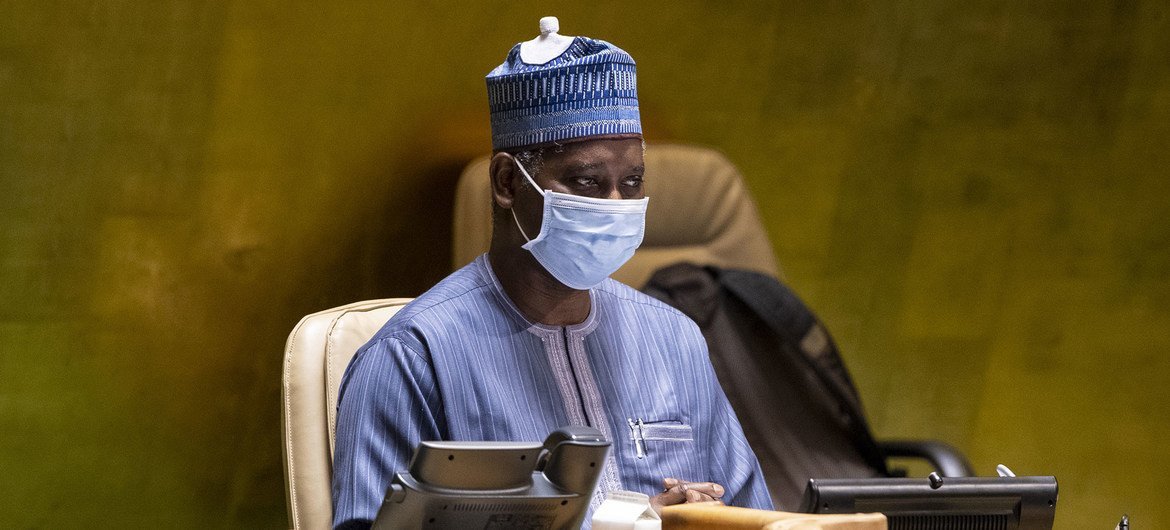
Тиджани Мохаммад Бандер председательствует на первом "очном" заседании Генассамблеи с начала пандемии COVID-19.
3 сентября 2020

Сегодня в зале Генеральной Ассамблеи впервые за шесть месяцев с начала пандемии COVID-19 собрались представители всех 193 государств-членов ООН. Все предыдущие встречи делегатов Генассамблеи проходили в виртуальном формате. Сегодняшнее пленарное заседание стало своего рода репетицией перед открытием юбилейной 75-й сессии Ассамблеи, которая стартует 15 сентября. 

«Несмотря на то, что мы не собирались в этом зале с марта, делегаты, находящиеся в Нью-Йорке, и в условиях пандемии COVID-19 продолжали неустанную работу по продвижению ценностей и принципов, заложенных в Уставе ООН», - заявил Председатель текущей сессии Генассамблеи Тиджани Мохаммад Банде.

Встречи комитетов Генассамблеи и ее пленарные заседания в последние несколько месяцев шли в виртуальном формате. Тем не менее, члены Генассамблеи приняли более 70 решений и резолюций и даже провели выборы новых непостоянных членов Совета Безопасности, Председателя Экономического и Социального Совета, а также Председателя предстоящей 75-й сессии Генеральной Ассамблеи. Им стал  турецкий дипломат, политический деятель Волкан Бозкыр.

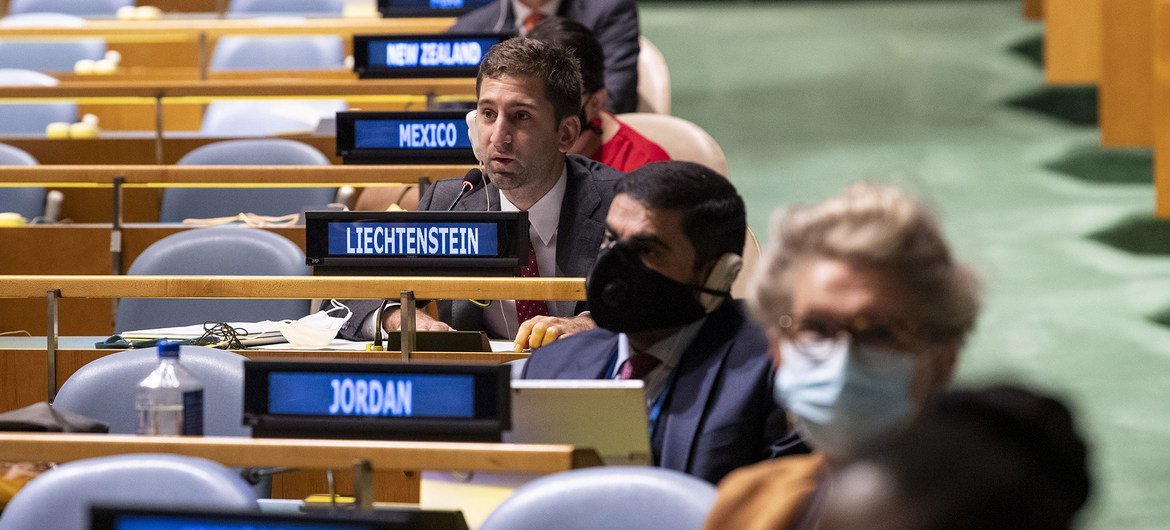
Тиджани Мохаммад Банде поблагодарил присутствующих – а в обычно полном зале находилось лишь по одному представителю от каждой страны – за твердую позицию в поддержку солидарности в борьбе с COVID-19. Одна из резолюций касалась необходимости обеспечить всеобщий доступ к лекарствам и медицинскому оборудованию.

Фото ООН/Э.Дебебе
В Нью-Йорке состоялось первое за полгода «живое» заседание Генассамблеи ООН

Пандемии коронавируса будет посвящено одно из сентябрьских заседаний в ходе сегмента высокого уровня, который традиционно проходит во вторую неделю каждой новой сессии Генассамблеи.

Каждый год в это время в Нью-Йорк съезжались главы государств и правительств, а также министры всех 193 стран-членов ООН. В этом году все будет иначе. Ожидается, что мировые лидеры обратятся к мировому сообществу по видеосвязи, а в зале заседаний во время прений будут присутствовать, как и сегодня, по одному представителю от каждой страны

 
https://news.un.org/feed/view/ru/story/2020/09/1385132
https://creativecommons.org/licenses/by/3.0/legalcode

США расширили список санкций по Ирану - Минфин


Власти США расширили список санкций по Ирану, добавив в него три физических лица и 11 юридических лиц. Об этом сообщается в пресс-релизе, распространенном в четверг американским Минфином.

Как отмечается в сообщении, попавшие в санкционные списки компании базируются в Иране, ОАЭ и Китае. Рестрикции вводятся за причастность этих юрлиц к реализации «поставок и продажи иранской нефтехимической продукции». Ограничительные меры в отношении трех физических лиц вводятся за их связь с указанными компаниями.

«Продажа продукции нефтехимической отрасли остается для иранского режима ключевым источником дохода, что помогает ему финансировать [оказание] дестабилизирующей поддержки коррумпированным режимам и террористическим группировкам на все Ближнем Востоке, а в последнее время и в Венесуэле», - утверждает Минфин США.

Попадание физических и юридических лиц в американский черный список означает заморозку их активов в США, запрет для американских граждан или компаний вести бизнес с ними. Запрет распространяется и на иностранные финансовые учреждения.

Информационное агентство России ТАСС

https://www.finanz.ru/novosti/aktsii/ssha-rasshirili-spisok-sankciy-po-iranu-minfin-1029561230
https://creativecommons.org/licenses/by/3.0/legalcode

"Переговоров не будет, я не вижу этого" - президент Карабаха


Президент Карабаха Араик Арутюнян на встрече с президентом Армении (10 июля 2020). Степанакерт
Араик Арутюнян не видит готовности Азербайджана к мирному урегулированию и считает бессмысленным обсуждать какое-либо соглашение с Баку.

ЕРЕВАН, 2 сен – Sputnik. Народ Карабаха должен готовиться к войне, а не к переговорам. Об этом на пресс-конференции заявил президент Нагорного Карабаха Араик Арутюнян


"Давайте быть реалистами и готовиться к войне, а не обсуждать тему переговоров. Переговоров не будет, я не вижу этого. Азербайджан не настроен на переговоры, он обстреливает позиции Армении, угрожает ударом по атомной электростанции, заявляет, что Степанакерт и Арцах должны быть азербайджанскими… О чем тут можно говорить?", - сказал президент.

Арутюнян добавил, что для него неприемлем ни один из известных пакетов и договоров между Арменией и Азербайджаном. По его словам, армянская сторона не собирается обсуждать варианты, которые могут ослабить безопасность Карабаха.

"Наши шаги ясны - мы укрепляем армии, принуждаем противника считаться с силой Арцаха. Пока Баку продолжает свою агрессивную риторику, ни о каких переговорах не может быть и речи", - заявил Арутюнян.

Армения проверяет информацию о переброске турецких наемников из Сирии в Карабах>>

Отметим, что в июле этого года азербайджанские ВС обстреляли армянские позиции на Тавушском направлении границы и попытались их атаковать. Это была первая эскалация между азербайджанскими и армянскими ВС на границе Республики Армения, а не на территории Нагорного Карабаха со времен карабахской войны 90-х.

https://m.ru.armeniasputnik.am/karabah/20200902/24321244/Peregovorov-ne-budet-ya-ne-vizhu-etogo---prezident-Karabakha.html?mobile_return=no

https://creativecommons.org/licenses/by/3.0/legalcode