вторник, 1 октября 2019 г.

Millions of Afghans have ‘voted not just for a president, but also for democracy’, UN Assembly told


UN Photo/Cia Pak


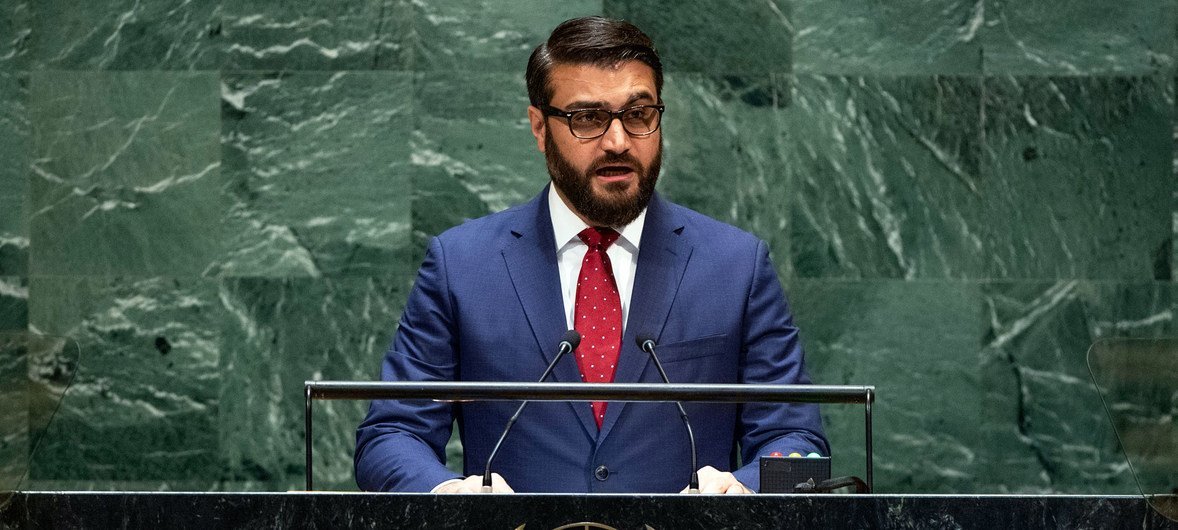
Hamdullah Mohib, Chair of Delegation of Afghanistan, addresses the 74th session of the United Nations General Assembly’s General Debate. (30 September 2019)


30 September 2019

UN Affairs


Just two days ago, some three million Afghans faced the threat of terrorism and headed to the polls, to “vote not just for a president, but also for democracy,” Hamdulla Mohib, Afghanistan’s National Security Adviser told the UN General Assembly on Monday, adding that no matter the outcome of the elections, “peace is and will remain the Government’s priority.”


Congratulating his fellow Afghans for exercising their right to vote, even some who had had their fingers cut off by the Taliban in previous polls,” Mr. Mohib wholeheartedly thanked the “brave and professional Afghan National Defense and Security Forces for protecting that right.”

Indeed some 70,000 soldiers protected the citizenry and “because of their professionalism, most of the attacks – and all attacks that were intended to inflict mass casualties on civilians – were averted.”

“The next step in the journey to peace will be taken by Afghans, just as the first step was,” he continued, giving credit to Afghan women, “the first Afghan citizens to unite nationally around an agenda for peace.” Indeed, this past February, some 15,000 women from 34 provinces had been consulted on what would be acceptable to them in any peace agreement.

Mr. Mohib went on to highlight the historic national consultations that had been held in April and told the Assembly that as Afghanistan prepares to take the next step forward in the process, “we are committed to the principles of inclusivity, sustainability and dignity.

“No Afghan,” he said, “will truly be able to live in peace and freedom, until the day that every single Afghan lives in peace and freedom. It is the day we know we achieve with our international friends and partners.”

“Increasingly, Afghanistan is a country driven and defined by the expectations of its youth,” he said, explaining that this generation of young Afghans had been born and raised in war. “We are the new Afghanistan … We believe in our abilities to bring about peace we have hoped for all our lives.”

He said the message of the Afghan people to the “Taliban and their foreign sponsors is: join us or we will continue to fight.” Thanking the country’s international friends and partners that had supported the peace effort, he stressed the Afghan people have demanded a ceasefire immediately to stop the bloodshed and that talks must take place between the Government and the Taliban.

Stressing the need to extinguish the ideologies behind terrorism, he called for stronger institutional cooperation and collective security which considers the nexus of transnational criminal activities as a whole, including the flow of terrorist fighters, their recruitment and resources that allow them to remain lethal.

Mr. Mohib went on to underscore the effects of climate change and humanitarian crisis, saying that Afghanistan, a predominately agricultural economy, has felt tremendous adverse effects of climate change.

Prolonged drought has been a matter of life and death, driving many out of their homes and into severe poverty, he noted, recalling the upcoming Conference of the Parties to the UN Framework Convention on Climate Change (COP25) meeting in Chile in December.


https://news.un.org/en/story/2019/09/1048272
http://creativecommons.org/licenses/by/3.0/legalcode

DPRK reports ‘little progress’ since historic June 2018 summit with US


UN Photo/Cia Pak


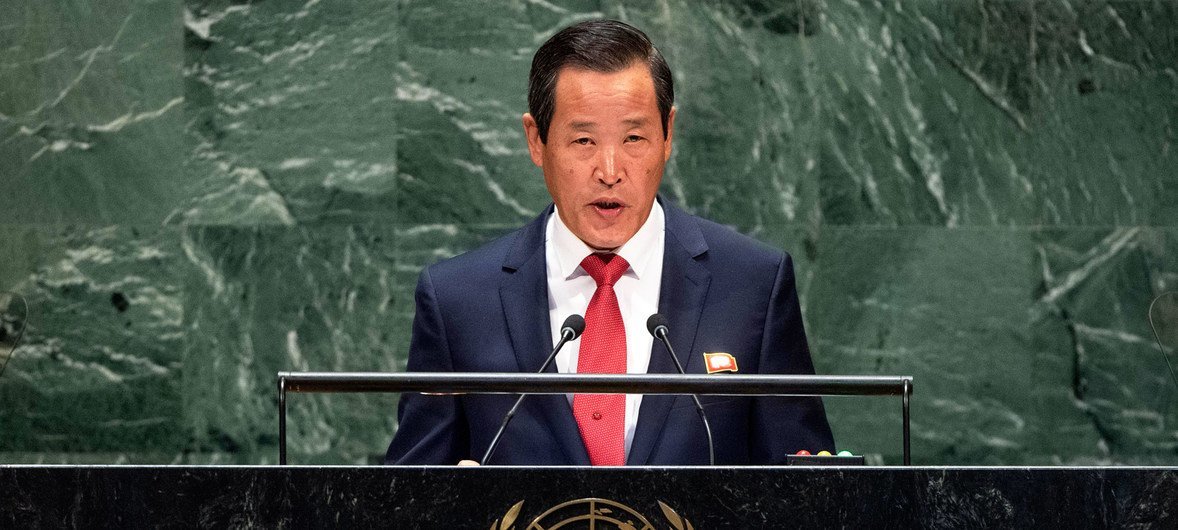
Kim Song, Chair of Delegation of the Democratic People's Republic of Korea, addresses the 74th session of the United Nations General Assembly’s General Debate. (30 September 2019)


30 September 2019

UN Affairs


Lack of progress in achieving peace on the Korean Peninsula is “entirely attributable” to the United States, a senior official from the Democratic People’s Republic of Korea (DPRK) told the UN General Assembly on Monday.


Kim Song, head of the country’s delegation, observed that more than a year has passed since DPRK leader Kim Jong Un and US President Donald Trump issued a joint statement following a historic summit in Singapore in June 2018.

It included security guarantees from Washington while the DPRK, also referred to as North Korea, committed to complete denuclearization of the Korean Peninsula.

“However, the relations between the DPRK and the US have made little progress so far and the situation of the Korean peninsula has not come out of the vicious cycle of increased tension, which is entirely attributable to the political and military provocations perpetrated by the US resorting to the anachronistic hostile policy against the DPRK,” Mr. Song said.

“It depends on the US whether the DPRK-US negotiations will become a window of opportunity or an occasion that will hasten the crisis.”

Last year also saw strides in the relationship between the DPRK and its neighbour to the south, the Republic of Korea.

Pyongyang and Seoul held three summits in 2018 covering numerous measures included denuclearization, but also on bringing an official end to the Korean War, which began in 1950. Although fighting ended three years later, the sides failed to reach agreement on a peace treaty.

Mr. Song reported that the inter-Korean dialogue has also flatlined, and he blamed “the double-dealing behavior of the South Korean authorities”, as evidenced by joint military exercises conducted with the US.

“The improvement of inter-Korean relations can only be achieved when the South Korean authorities put an end to big-Power worship and the policy of dependence on foreign forces encroaching upon the common interests of the nation and fulfill their responsibility assumed before the nation by implementing the inter-Korean declarations in good faith,” he stated.

On the development front, Mr. Song informed that his country is part of the global push to create a better world for all people and the planet.

He said the DPRK is taking efforts to achieve the Sustainable Development Goals (SDGs) “through vigorous struggle to build a powerful socialist country, upholding the banner of self-reliance”.

He further stressed the need for all 193 UN Member States to create a peaceful environment to realize the Goals by 2030.

In this regard, Mr. Song expressed his country’s solidarity with nations including Syria, Cuba and Venezuela.


https://news.un.org/en/story/2019/09/1048232
http://creativecommons.org/licenses/by/3.0/legalcode
UN General Assembly President upholds value of multilateralism in speech closing annual debate


UN Photo/Cia Pak


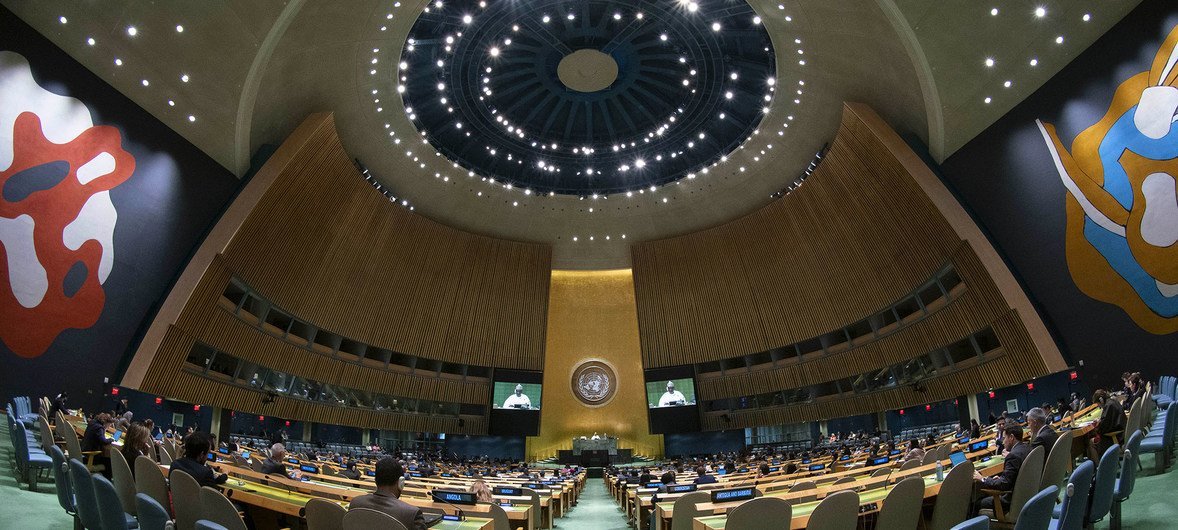
Tijjani Muhammad-Bande, President of the seventy-fourth session of the General Assembly, closes the general debate of the seventy-fourth session of the General Assembly. (30 September 2019)


30 September 2019

UN Affairs


The only way to guarantee peace, security and sustainable development is for countries to work together, the UN General Assembly president said in his speech on Monday concluding the annual high-level debate in the Hall.


Tijjani Muhammad-Bande underscored the value of multilateral cooperation in addition to what he described as “the give-and-take spirit” that defines it.

“It is perfectly legitimate to raise questions about the essence of, and the need for, multilateralism,” he said.

“All the same, even when we disagree on how the world should be organized to respond to or anticipate mounting challenges, we shall eventually come to common cause on the need for a rules-based international order."


Indeed, the broad participation in this year’s General Debate had shown that far from being an out-moded principle, multilateral cooperation remains an accepted and reliable method of managing relations among nations.

The debate began on Tuesday and saw active participation by Heads of State or other senior officials from 192 of the 193 UN Member States.

While the General Assembly is the UN body where these countries have equal representation, Mr. Muhammad-Bande pointed out that only 16 had women deliver their national statements.

“When we speak of a representative United Nations, this is clearly not what we mean,” he said, calling for wider participation of women.

“By a representative UN we mean a body that allows every human being to realize his or her fullest potential, unhindered by his or her gender or by history of advantage. Gender equality in the contemporary world is still a work in progress. We therefore need to double our efforts to speed up the process of including women, not only in decision-making structures but also in the list of speakers billed to address this high-level forum.”

This year’s high-level week was marked by five major summits on global challenges such as climate action and universal access to health care.

Mr. Muhammad-Bande recalled that young people also made their voices heard during this period, with millions worldwide taking to the street for the global climate strike. They also took over the General Assembly for a Youth Climate Action Summit.

“Let me assure you, youth, we hear you,” he said. But that ‘I hear you’ does not mean you should lower the volume. You should continue to make your voice heard at every opportunity you have

Another summit underlined the need for additional financing to realize the promise of the Sustainable Development Goals (SDGs) before the deadline of 2030.

World leaders adopted the 17 SDGs four years ago with the aim of eradicating extreme poverty, promoting greater equality and protecting the environment for the benefit of all people, but also the planet.

As another $2.4 trillion is needed to meet these commitments, the General Assembly president suggested countries could work to curb illicit financial flows which siphon $2.6 trillion annually from the global economy.

“We must also accord good governance high priority,” he said. “This is to ensure that corruption does not continue to derail progress and fuel conflict as we approach the year 2030,” he said.


https://news.un.org/en/story/2019/09/1048242#targetText=UN%20General%20Assembly%20President%20upholds%20value%20of%20multilateralism%20in%20speech%20closing%20annual%20debate&targetText=The%20only%20way%20to%20guarantee,level%20debate%20in%20the%20Hall.
http://creativecommons.org/licenses/by/3.0/legalcode

Monday's Daily Brief: Hopes rise for peace in Syria and Yemen, UNGA speeches end, Guterres saddened by India flood deaths


© UNICEF/Aaref Watad

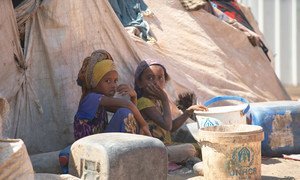
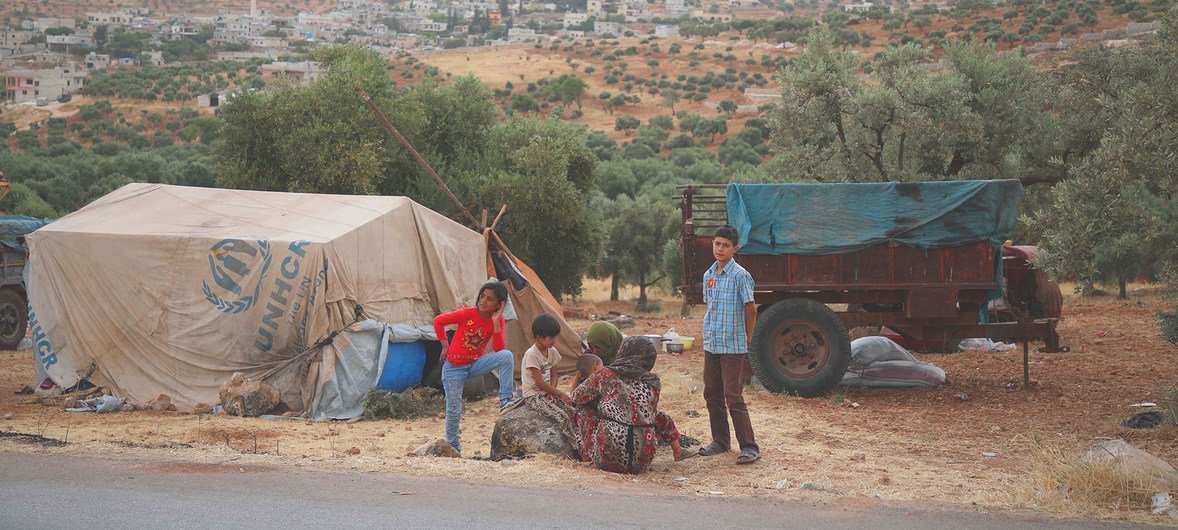
A family fleeing hostilities in Idlib set up a makeshift camp in Aqrabat village, near the Turkish border. (3 June 2019)


30 September 2019

Peace and Security


'Sign of hope' for long-suffering Syrians as new committee forms; Yemen prisoner release signals hope for Yemen; Assembly President closes formal Debate; Refugees evacuated from Libya to Rwanda; Multilingualism observed on World Day.

Constitutional Committee breakthrough offers ‘sign of hope’ Syrians


There is a “sign of hope for the long-suffering Syrian people” as a Syrian-led, Syrian-owned, credible and inclusive Constitutional Committee is set to start deliberations next month, the United Nations Special Envoy for the country told the Security Council on Monday.

As the “first concrete political agreement” between Government and opposition groups, it “implies a clear acceptance of the other as an interlocutor", said Geir O. Pedersen. “It commits their nominees to sit together in face-to-face dialogue and negotiation, while at the same time opening the space for civil society at the table”.

Get our coverage here.
UN chief saddened by death toll, displacement in India, due to major flooding

The UN chief said on Monday he was "saddened by the loss of life" across the Indian states of Uttar Pradesh and Bihar over the past few days, due to heavy rains which sparked major flooding.

More than 100 have reportedly died since Thursday. In a statement issued by his Spokesperson, Secretary-General António Guterres, said the rains had also caused "displacement of people and destruction of property due to monsoon rains and associated flooding".

"He extends his condolences and solidarity to the families of the victims, to the Government and people of India and wishes those injured a speedy recovery", said the statement.

Mr. Guterres said the UN stood ready to work with the authorities "as they respond to the humanitarian needs resulting from this ongoing monsoon season."
Curtain closes on UN General Debates


As the 74th General Assembly Debate comes to a close, the UN body’s President declared multilateralism “the only guarantee” of peace and sustainable development for the future.

“The world will not survive for long unless we cultivate the give-and-take spirit which is a distinct and defining attribute of multilateralism,” Assembly President Tijjani Muhammad-Bande told delegates.

“It is gratifying to note that even those who are a bit skeptical about the direction of multilateralism acknowledge this much. Active participation in the General Debate by 192 of our 193 Member States is the clearest indicator of the acknowledgement of the interdependence between and among nations”, he added.

The Assembly chief went on to praise world leaders and General Debate participants for strides made in the climate dialogue, elimination of nuclear weapons, and global finance, among others.

Full story here.

Yemen prisoner release boosts hopes of peace at last for war-weary civilians


Hopes for a possible end to the war in Yemen are growing slightly, following news that nearly 300 detainees have been released as a gesture of goodwill by Houthi forces, pitted against the Government of Abd Rabbu Mansour Hadi.

Welcoming the development, UN Special Envoy for Yemen, Martin Griffiths, said he hoped that it would lead to both sides meeting at “the nearest opportunity” to resume the discussions on a future exchange, as per the UN-led deal signed by their representatives in the Swedish capital last December.

Read the full story here.

First group of vulnerable refugees evacuated from Libya to Rwanda


A group of 66 vulnerable refugees have been successfully evacuated from Libya to Rwanda, the UN’s support Mission in Libya (UNSMIL) announced on Sunday, making the group the first to benefit from the recently-implemented Emergency Transit Mechanism.

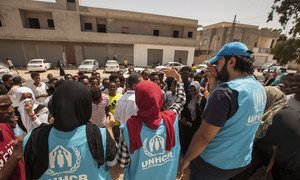
After landing at Kigali International Airport on Thursday morning, all were granted asylum-seeker status, pending assessment of their refugee claims by the UN’s refugee wing (UNHCR).

In total, 26 of the evacuees were children, nearly all unaccompanied, hailing from Sudan, Somalia and Eritrea. One of the youngsters had not been outside a detention centre for more than four years.
International Day recognizes pivotal role of multilingualism for peace


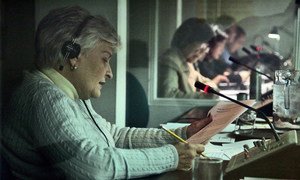
The world is paying tribute to the work of language professionals, who play a vital role in all international relations and dialogue for peace, on International Translation Day, observed 30 September.

Transposition of a literary or scientific work between languages, and interpretation are indispensable to preserving clarity and productivity in international relations and interpersonal communication, the UN says.

The UN is one of the world’s largest employers of language professionals, employing several hundred language staff between New York, Geneva, Vienna, Nairobi and other regional commissions.

Listen to or download our audio News in Brief for 30 September on Soundcloud:


:

 https://news.un.org/en/story/2019/09/1048212

http://creativecommons.org/licenses/by/3.0/legalcode
Constitutional Committee breakthrough offers ‘sign of hope’ for long-suffering Syrians


© UNICEF/Aaref Watad


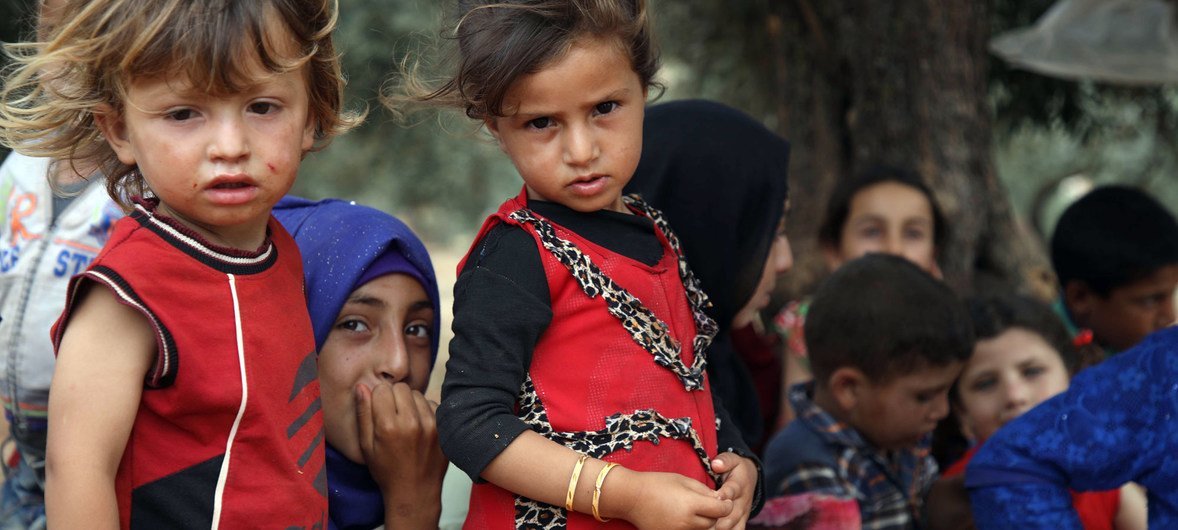
Children rest beneath a tree in a makeshift camp in Aqrabat village, near the Turkish border, after fleeing hostilities in Idlib. (June 2019)


30 September 2019
Peace and Security


There is a “sign of hope for the long-suffering Syrian people” as a Syrian-led, Syrian-owned, credible and inclusive Constitutional Committee is set to start deliberations next month, the United Nations Special Envoy for the country told the Security Council on Monday.


As the “first concrete political agreement” between the Government and opposition groups, it “implies a clear acceptance of the other as an interlocutor”, said Geir O. Pedersen. “It commits their nominees to sit together in face-to-face dialogue and negotiation, while at the same time opening the space for civil society at the table”.


UN Special Envoy for Syria@UNEnvoySyria
· 11 ч


.@GeirOPedersen In one month, on 30 October, I intend to convene 150 Syrian men & women for the launch of a Syrian-led, Syrian-owned, credible, balanced & inclusive Constitutional Committee facilitated by the @UN in Geneva


UN Special Envoy for Syria@UNEnvoySyria


.@GeirOPedersen Constitutional Committee will really matter if it becomes a step along the difficult path out of this conflict & to new Syria & if its launch & work is accompanied by other steps to build trust & confidence among Syrians & between Syria & international community.
4
17:18 - 30 сент. 2019 г.
Информация о рекламе в Твиттере и конфиденциальность
Смотреть другие твиты UN Special Envoy for Syria


After years of intense negotiation, Secretary-General António Guterres announced last Monday that the Syrian Government and the Syrian Negotiations Commission had agreed to form “a credible, balanced and inclusive Constitutional Committee that will be facilitated by the UN in Geneva”.

It offers “a new social contract to help repair a broken country”, he flagged, saying it “can be a door opener to a wider political process” and, if accompanied by other steps to build trust and confidence among Syrians and the international community, “a step along the difficult path out of this conflict”.
Nuts and bolts

The agreement’s core terms of reference are framed by the key principles of respect for the UN Charter, Security Council resolutions, Syria’s sovereignty, independence and territorial integrity.

The UN envoy spelled out that the constitutional reforms adopted by the Committee “must be popularly approved and transposed into the national legal order by a means that will need to be agreed”.

He outlined the Committee’s structure, which will consist of “equal co-chairs” one from the Government, the other from the opposition; a 45-person body consisting of 15 Government, 15 opposition and 15 civil society members to prepare and draft proposals; and a 150-person body from the same sectors, each with 50 members, to discuss and adopt proposals – with a 75 per cent decision-making threshold.

Noting that the UN will release the names of the 150 members after they have been confirmed, he pointed out that the 50 civil society actors hail from different religious, ethnic and geographical backgrounds; some live inside Syria while others are based outside; and nearly half are women.


“Both parties have told me that they have confidence in the United Nations and want to work with us in a sustained and constructive manner”, said Mr. Pedersen, adding: “We will do everything we can to meet their expectations”.

“Ensuring sufficient credibility, balance and inclusivity…has been a key priority”, the UN envoy said, admitting that “the result is a negotiated compromise, and like all compromises, no one is completely satisfied”.

Lauding the “outstanding work” of “Syrian experts and activists, men and women, on all sides” that have helped create this new public space for democratic and civic debates, he acknowledged that not all of them could be on the Committee, but expressed confidence that “they will continue to make their voices heard”.

“The future constitution of Syria belongs to the Syrian people and them alone”, he stressed.

“Syrians, not outsiders, will draft the constitution, and the Syrian people must popularly approve it”, maintained Mr. Pedersen.

Pointing to the continuing humanitarian crisis in Idlib; ongoing terrorism concerns; violence - and the plight of displaced, abducted and missing civilians - the Special Envoy recognized that many challenges persist, and appealed to all parties to “seize upon the momentum that the Committee offers and take concrete actions, to build trust and confidence”.

“Step by step”, Mr. Pederson told Council members, “we need to build the kind of safe, calm and neutral environment that could make Syrians feel that the political process can restore their country and respond to their aspirations”.


https://news.un.org/en/story/2019/09/1048162
http://creativecommons.org/licenses/by/3.0/legalcode
‘We need to stand up now’ for the elderly: urges UN rights expert on World Day


© Centro de la Diversidad Cultural, 2013, with UNESCO's permission
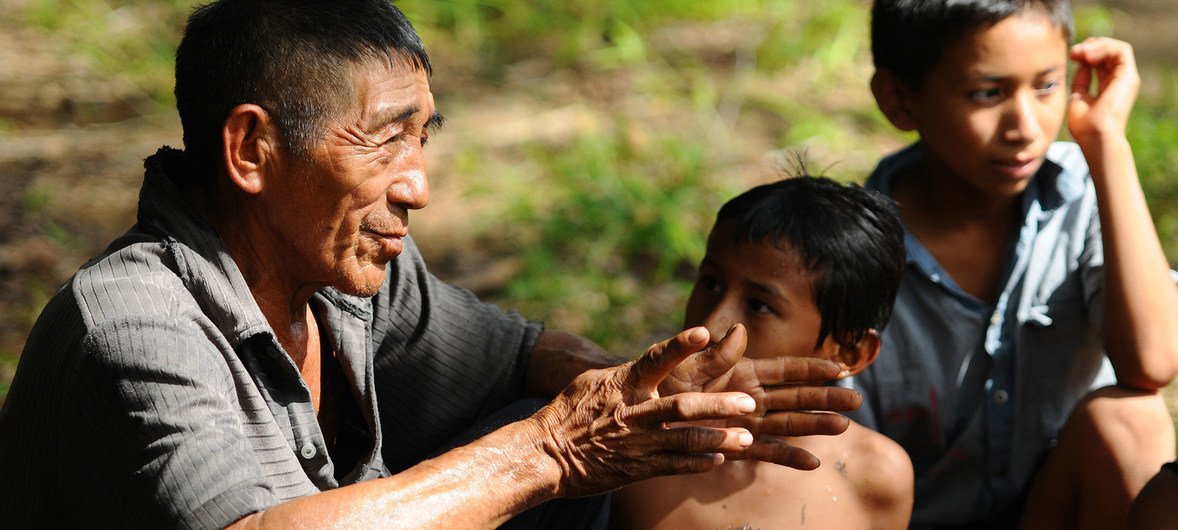
An elder man talks to children according to the Mapoyo oral tradition.


30 September 2019
Human Rights


In the coming decade, the number of persons aged 60 or over is projected to grow by 46 per cent, making the increase in those officially classified as elderly, one of the “most significant transformations of this century,'' the United Nations declared on Tuesday, marking the International Day of Older Persons.


By 2030, 1.4 billion elderly people globally will outnumber youth - a big rise from 2017, when that figure stood at 962 million.

Numbers in the developing world are seeing the steepest hikes. In South-East Asia alone, the elderly account for nearly 10 percent of the population as of 2017, compared to eight percent in 2010. This number will continue to increase, with older people expected to make up 13.7 percent of the population by 2030, according to regional World Health Organization (WHO) data.

Given this “demographic revolution”, greater attention must be paid to specific vulnerabilities the elderly face, the UN Independent Expert on the enjoyment of all human rights by older persons, Rosa Kornfeld-Matte, said in a statement.

Unlike refugees, women and children, persons with disabilities or other groups, older persons are not protected by any specific human rights instrument; which may explain the lack of representation of the unique challenges faced by the elderly, in terms of global policy, including the Sustainable Development Goals (SDGs), she explained.

“We need to stand up now for older person’s rights” Ms. Matte pressed, “while we aspire to live for as long as possible, we do not want to age. Pervasive gerontophobia, the fear of age-related self-degeneration and death, nurtures prejudice against older people, discrimination and ultimately the denial of human rights in older age.”

Disparities in old age reflect an accumulated disadvantage, stemming from location, gender, socio-economic, health and income factors, the UN says.

The Day’s theme this year, “The Journey to Age Equality”, aims to empower older persons in all dimensions of development, including promoting their active participation in social, economic and political life as a means of ensuring their inclusiveness.

The 2019 focus on equality is in line with the 2030 Sustainable Development Agenda, specifically SDG 10, the target to reduce inequality within and among countries and ensure equal opportunities for all.

Urging all to defend the rights of older persons, Ms. Matte said “We all are duty bound to ensure that future generations – our children and grandchildren – as they grow older, are seen as valuable contributors to society.

“Young people, those in positions of power today, need to realise that they too will age. It is for them to shape older people’s reality and the future they want,” she added.


https://news.un.org/en/story/2019/09/1048252
http://creativecommons.org/licenses/by/3.0/legalcode
В Аргентине определились кандидаты на пост президента


23 июня 2019, 15:35


© СС0 Public Domain

В октябре 2019 года за пост президента Аргентины поборются девять кандидатов, в том числе действующий глава государства Маурисио Макри.

Как сообщает газета La Nacion в 01:00 (07:00 мск) завершился срок подачи заявок и регистрация кандидатов была прекращена.

Одним из главных претендентов на победу является Макри, который идет на выборы от специально созданного для этой цели альянса «Вместе за перемены». Его вице-президентом в случае победы станет сенатор Мигель Пичетто.

Серьезную конкуренцию Макри составит экс-премьер Альберто Фернандес в тандеме с потенциальны вице-президенты Кристиной Фернандес де Киршнер, которая была главой государства с 2007 по 2015 год. Они будут представлять левоцентристский альянс «Фронт для всех».

Кроме того, за пост президента поборются бывший министр экономики Роберто Лаванья, а также менее популярные кандидаты Николас дель Каньо, Мануэла Кастаньейра, Хосе Луис Есперт, Гомес Сентурион, Алехандро Бьондини и Хосе Ромеро Ферис.


http://www.rosbalt.ru/world/2019/06/23/1788333.html
http://creativecommons.org/licenses/by/3.0/legalcode