среда, 1 мая 2019 г.

Путин назначил нового посла России в Белоруссии


30 апреля 2019, 21:19

Президент РФ Владимир Путин подписал Указ о назначении Дмитрия Мезенцева Чрезвычайным и Полномочным Послом Российской Федерации в Республике Беларусь. Соответствующий документ публикует пресс-служба Кремля.

Другим указом Путин освободил Михаила Бабича от обязанностей посла России в Белоруссии, а также от должности спецпредставителя президента России по развитию торгово-экономического сотрудничества с Республикой Беларусь «в связи с переходом на другую работу».

Ранее СМИ сообщали, что решение об отзыве Бабича с этой должности обсуждалось с прошлой недели. Как писала газета «Коммерсант», отставка Бабича связана с неоднократными просьбами белорусского лидера Александра Лукашенко, которые тот адресовал лично российскому коллеге Владимиру Путину.

А на днях МИД Белоруссии обвинял Бабича в попытке разрушить отношения Москвы и Минска.

Напомним, что Михаил Бабич назначен главой дипмиссии в Минске в 2018 году. Ранее он работал полномочным представителем президента РФ в Приволжском федеральном округе.

Дмитрий Мезенцев с 1 января 2016 года является членом Совета Федерации от Сахалинской области. До этого, с 1 января 2013 года по 31 декабря 2015 года, занимал должность генерального секретаря Шанхайской организации сотрудничества, с 8 июня 2009 года по 18 мая 2012 года был губернатором Иркутской области.


http://www.rosbalt.ru/russia/2019/04/30/1779183.html
http://creativecommons.org/licenses/by/3.0/legalcode

Secretary-General's video message on the 50th Anniversary of the United Nations Population Fund


30 April 2019

I congratulate the United Nations Population Fund on its 50th anniversary.

Your work has saved lives and improved the well-being of people around the world.

Your efforts have been particularly instrumental in enabling women and couples to access the sexual and reproductive health care they need; in preventing gender-based violence; in tackling female genital mutilation and early marriage, and in empowering young people.

UNFPA has also been a leader in advancing the landmark Cairo Programme of Action on Population and Development and in mobilizing action to achieve the Sustainable Development Goals.

Today, the world needs UNFPA more than ever. You can count on my support as your vital work continues.

I wish you the best as you mark this milestone.


https://www.un.org/sg/en/content/sg/statement/2019-04-30/secretary-generals-video-message-the-50th-anniversary-of-the-united-nations-population-fund
http://creativecommons.org/licenses/by/3.0/legalcode

Gains by Abyei interim force can help advance resolution of border issues between Sudan and South Sudan, UN peacekeeping chief says


UN Photo/Stuart Price

UNMIS Troops prepare for a patrol in Abyei (file).

30 April 2019

Peace and Security

The United Nations security force for Abyei remains essential to stability in the border regions between Sudan and South Sudan, the UN peacekeeping chief said on Tuesday, proposing the creation of a civilian unit to support progress towards political resolution of the dispute between the neighboring countries, and requesting a six-month extension of its mandate.

“This modest shift in the mission’s role is necessary to match the reality on the ground,” Jean-Pierre Lacroix, Under-Secretary-General for Peacekeeping Operations said during a briefing to the Security Council on the Secretary-General’s latest report on the work of the UN Interim Security Force, known by the acronym UNISFA.

He explained that a civilian component would enable the mission to support the parties, the African Union High-Level Implementation Panel and the African Union Commission to advance daily solutions.


UN Photo/Loey Felipe


Jean-Pierre Lacroix, Under-Secretary-General for the Department of Peace Operations, briefs the Security Council on the situation in the Sudan and South Sudan including the situation in Abyei.


“The proposed support is particularly pertinent given the difficult internal circumstances in both countries,” noted Mr. Lacroix, adding: “It is important to prevent the dispute over Abyei and the border regions between Sudan and South Sudan from becoming another frozen conflict and preserve the gains achieved by UNISFA.”


Stressing that while the situation generally remains calm – amid efforts by the Ngok Dinka and Misseriya communities to preserve peace through dialogue – Sudan and South Sudan have made no progress on the issue of Abyei.


Further, there have been delays in the Council’s request to reconfigure the mission, he said. The first phase of troop reductions – a repatriation of 260 troops by 15 March – has not taken place, but efforts are under way to start the process on 12 May.


As for the increase in police personnel, while the selection of police officers and the formed police unit has been completed, 130 visas from the Sudanese Government, necessary for their deployment, remain outstanding.


Against this background, Mr. Lacroix said that while UNISFA continues to play a stabilizing role in the Abyei Area and along the border regions, the operation can only provide a conducive environment for the parties, whose own efforts remain essential to progress.


“I am encouraged by the significantly improved relations between the two countries in the past year, as evidenced by Sudan’s role in facilitating the revitalized peace agreement reached by the South Sudanese parties and the resumption of joint oil operations,” he told the Council, urging the two countries to continue this “positive trajectory” and extend their cooperation to move forward on the resolution of their disputes.

UN Photo/Evan Schneider


Parfait Onanga-Anyanga, Special Envoy of the Secretary-General for the Horn of Africa, briefs the Security Council on the situation in the Sudan and South Sudan including the situation in Abyei.

Gains in relations between Sudan and South Sudan should not be lost


Also briefing the Council, Parfait Onanga-Anyanga, the UN Secretary-General’s Special Envoy for the Horn of Africa, said that both id Sudan and South Sudan “are at a crossroads with critical political processes under way.”


Following the ouster of Sudan’s President on 11 April after months of popular protests, the new authorities may need time to resume bilateral relations on the border, the Two Areas and Abyei.


“We have a de facto status quo situation,” he said. In the absence of a joint administration and progress on Abyei’s final status, UNISFA remains central to preventing and resolving intercommunal conflicts.


In the coming weeks, he will encourage the respective capitals, Khartoum and Juba, to take a fresh look at the Abyei file, with a focus on implementing temporary arrangements for the Area’s administration.


Noting that Sudan’s political transition could allow for redefining relations between the “centre” and its “peripheries” in a way that ends discrimination based on ethnicity, religion and territorial belonging, he said he will encourage parties to resolve the conflicts on the basis of a new political dispensation.


https://news.un.org/en/story/2019/04/1037631
http://creativecommons.org/licenses/by/3.0/legalcode

Выборы в Испании: победили социалисты, ультраправые прошли в парламент


3 часа назад


Правообладатель иллюстрации AF PImage caption


Явка была самой высокой с 2008 года, особенно высокой в Мадриде и Каталонии


На прошедших в воскресенье выборах в Испании правившая до этого Социалистическая партия победила, но не получила абсолютное большинство мест с парламенте. Чтобы сформировать правительство, ей потребуется поддержка других партий. Главной сенсацией стала ультраправая партия Vox, она впервые проходит в парламент, набрав чуть более 10% голосов.

По итогам подсчета 99,4% бюллетеней, социалисты получили 28,7% голосов.


Правоцентристская Народная партия, неоднократно сменявшая социалистов у власти со времени перехода к демократии после диктатуры Франко, показала наихудший результат в своей новейшей истории - 16,7% голосов. Многие считают, что у нее отобрали голоса ультраправые.

Как и в других европейских странах, в Испании резко выросла популярность радикальных правопопулистских политических сил.


Партия Vox выступает против мультикультурности, феминизма и неограниченной иммиграции. По последним данным, она набирает 10,3% голосов, что позволит ей занять в парламенте 24 места из 350.


Премьер-министр социалистов Педро Санчес представлял себя на выборах как главную альтернативу крайне правым.


Социалистам может достаться 123 мандата, их бывшим партнерам по коалиции из левой партии Podemos - 42.

Правообладатель иллюстрации EPA Image caption

Социалисты победили, но абсолютного большинства набрать не смогли


Ни одна из партий не сможет набрать абсолютного большинства голосов и получить больше 176 мандатов. Таким образом, премьеру Санчесу нужно будет формировать коалицию.


Ожидается, что почти все голоса будут подсчитаны к полуночи по местному времени.
Что происходило после кризиса в Каталонии?


Ситуация в Испании остается нестабильной после референдума о независимости Каталонии, признанного испанским правительством незаконным.


Премьер-министр Испании Педро Санчес вынужден был объявить досрочные выборы после того, как депутаты, которые выступают за независимость Каталонии, отказались голосовать за проект бюджета на 2019 год.

Правообладатель иллюстрации  AFP / GETTY IMAGES  Image caption

Слева направо: Педро Санчес из Социалистической партии, Пабло Касадо из Народной партии, Альберт Ривера ("Граждане"), Пабло Иглесиас из Podemos и Сантьяго Абаскаль из Vox


Санчес, занявший пост премьера в июне прошлого года, во время кампании предупреждал, что Испания может повторить судьбу Финляндии, где две недели назад ультраправая партия неожиданно заняла второе место на выборах.
Реванш ультраправых


Долгое время считалось, что в Испании ультраправые политики не имеют перспектив - слишком свежи, как считалось, воспоминания о режиме Франсиско Франко, умершего в 1975 году.

Однако партия Vox в декабре доказала обратное, неожиданно получив более 10 мандатов в местный парламент Андалусии.

Эксперты полагают, что успех ультраправых - реакция на попытку Каталонии объявить независимость. В феврале несколько десятков тысяч человек вышли в Мадриде на акцию протеста против планов испанского правительства назначить посредника для переговоров с сепаратистами.


"Рост популярности Vox - это землетрясение в испанской политике", - говорит Бонни Филд, профессор политологии из Университета Бентли (штат Массачусеттс). В то же время она призывает не преувеличивать успех, которого достигли ультраправые.


В программе Vox, среди прочего, - отмена автономии Каталонии, выдворение мигрантов, противостояние "радикальному феминизму", переговоры о возвращении Гибралтара и запрет партий, выступающих за разделение страны.

Главные проблемы: Каталония и идентичность


Одним из ключевых вопросов предвыборной кампании стала судьба Каталонии. Местные националисты вернулись к власти в Барселоне в мае после семимесячного периода прямого правления Мадрида в регионе.

Правообладатель иллюстрацииREUTERSImage captionПремьеру Педро Санчесу пришлось оправдываться за хорошие отношения с сепаратистами


Педро Санчес выступал за переговоры с сепаратистами, чем навлек на себя обвинения в предательстве родины и связях с "врагами Испании".


За жесткую позицию в отношении Каталонии, помимо Vox, выступают правая Народная партия и либеральная партия "Граждане", предлагающие вернуть прямое правление. Podemos хочет провести еще один референдум.


Несмотря на непростую ситуацию с экономикой и безработицу, эти проблемы практически не упоминалась во время кампании.


"Эти выборы не про экономику, это новая ситуация, с которой мы не сталкивались последние 20 лет. Эта кампания останется связанной с вопросами идентичности, в особенности проблемой Каталонии... кажется, что экономика перестала быть фундаментальной проблемой", - объясняет профессор политологии Университета Валенсии Хуан Родригес Теруэль.
Что дальше?


Аналитики полагают, что голосование может погрузить Испанию в долгий период политической неопределенности, пока политики будут пытаться сформировать коалицию.


Растет риск, что Испании придется проводить еще одни выборы.


https://www.bbc.com/russian/news-48087919
http://creativecommons.org/licenses/by/3.0/legalcode

‘Action and tangible progress’ needed to finally ‘win the peace’ for Syrians: UN envoy


© UNHCR/Andrew McConnell

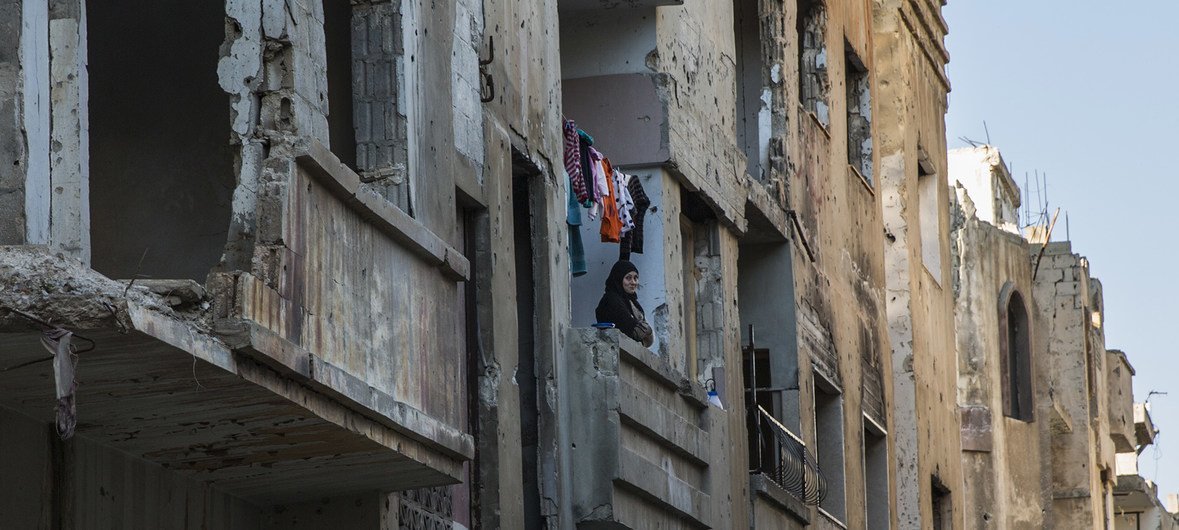
A woman stands on her balcony in the El Khalideh neighbourhood of the Old City of Homs, in Syria. (March 2019)


30 April 2019

Peace and Security


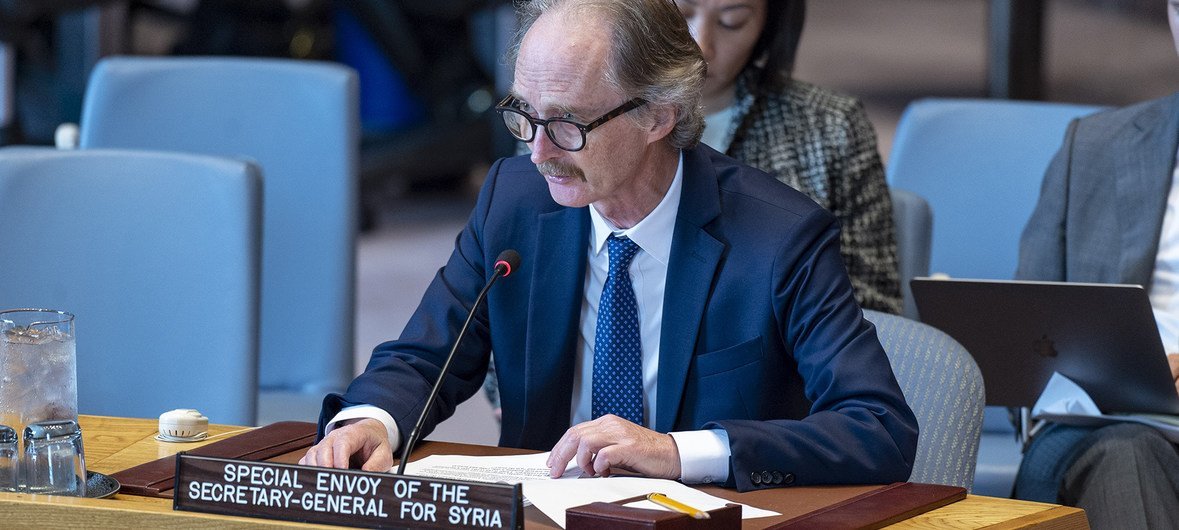
It will take “action and tangible progress” between Syrian Government and opposition leaders, not just dialogue, to bring about lasting peace said the UN Special Envoy for the war-torn country on Tuesday, stressing that Syria “contains many threats for renewed escalation”.


Geir Pedersen, in his second briefing in the job to the UN Security Council in New York, said he had been “doing everything I can” in the past eight weeks, to consult and help bring the "key players" closer together both inside and outside the country.

“Even where violence has abated, the toll of suffering remains staggering”, he said. “There is a desperate need to meet the humanitarian and protection needs of Syrians across the country.”

He noted the “terrible situation” facing 73,000 in the overcrowded Al Hol camp, where many of the families of former extremist fighters, are alongside those displaced by the fall of ISIL – 92 per cent of them women and children.

Helping facilitate “concrete action” over those detained or abducted during eight years of war, would be “an important confidence building measure” said Mr. Pedersen, highlighting also the fate of tens of thousands who have gone missing. “The scale of this issue is of unprecedented proportions. It obliges us to continue our collective attempts to make progress”, he said, adding it would take “months if not year of meticulous and committed work.”


UN Photo/Loey Felipe

Geir Pederson, the UN Special Envoy of the Secretary-General for Syria, addresses the Security 

Council on 30 April 2019.

Scale of suffering ‘weighs heavily on me’

For a political solution to work, it would have to meet the aspirations of the people said the Special Envoy, saying that only weeks into the role, the “terrible scale” of suffering “and the uncertain future of millions, weighs heavily on me, as it should us all.”

The Women’s Advisory Board, he said, “continues to remind us of the specific security, economic and human rights concerns of Syrian women - women who bring diverse experiences and views to the table and share the right to have a voice at the table.”

He expressed optimism that the stalled negotiations over an inclusive Constitutional Committee, to draft a new political roadmap for Syria, could now move forward: “I believe the final terms of the mandate can be agreed, with a modicum of goodwill…Work continues to identify a set of names that, when viewed in totality, can have the support of all concerned” to serve, he added.

Finally, he called for further international engagement and support for a Syrian-led and owned process. “I remain convinced that key international players agree on far more than it might seem", he said, noting that external intervention was “a hard reality of the conflict".

"Syria’s sovereignty, independence, unity and territorial integrity, must be respected and restored - but saying so will not make it so", said Mr. Pedersen.

“External intervention poses real threats to international peace and security. Five international armies operate across Syria’s land and airspace, in tension or even in conflict, generating risks for dangerous escalation. These risks must be contained and ultimately removed”, he told Council members.

He concluded on an upbeat note, said progress was being made: “I hope that next time I brief you, I will be able to report tangible achievements on the long road to a political settlement.”


https://news.un.org/en/story/2019/04/1037621
http://creativecommons.org/licenses/by/3.0/legalcode

Tuesday’s Daily Brief: Guterres calls for restraint in Venezuela, Jazz Day, the importance of breastfeeding, and updates from Libya, Iran and Mozambique


WFP/Mohamed Razak

Aftermath of Hurricane Kenneth at Mieze River, near Pemba, Mozambique, 29 April 2019.


30 April 2019

Humanitarian Aid


This Tuesday, we cover: the cost of almost one month of fighting in Libya's capital; humanitarian responses in Iran and Mozambique following devastating storms and rains; Guterres calls for calm in Venezuela; how breastfeeding can prevent obesity in children; and a very jazzy celebration...

Libya: UN mobilized to support thousands uprooted by Tripoli clashes, renews call for humanitarian truce


Since fighting broke out on the edge of Libya’s capital, Tripoli, earlier this month, over 42,000 people have been displaced and thousands are believed trapped in the city’s southern outskirts. As UN humanitarian teams work around the clock to provide life-saving assistance, human rights chief Michelle Bachelet stressed on Tuesday the urgent need for an immediate ceasefire, and humanitarian corridor for civilians.  

“The escalation of attacks in residential areas, including the use of artillery, rockets and airstrikes is deeply worrying. Thousands of children, women and men’s lives are at risk,” Ms. Bachelet said, calling on all parties to fully respect international human rights and humanitarian law. 

The full update here. 

UN aid teams scramble to reach ‘most remote places’ cut off by Cyclone Kenneth in Mozambique


With heavy rains expected to continue in the coming days across northern Mozambique, access to the most remote areas affected by Cyclone Kenneth “remains difficult” the UN warned on Tuesday.

Humanitarian affairs coordination office, OCHA, reported that heavy rains had paused in the morning around the coastal city of Pemba, with aid workers going flat out to prepare relief flights – including medical supplies – to the island of Matemo, one of the worst-hit by the cyclone.

Find the latest humanitarian updates here. 

UN chief calls for ‘maximum restraint’ in Venezuela amid uncertainty over coup attempt reports

UN chief António Guterres is calling for both Government and opposition forces in Venezuela to exercise “maximum restraint” amid reports of a possible attempted coup, and renewed violence on the streets.

His Spokesperson Stéphane Dujarric told journalists in New York that that the focus needs to be on the well-being of the people of Venezuela. He called for everything to be done to avoid violence and restore calm, and the Secretary-General said he was monitoring events closely through Tuesday, and with great concern.

UN humanitarian agencies ramped up their presence in the country over the last few months, amid strife between President Nicolas Maduro and opposition leader Juan Guaido, who has declared himself interim President.

Mr. Guterres has had dialogue with both sides. He met with the Venezuelan Foreign Minister last week, and on Monday with the Lima group of countries, which are supporting Mr. Guaido.

Floods in Iran: worst damage in over 50 years, as UN supports recovery effort 


Heavy flooding across Iran has caused what is probably the worst damage inflicted in more than 50 years, with 25 of its 31 provinces being affected by heavy-rains since mid-March, said the World 

Food Programme (WFP) on Tuesday.  

According to latest Government figures, at least 78 people have lost their lives with around 1,140 people injured. WFP said it would deliver 10,000 family emergency food packages to the Iranian Red Crescent Society to help meet the food and nutritional needs of at least 40,000 over the next month.  

WFP’s spokesperson Hervé Verhoosel told reporters in Geneva that “additional funding is needed to support the population, as more food should be provided in the coming weeks. Two million people are in need of humanitarian support or some sort of assistance and about 10 million people have been affected by the floods.” 

UN Resident Coordinator in Iran, Ugochi Daniels, announced an Iran Flood Response Plan on Monday, calling for US$ 25 million to cover the emergency and early recovery needs of around 115,000 highly vulnerable people.   

Story of Jazz celebrated worldwide with International Jazz Day 

With the aim of raising awareness of the virtues of jazz as “a force for peace, unity and dialogue”, International Jazz Day was celebrated worldwide on Tuesday, with the support of UN cultural agency, UNESCO.  

Speaking to UN News before participating in the main commemorations, held this year in Australia, Mexican jazz composer and drumer Antonio Sánchez, defined jazz simply as “freedom”. 


Breastfeeding protects children from obesity, new UN studies confirm  


According to two new studies from UN health agency (WHO), babies who have never or only intermittently been breastfed, “have an increased risk of becoming obese as children”.  

The results released at this year’s European Congress on Obesity, also show that despite prevention efforts, childhood obesity across the continent remains a problem.  WHO spelt out on Tuesday, that “the longer a child is breastfed, the greater their protection from obesity”.  

According to the study, breastfeeding practices in the region fall short of WHO recommendations for a number of reasons, including: a lack of policies to encourage breastfeeding, a lack of training for health professionals to support breastfeeding, and the intensive marketing of breast milk substitutes. 

WHO recommends breastfeeding exclusively for the first 6 months of life. Thereafter, infants should be given complementary foods, with continued breastfeeding up to the age of two, or even beyond. 


Listen to our 3-minute audio News in Brief:


https://news.un.org/en/story/2019/04/1037591
http://creativecommons.org/licenses/by/3.0/legalcode
Libya: UN mobilized to support thousands uprooted by Tripoli clashes, renews call for humanitarian truce


OCHA/Giles Clarke


Destruction in Tripoli, Libya.

30 April 2019

Humanitarian Aid

Since fighting broke out on the edge of Libya’s capital, Tripoli, earlier this month, over 42,000 people have been displaced and thousands are believed trapped in the city’s southern outskirts. As UN humanitarian teams work around the clock to provide life-saving assistance, human rights chief Michelle Bachelet stressed on Tuesday the urgent need for an immediate ceasefire, and humanitarian corridor for civilians.

“The escalation of attacks in residential areas, including the use of artillery, rockets and airstrikes is deeply worrying. Thousands of children, women and men’s lives are at risk,” Ms. Bachelet said, calling on all parties to fully respect international human rights and humanitarian law.

“I remind all parties to the conflict that the use of explosive weapons with indiscriminate effects, in densely populated areas is a violation of international humanitarian and human rights law,” she stated.

In her statement released on Tuesday, human rights High Commissioner Bachelet also expressed serious concerns about the safety of around 3,350 migrants and refugees, still held in detention centres near the conflict areas. “Migrants should be released from detention centres as a matter of urgency, and should have access to the same humanitarian protection as all civilians, including access to collective shelters or other safe places,” she stressed.

The UN refugee agency (UNHCR) echoed her call for a “temporary humanitarian truce to allow for the provision of emergency services and the safe and voluntary passage of civilians out of conflict-affected areas”.

Fighting broke out in Tripoli at the beginning of April, when General Khalifa Haftar, commander of the self-styled Libyan National Army, began a military campaign to take Tripoli from fighters loyal to the UN-recognized Government. By the second week of the month, casualties were in the hundreds, and the number of displaced, in the thousands.

To date, the UN has recorded close to 350 people killed, including 22 civilians, and over 1,650 wounded, including 74 civilians. Ms. Bachelet noted that the actual number of civilians killed or injured “is likely to be higher”.

“The hospitals are overwhelmed with injured people requiring surgery,” said Dr. Hussein Hassan, Health Emergencies Team leader for the World Health Organization in Libya. “WHO’s emergency medical teams are helping them save lives,” he explained, adding that the “EMTs work into the wee hours to handle complicated surgical cases.”

“Some specialists, like the vascular surgeon, are travelling from one place to another to cover two hospitals,” he added. In just over a week, WHO’s three medical teams have performed 144 major surgeries and 104 minor surgeries in a little more than a week.

As conflict intensifies, the UN is lacking funding to carry out critical interventions. Along with other humanitarian partners, it launched a common flash appeal for US$ 10.2 million to assist about 100,000 people specifically affected by the surge in violence around Tripoli.


https://news.un.org/en/story/2019/04/1037551
http://creativecommons.org/licenses/by/3.0/legalcode