вторник, 2 апреля 2019 г.

Wars have rules: 5 things the UN humanitarian chief wants countries to tackle so human suffering in conflict can be minimized


1 April 2019
With the rights and lives of millions of women, children and men uprooted by conflict every year, the UN Security Council held a special meeting on Monday to examine ways to promote and strengthen the rule of law, especially in the humanitarian field.


Addressing the 15-member body, the UN humanitarian and emergency relief chief, Mark Lowcock, proposed five areas of action.


“Where conflict persists, it is civilians who bear the brunt”, said Mr. Lowcock. “Wars have forced nearly 70 million people to flee their homes. As combatants have resorted to siege and starvation as weapons of war, and as conflict has prevented farmers from planting and harvesting crops, destroyed vital infrastructure, and disrupted commercial trade, hunger levels have increased again, after decades of decline.”


The UN humanitarian chief cited some concerning facts:

60 per cent of people affected by food crises are living in countries with conflict. 

Humanitarian workers are being directly targeted, with 317 attacks in 2018 resulting in 113 aid worker deaths. 

Medical personnel and facilities faced 388 attacks in 2018, resulting in over 300 deaths and 400 injuries. 

As rape has increasingly become a weapon of war, one-in-five displaced women say they have experienced sexual violence. 

More than 21,000 grave violations of children’s rights were verified by the United Nations in 2017.


“All of these things are having a big impact on humanitarian operations,” Mr. Lowcock told the Council. “International humanitarian law is designed to minimize human suffering in war, including by safeguarding humanitarian activities”, he added, noting the international community has a “strong legal framework to safeguard humanitarian activity in conflict”.


As the world marks 70 years since the Geneva Conventions were adopted – the internationally-agreed rules for conduct during wartime designed to protect non-combatants, including those removed from the battlefield - here are five things the UN humanitarian chief wants Member States to focus on:

1. Promoting policies and practices to strengthen adherence to international humanitarian law


Mr. Lowcock proposed that the Security Council seek much wider endorsement of political commitments made by some countries, such as the Safe Schools Declaration, and the French Declaration on the Protection of Medical Care in Conflict.


He also called on Member States to develop policy frameworks that state which entities are responsible for the protection of civilians; establish civilian casualty mitigation measures; prevent the use of explosive weapons with wide-area effects in populated areas; and make arms exports conditional on respect for international humanitarian law (IHL).

2. Deepening understanding and acceptance of existing rules of war


“Experience has shown that often, fighting parties have an incomplete understanding of IHL,” deplored Mr. Lowcock, who recommended that training be providing for armed forces and members of non-State armed groups on the Geneva Conventions and the Additional Protocols, among others.


“Member States should help humanitarian organizations to spread such knowledge,” he added.

3. Measures to enabling humanitarian and medical activities


To facilitate humanitarian access, Mr. Lowcock emphasized the need to establish civil-military coordination platforms or humanitarian notification systems so that humanitarian operations can be respected.


“You and other Member States could do more to advocate for rapid and unimpeded access to people in need, including by adopting clear, simple, expedited procedures, and by supporting humanitarian organizations to engage with armed groups for humanitarian purposes”, he told the Security Council.


In addition, he encouraged States to take practical measures to minimize the impact of sanctions and counter-terrorism measures on humanitarian action. To limit the targeting of medical personnel, he recommended that legal protection be ensured for them when they act in accordance with their profession’s ethics.

4. Carrots and sticks to boost compliance


The UN humanitarian chief stressed the need for incentives and penalties to boost compliance with IHL.


“For example, sanctions imposed by the Security Council can be a powerful tool, and States can exert their diplomatic, political and economic influence over parties to conflict,” he said.
5. Accountability


Mr. Lowcock told the Security Council that Governments “need to do much better in holding individuals to account when they commit serious violations of IHL.”


This includes for example: adopting legislation encompassing the full range of international crimes and jurisdiction over them; strengthening national capacity to carry out impartial, independent investigations into allegations of war crimes and to prosecute suspects; and where needed, provide more support for international or hybrid accountability mechanisms, including the International Criminal Court.


“Supporting – financially or otherwise – the systematic collection, analysis and documentation of evidence of violations of IHL is important in this process”, he stressed.


“Let us never forget that accountability for serious violations of international humanitarian law is required by law,” he concluded.


https://news.un.org/en/story/2019/04/1035861
http://creativecommons.org/licenses/by/3.0/legalcode

UN highlights profound implication of population trends on sustainable development


Dominic Chavez/World Bank
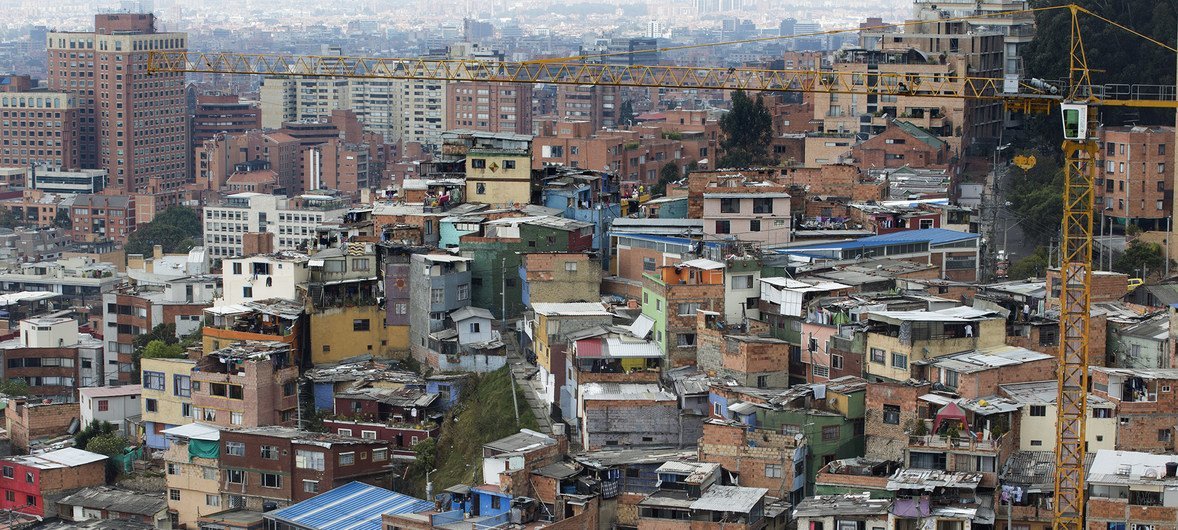
A view of the city of Bogotá, Colombia.


1 April 2019
Economic Development


The United Nations is highlighting the important role that population trends play in promoting sustainable development, during the annual Commission on Population and Development, which began at UN Headquarters in New York on Monday.


The United Nations is highlighting the important role that population trends play in promoting sustainable development, during the annual Commission on Population and Development, which began at UN Headquarters in New York on Monday.

This year’s Commission is also an opportunity to take stock and review progress made since the landmark International Conference on Population and Development (ICPD), which took place 25 years ago in the Egyptian capital, Cairo. The 1994 event resulted in a Programme of Action, based on the idea that investing in individual human rights, capabilities and dignity, is the foundation of all sustainable development.

The Programme was described by the UN as “revolutionary”, because it succeeded in bringing together diverse views on human rights, population, sexual and reproductive health, gender equality and sustainable development, in the search for a global consensus.

This year’s Commission will examine the many gains that have been made in implementing the Programme of Action, but also the gaps and shortfalls in achieving its goals and objectives: these must be addressed, says the UN, if we are to achieve the 2030 Agenda for Sustainable Development, the UN’s plan of action for bringing about a better and more sustainable future for all.

Speaking on behalf of Liu Zhemin, Under Secretary General for Economic and Social Affairs, and head of the UN Department of Economic and Social Affairs (DESA), Maria-Francesca Spatolisano, Assistant Secretary-General for Policy Coordination and Inter-Agency Affairs, drew attention to the four demographic “mega-trends” that are shaping the world in fundamental ways: population growth, population ageing, international migration and urbanization.

The two latter trends, international migration and urbanization, “affect the spatial distribution of population,” she said, “and are linked in various and complex ways to the process of sustainable development. While it is right to celebrate achievements, we must also prepare for a world that is larger, older, more mobile and more urbanized than ever before.”

In her address, Dr. Natalia Kanem, Executive Director of the UN Population Fund (UNFPA), credited “national strategies and leadership, United Nations agencies, civil society, communities and our partners,” for their role in bringing about the progress made since the International Conference on Population and Development.

“The vision and values of the ICPD, that development must be people-centred, and attention paid to strengthening equal access to health, education and human dignity for all persons, anticipated the vision and values of the 2030 Agenda, our common blueprint for peace and prosperity, for people and the planet now and in years to come.”

UN Deputy Secretary-General, Amina Mohammed, speaking on behalf of Secretary-General António Guterres, warned that efforts on some Sustainable Development Goals are not keeping pace with population growth, citing targets on poverty in the least developed countries, child marriage, and people living in urban slums.

“While the percentage of affected persons may be declining,” she said, “their number is still rising. It is time for the world to show greater ambition and urgency around SDG implementation that is fully aligned with the Cairo Programme of Action.”

Ms. Mohammed emphasized the importance of gender equality in the implementation of the Sustainable Development Goals, and the involvement of women and girls as “agents of change,” with the ability to make decision
that affect their bodies and lives, including reproductive rights, and access to quality education.


Also speaking at the opening session was film and TV actress, and Goodwill Ambassador for UNFPA, Ashley Judd, who said on social media that she was appearing as a messenger for “the 6.7 million girls who will be forced into marriage this year, as well as the 214 million women who are unable to access family planning, the 300,000 women who will die preventable deaths whilst giving life this year.”

Ms. Judd followed the deputy UN chief’s remarks on gender equality by describing the ICPD as a “paradigm shift,” that placed the future of the world’s development firmly in the hands of women and girls, and demanded that we have the rights to make decisions over our own bodies, to have our bodily integrity and our sexual autonomy. 25 years of evidence and practice continue to support this consensus and prove that this mission is as vital and critical today as it was then.”
Progress unevenly distributed

Data from the UN shows that progress has been made in many population-related areas, but that there is a significant regional disparity. In all regions, for example, people are living longer, with average global life expectancy rising from 65 to 72 years, but there is a 15-year gap in that figure, between citizens of the most and least-developed countries.

Child mortality is also moving in the right direction, having fallen by half in the last quarter-century but, here again, there is a marked regional disparity. Child mortality levels in Sub-Saharan Africa have dropped from 180 to 78 deaths per 1,000 births, but the child mortality rate in the region is still 15 times higher than that of children born in developed regions.

As for family planning needs, 78 per cent of women who are married, or living with a partner, have access to modern methods of contraception - up from 72 per cent in 1994 - but that figure drops to less than 50 per cent in 44 countries, mostly in sub-Saharan Africa and the southern Pacific island nations.

90 per cent of urban growth is projected to take place in Africa and Asia over the next two decades, and the share of the world’s population living in urban areas is expected to rise from 56 per cent now, to 68 per cent by 2050.

The Commission will look at several population-related topics which contribute to sustainable development, including government policies to expand access to sexual and reproductive health care services, including family planning; policies to improve education quality and access; and ensuring sustainable patterns of consumption and production.


https://news.un.org/en/story/2019/04/1035841
http://creativecommons.org/licenses/by/3.0/legalcode
понедельник, 1 апреля 2019 г.

В ДНР не проходят выборы президента Украины


Вчера, 11:32

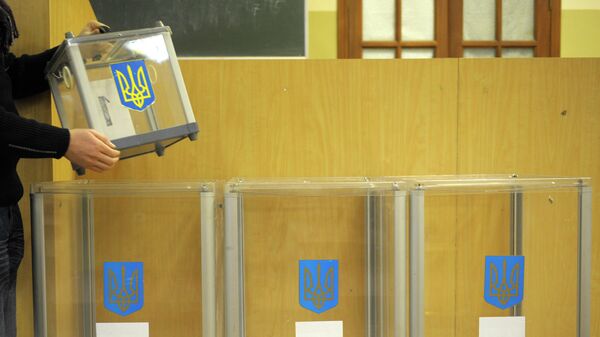
ДОНЕЦК, 31 мар — РИА Новости. Выборы президента Украины не проходят на неподконтрольной Киеву территории самопровозглашенной Донецкой народной республики, заявил журналистам в воскресенье председатель Комитета Народного совета ДНР по внешней политике, международным связям, информационной политике и информационным технологиям Владислав Бердичевский.


"На неподконтрольных киевскому режиму территориях Республик Донбасса не проходят уже вторые президентские выборы", — сказал Бердичевский.


Вчера, 08:00


Он напомнил, что политика властей Украины лишила около трех миллионов человек основополагающих принципов прав человека.


"ДНР в любом случае все равно, кто будет президентом на Украине, — это не наши выборы и изменения политики Украины в отношении Донбасса мы не ожидаем", — сказал Бердичевский.


30 марта, 10:21

Дорого и незачем: украинцы из России не поедут голосовать на Украину


Очередные выборы президента Украины проходят в воскресенье. На пост главы государства претендуют 39 кандидатов, что стало рекордом. В гонке лидирует шоумен Владимир Зеленский, за неделю до выборов его рейтинг превысил 30%. Действующего главу государства Петра Порошенко готовы поддержать около 17% граждан, лидера партии "Батькивщина" Юлию Тимошенко — 12,5%. Социологи полагают, что будущий президент определится во втором туре. Из-за закрытия участков в России, а также отказа от проведения выборов на неподконтрольной Киеву территории Донбасса, семь-десять миллионов граждан Украины не смогут проголосовать.


Выборы президента Украины. Онлайн-репортаж >>


https://ria.ru/20190331/1552261084.html
http://creativecommons.org/licenses/by/3.0/legalcode
В Венесуэле пятый раз за месяц отключилось электричество


31 марта 2019


© СС0 Public Domain


В Венесуэле накануне произошло уже пятое в этом месяце отключение электроэнергии.


На этот раз блэкаут затронул столицу страны Каракас и не менее 20 штатов, сообщает газета El Nacional.


По словам министра связи и информации Хорхе Родригеса, на систему энергоснабжения страны совершили кибератаки. Он пообещал, что власти восстановят оборудование и защитят его от повторения подобных атак.


Ранее в Венесуэле отключилась электроэнергия 29 марта. Первый блэкаут произошел 8 марта. Власти назвали причиной ЧП кибератаку на автоматическую систему контроля гидроэлектростанции. В обесточенных больницах страны скончался 21 человек.


http://www.rosbalt.ru/world/2019/03/31/1772751.html
http://creativecommons.org/licenses/by/3.0/legalcode

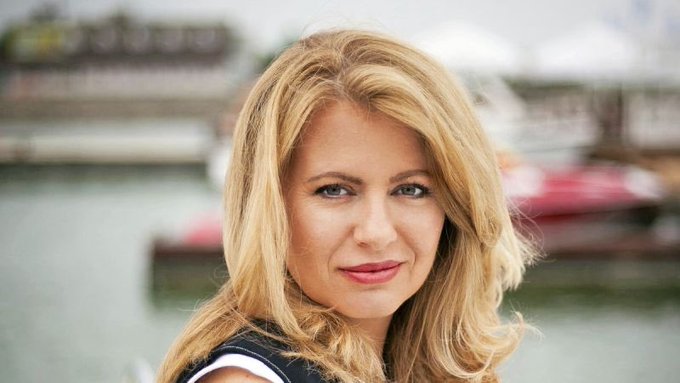
Президентом Словакии впервые станет женщина


31 марта 2019, 07:23 


Победу на президентских выборах в Словакии одержала адвокат Зузана Чапутова.


По данным избирательной комиссии страны, 45-летняя Чапутова получила 58,3% голосов. У ее соперника, заместителя главы Европейской комиссии Мароша Шефчовича, — 41,7% голосов.


Шефчович уже признал свое поражение и поздравил соперницу с победой. Чапутова пообещала бороться с коррупцией и сохранить проевропейский курс Словакии.


Чапутова станет пятым президентом Словакии после получения страной независимости в 1993 году и первой женщиной на этом посту. Она вступит в должность после отставки Андрея Киски 15 июня.


Зузана Чапутова много лет сотрудничала с правозащитниками и экологами. Известность ей во многом принесло участие в расследовании убийства журналиста Яна Куцяка, писавшего о коррупции чиновников.


http://www.rosbalt.ru/world/2019/03/31/1772746.html
http://creativecommons.org/licenses/by/3.0/legalcode

Власти Франции объявили о перестановках в правительстве


31 марта 2019, 22:59


© СС0 Public Domain

Ряд новых назначений в правительстве Франции сделал президент Эммануэль Макрон, сообщает пресс-служба Елисейского дворца.

Свой пост покинул официальный представитель кабмина Бенжамен Гриво, на его место назначена Сибет Ндияй.

Амели де Моншален заняла пост госсекретаря по европейским делам при МИД Франции вместо Натали Луазо, которая решила участвовать выборах в Европарламент.

Седрик О стал государственным секретарем при министерстве экономики и финансов и министерстве действий и государственных счетов, отвечающим за цифровые технологии. Ранее этой работой занимался Мунир Мажуби.


http://www.rosbalt.ru/world/2019/03/31/1772817.html
http://creativecommons.org/licenses/by/3.0/legalcode
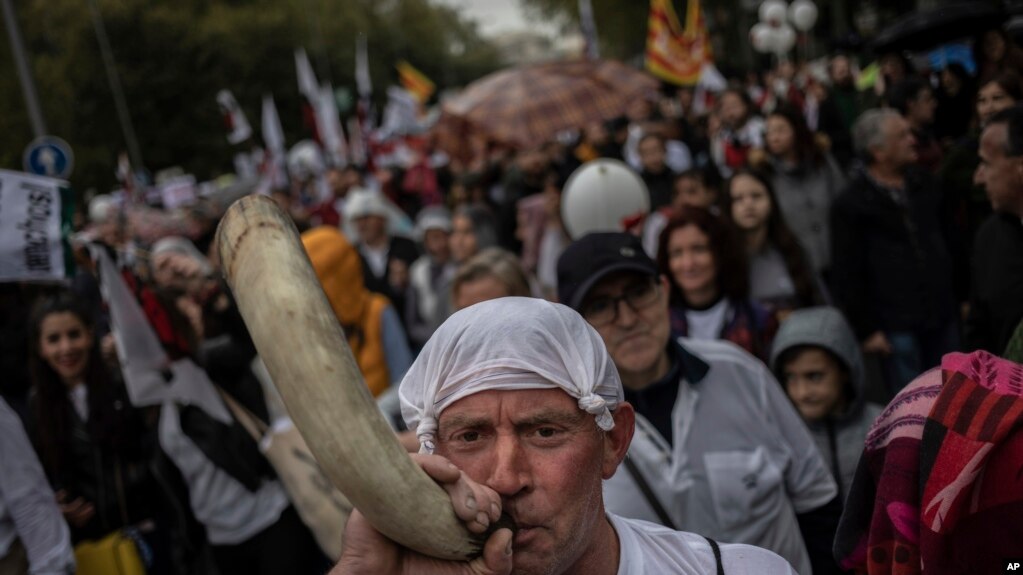
Протесты в Испании: демонстранты требуют увеличить помощь сельским районам


31 Март, 2019


Жители сельских районов Испании проводят акцию протеста в Мадриде

90 процентов населения страны проживают в Мадриде и на прибрежных территориях

В воскресенье в Мадриде прошла многотысячная акция с требованием к правительству принять меры для снижения оттока населения из сельских районов.

Воскресный марш под лозунгом «Восстание опустошенной Испании» был организован местными организациями, представляющими сельские районы страны.

В настоящее время 90 процентов населения Испании скоцентрировано на 30 процентах территории страны, а – именно в Мадриде и в прибрежных районах.


Остальные 10 процентов – разбросаны по обширным участкам испанской территории.


В пятницу правительство объявило о мерах по улучшению качества интернет-связи в сельской местности.


Марш проходит накануне всеобщих выборов в Испании, которые пройдут 28 апреля. Сельские районы могут сыграть на них определяющую роль в вопросе о том, останутся ли социалисты у власти. Испанское законодательство о выборах придает больший вес малонаселенным районам.


https://www.golos-ameriki.ru/a/spain-protest-demand-rural-regions-support/4855738.html
http://creativecommons.org/licenses/by/3.0/legalcode