вторник, 1 января 2019 г.

Afghanistan: UN mission welcomes new polling dates following election delays


UNAMA / Mujeeb Rahman


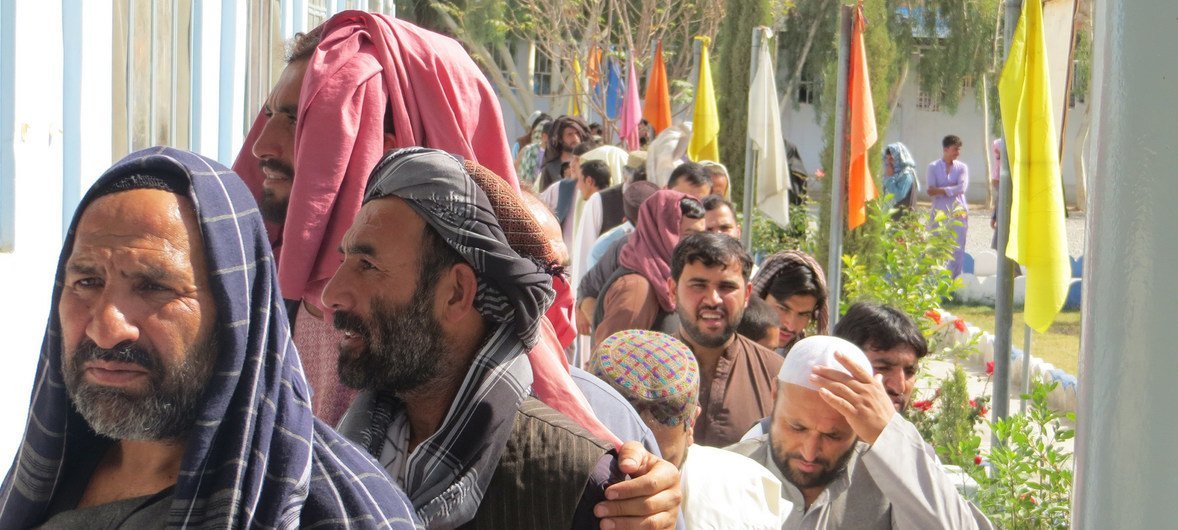
Hundreds of voters in line outside the Sayed Jamaludin Afghan polling center in Ayno Mena, Kandahar for the Afghanistan parliametary elections. 27 October 2018.


31 December 2018

Peace and Security


Amid reports that Afghanistan’s 2019 presidential election may be postponed, local electoral authorities confirmed a polling date delay; a decision the UN Assistant Mission in Afghanistan (UNAMA) welcomed for its clarity on Monday.


On Sunday, Afghan officials indicated that the highly-anticipated election, scheduled for the coming April, will be delayed by three months and held in July.

In response to this “clarity in the electoral calendar,” UNAMA said the UN understands the new date announced by the Independent Election Commission of Afghanistan (IEC) follows broad consultations with political actors, civil society organization, and the Afghan Government, “all of whom have expressed the strong desire for a credible and transparent election.”


No one has the right to disrupt the electoral process--UNAMA

The UN acknowledged the Commission’s assessment for additional time needed to learn from the 2018 parliamentary election in October, when technical issues and a series of bomb attacks closed polling stations.

The crucial elections come while a deadly four-decade conflict continues to rage on in Afghanistan; and its results could form the “the fundamental fabric” of the country’s society and future, the mission’s head, Tasamichi Yamamoto has previously stressed.

UNAMA has urged the Commission to publish a detailed election calendar, provide regular public updates throughout the process, and encourages all actors with credible concerns about irregularities and fraud to submit complaints to the Electoral Complaints Commission (ECC) – charged with investigating and adjudicating parliamentary election complaints, as outlined in Afghan electoral law and constitution.

“No one has the right to disrupt the electoral process and the country’s stability through incitement or threats,” UMAMA’s message read.

Electoral preparations were marred with “major and avoidable irregularities,” and both the IEC and ECC must take “necessary corrective measures” in the coming months to realize effective reforms, UNAMA said.

This includes cleaning the voters’ registry, outlining the respective responsibilities of the ECC and IEC, Ensuring the IEC Secretariat is fully and professionally staffed, and make necessary changes to each electoral authority’s structure.

Stressing the UN’s commitment to supporting Afghan electoral institutions and credible elections, UNAMA said it will continue its assistance “and enhance its advisory role to the IEC, as requested.”

“The United Nations stresses that all stakeholders have a responsibility for the credibility and legitimacy of the election process.”


https://news.un.org/en/story/2018/12/1029562
http://creativecommons.org/licenses/by/3.0/legalcode

‘Stealing’ food from hungry Yemenis ‘must stop immediately’, says UN agency


OCHA/ Charlotte Cans

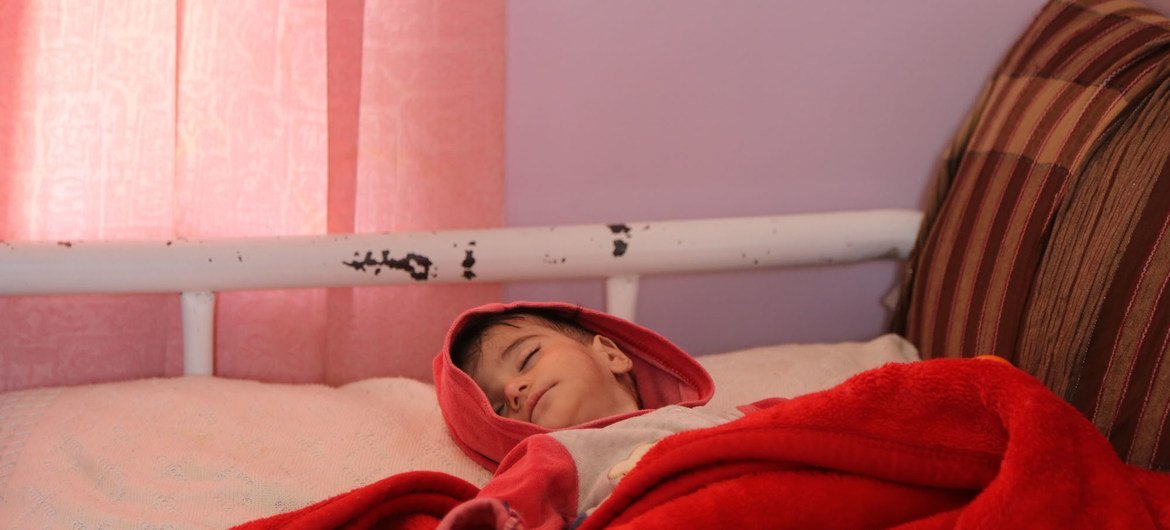
Nine-month-old baby weighing 3 kg is being treated for acute malnutrition in a Sana'a hospital.


31 December 2018
Humanitarian Aid


After uncovering evidence that humanitarian food supplies are being diverted in Yemen’s Houthi-controlled capital, Sana’a, and other parts of the country, the United Nations World Food Programme (WFP) has demanded an immediate end to the practice.


“This conduct amounts to the stealing of food from the mouths of hungry people,” WFP Executive Director David Beasley said on Monday.

Prompted by an increasing number of reports that humanitarian food was on sale in the capital, WFP conducted a survey to discover the misappropriation of those supplies.

It unearthed fraud by at least one local partner organization affiliated with the de facto Ministry of Education in Sana’a handling and distribution of WFP food assistance.

“At a time when children are dying in Yemen because they haven’t enough food to eat, that is an outrage,” stressed Mr. Beasley. “This criminal behaviour must stop immediately.”


The UN food agency’s assistance has been key in preventing famine, but as the food security situation deteriorates further aid is being dramatically ramped up to reach as many as 12 million severely hungry people in the war-torn country.

“I’m asking the Houthi authorities in Sana’a to take immediate action to end the diversion of food assistance and ensure that it reaches those people who rely on it to stay alive,” Mr. Beasley said.

“Unless this happens, we’ll have no option but to cease working with those who’ve been conspiring to deprive large numbers of vulnerable people of the food on which they depend,” he added.


During their checks, WFP monitors:

amassed photographic and other evidence of trucks illicitly removing food from designated distribution centres.

found that beneficiary selections were being manipulated by local officials

exposed falsified food distribution records.

discovered that unauthorized people were given food.

identified that food was being sold in Sa’ana markets.


The de facto authorities in Houthi-controlled abuse-prone areas have been resisting a WFP-supported overhaul of the relief system there, including more monitoring and revamping the beneficiary registration and selection processes.

Meanwhile, the WFP chief said: “We’re continuing our investigations and addressing those shortcomings which have given rise to this misuse of aid.”

The Yemen war intensified in early 2015 when a Saudi-led coalition joined the Government fight against Houthi rebels, instituting an aerial bombing campaign.

The warring sides have recently begun peace talks that have eased the challenges of getting food through the gateway port city of Hudaydah. However, the problem remains with what happens to the aid once it makes landfall.

As millions of people depend on humanitarian food assistance for their survival, it is vital that it reaches those who most need it.


https://news.un.org/en/story/2018/12/1029542
http://creativecommons.org/licenses/by/3.0/legalcode
UN diplomacy: political conflicts to watch in 2019


UN Photo/Paulo Filgueiras


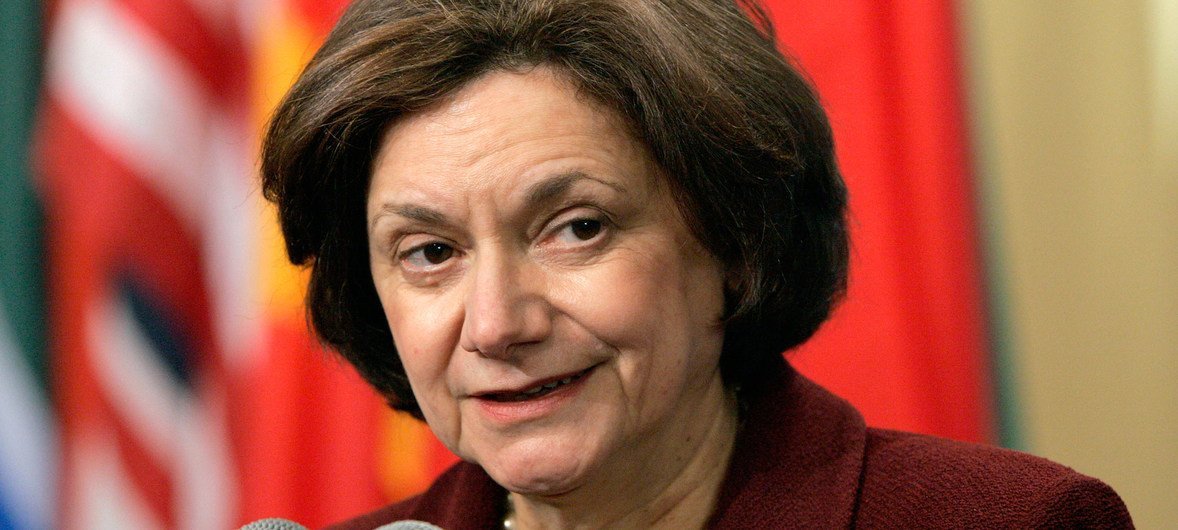
Rosemary A. DiCarlo, UN Under-Secretary-General for Political Affairs.


31 December 2018
Peace and Security


As the world – and the United Nations – continues to grapple with political crises, we look at the political landscape with Under-Secretary-General for Political Affairs Rosemary DiCarlo. We begin by asking her what it’s like to be the top UN political officer.


“My role is twofold. First is to help resolve conflict and to help prevent conflicts. Our role in the Department of Political Affairs – soon to be Political and Peacebuilding Affairs is very much focused on preventing conflict as well. And we work on a range of issues, many that do not come before the Security Council. Our goal is to help resolve them before they come to the … Council.”

“I cover the entire world now. I have never in my entire career had a job where I had to cover the entire world,” Ms. DiCarlo said in her first interview with UN News. As the Deputy to at the US Mission to the United Nations, I worked a lot on issues that came before the Security Council. In the Security Council, one promotes one government’s positions and policies. Of course, one is there to broker agreements among other members.”

“But where I am now, I find it all the more complicated, that it takes a different set of skills to work with so many individuals and countries to be able help resolve a particular issue or come to agreement on particular matters. I do think that having worked in the Security Council, I do have a perspective of a Member State, an understanding what is expected of us – and they expect a lot, I have to say – but that has I think helped me in this position in the first few months.”

Here are some of the main issues on the UN political agenda – in no particular order – for the coming year, according to UN political affairs chief DiCarlo. 


UN Photo/Loey Felipe

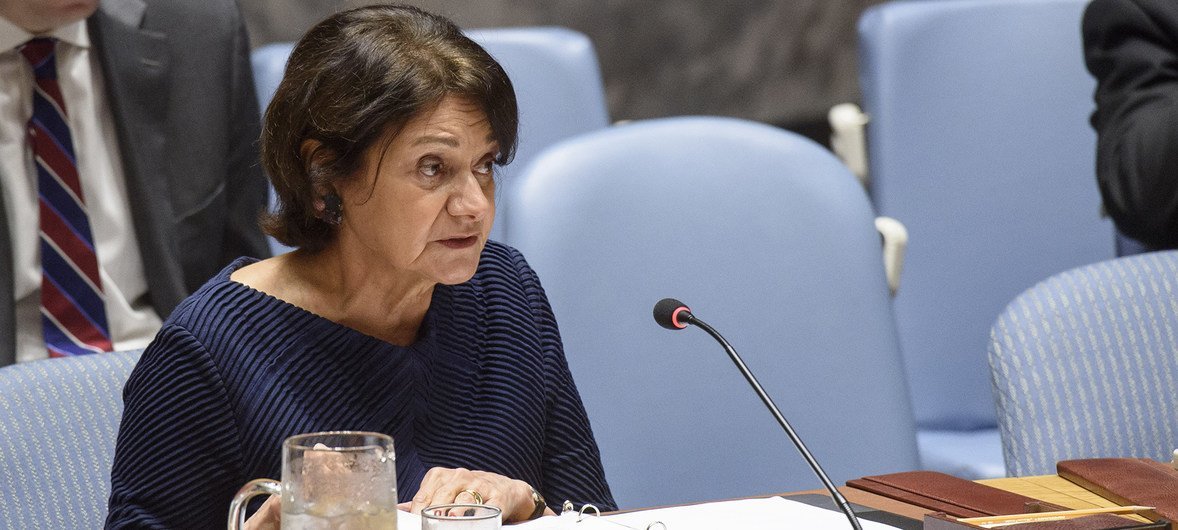
Rosemary A. DiCarlo, Under-Secretary-General for Political Affairs, addresses the Security Council meeting on Non-proliferation and the Democratic People’s Republic of Korea on 17 September 2018.
Yemen

Images of starving Yemeni children shocked the world this year, as it emerged that more than eight million Yemenis are now on the verge of famine, of them 1.8 million children under the age of five who are acutely malnourished.

The humanitarian situation in Yemen has been “horrific” given the destruction, devastation and loss of life since 2011 but the UN is “very, very grateful” to see the two sides – the Government of Abdrabbuh Mansour Hadi and the Houthi forces – come together in Sweden earlier this month to discuss an end to the conflict.

There are now UN monitors on the ground [led by retired Dutch General Patrick Cammaert] to see if there are violations of the ceasefire agreement on the port city of Hudaydah, and also to help open up pathways so that aid can be received at the port and distributed in other parts of the country.

Ms. DiCarlo also told UN News that the agreement on a ceasefire is only the beginning: “There’s a lot more to be done to resolve the conflict in Yemen, but this is a very good start.”

She credits the good offices of Special Envoy Martin Griffiths for the progress made so far.


UN Secretary-General's ‘good offices’

The Secretary-General’s “good offices” is a term for work led by the Secretary-General, one of his senior officials or individuals working on stand-by, prepared to help mediate a dispute. All this happens only with acceptance and permission of the people involved. The issues could be related to any issue, from elections to access to a port city, as in the case of Yemen.
Syria

After nearly eight years of war, more than 13 million people need aid – including 6.1 million people who have been internally displaced, and 5.5 million people living as refugees in Iraq, Jordan, Lebanon and Turkey. Along with these figures from the UN humanitarian affairs office (OCHA) , consider this one – 66 per cent of children in Syria have lost a loved one, had their house damaged or suffer conflict-related injuries.

“Syria has been with us for a long time and we have not really moved forward on a political process, but our intention is to keep supporting those efforts,” Ms. DiCarlo said.

Starting in January, the UN-led efforts at diplomatic negotiations will be headed by Geir Pederson, who succeeds Staffan de Mistura, Lakhdar Brahimi and the late Kofi Annan.

The latest discussions have been on creating a new, more inclusive Constitution in post-war Syria, which has been the focus of intensive consultations among three countries heavily invested in Syria’s future – Iran, Russia and Turkey.

The new year brings new unknowns, including the latest announcement that the United States is pulling its troops out of Syria, and what that means for the conflict and the road home for those affected.


We have not seen progress, have not seen conditions that are appropriate for refugees to return – Ms. DiCarlo on the Rohingya refugee crisis

Rohingya Refugee Crisis

“We have not seen progress, have not seen conditions that are appropriate for refugees to return, both in terms of the physical layout but also in terms of political guarantees,” Ms. DiCarlo told UN News about the situation of Rohingya refugees who have fled from Myanmar into Bangladesh.

Under an agreement struck between the two countries, thousands of refugees who fled starting in August 2017 were due to return to Myanmar last month. But none wanted to for fear of the Myanmar army, also known as the Tatmadaw – and other groups – which has been accused of committing genocide.

The UN appointed a Special Envoy to work with the Government of Myanmar, to enhance cooperation on addressing the conflict. Christine Schraner Burgener has met with Aung San Suu Kyi and other senior officials. Her job is to work with the Government to try to resolve outstanding issues and to help the Government put in place a framework so that we can see refugees return, Ms. DiCarlo said.
Colombia

In 2016, combatants from the FARC (Fuerzas Armadas Revolucionarias de Colombia) laid down their weapons after 50 years of bloody conflict that killed more than 260,000 people and displaced some seven million.

Ms. DiCarlo visited Colombia in early December and met with some of former combatants who are now parliamentarians, tailors, bakers and teachers.

“The United Nations has given to these communities help to develop livelihoods so they can turn from the activities of its previous movement,” she said. “I saw a number of FARC now in the legislature and very proud of a group that is making decisions on the future of the country.”

The UN says the reintegration process has made progress but remains complex: “It’s steady work and there’s a way to go, but I think the United Nations can be proud of the role it played in helping to bring about an agreement but also in verifying the implementation of it.”


As part of the pace deal, a special chamber is looking into egregious crimes that took place during the conflict, and a truth commission set up in May is hoping to help victims heal from the trauma of the conflict.

The opinion of whether these will bring justice “is divided,” Ms. DiCarlo said.

“There’s also a sense of extreme gratitude on the part of a lot of people that the violence that they saw before is over. Although there is still some violence from criminal groups that have come in. It’s going to be a long-term process,” Ms. DiCarlo said.

“I saw a very vibrant society and sense among the group that they have a stake in the future of the country.”


https://news.un.org/en/story/2018/12/1029632
http://creativecommons.org/licenses/by/3.0/legalcode
UN refugee agency presses States to aid 49 refugees stranded on Mediterranean


Frontex/Francesco Malavolta

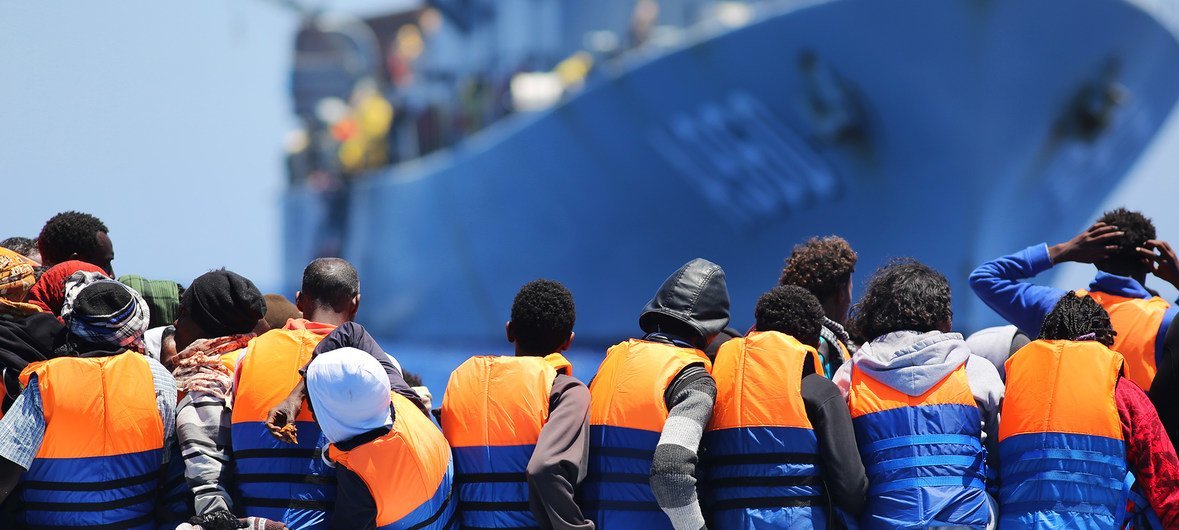
Migrants crossing the Mediterranean Sea are rescued by a Belgian ship


31 December 2018


Migrants and Refugees


The United Nations refugee agency (UNHCR), on the last day of 2018, called on UN Member States to urgently offer safe ports of disembarkation for 49 refugees and migrants, including young children, aboard rescue vessels in the Mediterranean Sea.


An NGO (non-governmental organization) Vessel called The Sea Watch 3 has been carrying 32 people since 22 December, while another 17 were rescued by the Sea Eye on 29 December.


With rough seas expected “in coming hours” as of Monday morning, the agency reported that conditions on the boats are likely to deteriorate in this situation where “time is increasingly of the essence.”


The harrowing journey across the Mediterranean is one that thousands make in a desperate attempt to successfully reach Europe, in hope of a better life.


According the latest numbers from UNHCR published in September, the rate of fatalities has gone up since 2017, with one in 18 people crossing to Europe between January and July going missing.


At the end of 2018, people rescued on the Mediterranean Sea are still risking their lives for lack of a safe port to disembark in.

It’s time to put an end to this once and for all, share responsibility and show solidarity.

We have to do better in 2019.https://t.co/CdUlAqwUzepic.twitter.com/zXQJhOUHny

— UNHCR, the UN Refugee Agency (@Refugees) December 31, 2018


More than 2,240 people have either died or disappeared at sea in this stage of the route in 2018, despite an overall decrease in the number of arrivals in Europe.


New measures targeting irregular migration in the central Mediterranean have limited access to ports and resulted in higher death rates.


With the absence of a collaborative approach to Mediterranean Sea crossings, rescue vessels face uncertainty over designation of a safe port for disembarkation.


Those who make it to Europe directly or by routes through Libya have recounted horrors of multiple forms of abuse, and are sometimes witnesses to death along the way.


For the 49 migrants and refugees waiting to dock safely, “decisive leadership is required, in line with fundamental values of humanity and compassion,” UNHCR Special Envoy for the Central Mediterranean, Vincent Cochetel, said.


“Negotiations on which States will subsequently receive them must come only after they are safely ashore.”


Echoing a call to put lives before legislation, the agency’s Europe Chief, Pascale Moreau, has said “this is no longer a test of whether Europe can manage the numbers, but whether Europe can muster the humanity to save lives.”


UNHCR commends the work of NGO search and rescue vessels for their “critical role towards preventing the death toll from being far higher.”


In the coming year, “there is a crucial need to end the current boat-by-boat approach,” the agency said, urging for States to implement arrangements that would provide clarity on where to disembark refugees and migrants stranded on the Mediterranean.


https://news.un.org/en/story/2018/12/1029582
http://creativecommons.org/licenses/by/3.0/legalcode
Бывший министр иностранных дел Испании назначен высоким представителем "Альянса цивилизаций" ООН


2018-11-21  10:55:13丨Russian.News.Cn


ООН, 20 ноября /Синьхуа/ -- Генеральный секретарь ООН Антониу Гутерриш во вторник назначил бывшего министра иностранных дел Испании Мигеля Анхеля Моратиноса на должность высокого представителя "Альянса цивилизаций" ООН. М. А. Моратинос примет пост его предшественника Насира Абдулазиза аль-Насера, срок полномочий которого истечет в конце этого года.


В канцелярии Генсека ООН заявили, что М. А. Моратинос вступит в должность 1 января 2019 года. А. Гутерриш также высоко оценил и выразил благодарность за проявленные Насиром Абдулазизом аль-Насером "дальновидность и руководящую способность" в продвижении диалога и работы между сторонами с момента его вступления в должность в 2013 году .


"Альянс цивилизаций" ООН был учрежден в 2005 году, его цели заключаются в укреплении понимания и сотрудничества между различными странами, нациями и культурами и стимулировании развития инклюзивного и плюралистического общества.


http://russian.news.cn/2018-11/21/c_137621631.htm
http://creativecommons.org/licenses/by/3.0/legalcode

В 2019 финансовом году США планируют потратить на военные нужды 717 млрд долларов


05 Май, 2018 04:37

Reuters


Среди приоритетов – сдерживание России

В Палате представителей Конгресса США обнародованы некоторые детали нового законопроекта по оборонной политике. На военные нужды предлагается выделить 717 млрд долларов. Среди приоритетов военных ассигнований – программы, направленные на сдерживание России и Китая.

На следующей неделе Комитет по вооруженным силам Палаты представителей начнет обсуждение проекта Закона о национальной обороне, которые определяет уровень и приоритеты военных расходов США на 2019 финансовый год. Полный текст законопроекта будет обнародован позднее, однако конгрессмены от обеих партий опубликовали свои краткие версии.

В частности, в отношении России законопроект предусматривает, что в качестве ответа на нарушение международных соглашений, США продолжат санкционное давление на российскую военную промышленность; продолжится действие запрета на сотрудничество американских и российских военных; а также будут увеличены ассигнования на защиту от киберугроз. В законопроекте также содержится положение, которое может позволить президенту Дональду Трампу отменить ряд российских санкций, введенных Конгрессом в прошлом году.

Окончательная версия законопроекта появится в результате компромисса между Палатой представителей и Сенатом.


https://www.golos-ameriki.ru/a/house-defense-budget-project-russia/4378804.html
http://creativecommons.org/licenses/by/3.0/legalcode

Германия 1 января вновь станет членом Совета Безопасности ООН


12:56, 29 декабря 2018


CA-NEWS (CA) - С 1 января 2019 года Германия уже в шестой раз станет непостоянным членом Совета Безопасности (СБ) ООН, сообщило 28 декабря, правительство ФРГ. В числе своих приоритетных задач в рамках Совбеза ООН оно считает защиту женщин и их участия в мирных процессах, усиление внимания к проблемам изменения климата, а также отстаивание концепции миротворчества как инструмента урегулирования конфликтов, передает DW.

Правительство ФРГ вновь призвало реформировать Совет Безопасности ООН. По мнению Берлина, нынешний состав постоянных членов СБ уже не отражает ни многополярность мира, ни крупнейших плательщиков взносов в казну ООН, как это было во время основания организации в 1945 году. Германия - четвертый по величине плательщик взносов после США, Японии и Китая, в 2018 она перечислила ООН 5,4 млрд долларов (6,4 процента бюджета ФРГ), столько же денег будет направлено и в 2019 году.

Помимо Германии, непостоянными членами СБ с 1 января 2019 года станут Бельгия, ЮАР, Индонезия и Доминиканская Республика, сменив Боливию, Эфиопию, Казахстан, Нидерланды и Швецию. Постоянными членам СБ с правом вето являются США, Франция, Великобритания, Китай и Россия. Решения Совбеза обязательны для всех стран-участниц ООН.


http://ca-news.org/news:1488671
http://creativecommons.org/licenses/by/3.0/legalcode