воскресенье, 30 декабря 2018 г.

‘Continue working together’ UN chief urges DR Congo, as country heads to polls


UN Photo/Sylvain Liechti

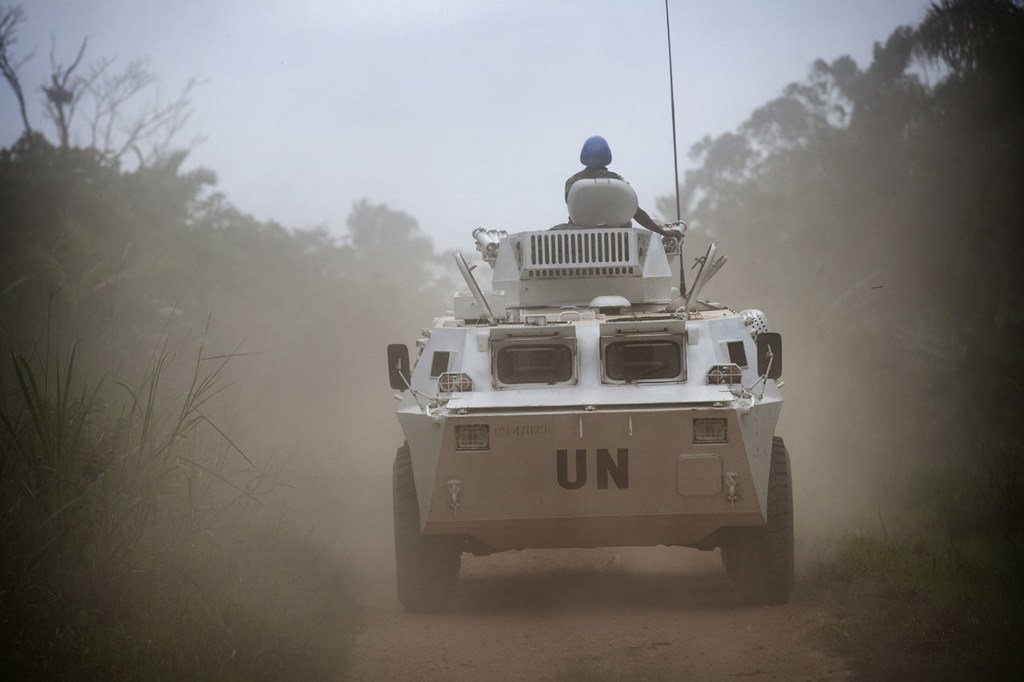
UN peacekeepers on patrol near Beni. (file photo)

28 December 2018

Peace and Security

United Nations Secretary-General António Guterres has called on all those playing an active political role in the Democratic Republic of the Congo (DRC) to “continue working together” to ensure free and fair elections, as the country heads to polls this Sunday.


In a statement, the Secretary-General also encouraged all Congolese citizens to seize “this historic opportunity” to participate in the consolidation of the country’s democratic institutions.


Mr. Guterres also reminded those with a stake in the outcome of their “critical role” in preventing electoral violence, by refraining from any form of provocation and showing maximum restraint in what they say and do.


He also urged everyone to protect and ensure safe access to health facilities in Ebola affected areas, amid serious concerns, expressed by the UN health agency, that recent violence in the country’s east could reverse important gains made against the disease and increase transmission.


In a separate statement, Tedros Adhanom Ghebreyesus, the Director General of the UN World Health Organization, said that the agency was doing “doing everything possible” to assist those affected by the deadly Ebola virus disease in eastern DRC despite deteriorating security situation in the region.


Protests have erupted in three key towns – Beni, Butembo and Yumbi – following the Government’s decision to postpone elections there, amid fears of Ebola transmission, and an uptick in violence by armed groups.


In Beni, protests at Government buildings spilled into an Ebola transit centre, causing panic among both those seeking services as well as health workers.


Mr. Tedros said that it would be a “tragedy” for the local population, if the disease were to come back, as they have “already suffered too much.”


“Working side by side” with DRC health authorities and partners, the priority is to end the Ebola outbreak, he added, noting “we cannot afford to take a step back at this critical point in the response.”
I ‘understand’ health concerns – UN mission head


Meanwhile, the head of the UN peacekeeping mission in the DRC, Leila Zerrougui, voiced regret over the postponement of elections in Beni, Butembo and Yumbi, on account of the Ebola outbreak.


“I was informed that there was a [health] concern with the hundreds of people passing by and touching a screen…I understand this concern,” Ms. Zerrougui told the UN mission’s radio station, Radio Okapi.


“Personally, I regret that the people of Beni [and] Butembo, who have suffered much for years…cannot vote,” she added.


To mitigate the threat of Ebola transmission during the elections, the UN mission – known by its French acronym, MONUSCO – is working to place hand-washing and cleaning facilities at the entrance to polling stations, to help allay fears.


https://news.un.org/en/story/2018/12/1029491
http://creativecommons.org/licenses/by/3.0/legalcode

суббота, 29 декабря 2018 г.

Шойгу прогнозирует нарастание конфликтного потенциала в Арктике


Москва. 31 августа. ИНТЕРФАКС-АВН - Арктика стала объектом территориальных, ресурсных и военно-стратегических интересов ряда государств, что может привести к усилению конфликтного потенциала в регионе, заявил министр обороны РФ Сергей Шойгу на заседании коллегии Минобороны РФ в пятницу.

Он подчеркнул, что "защита национальных интересов России в Арктическом регионе и его активное развитие остаются приоритетами деятельности Вооружённых сил". "Сегодня Арктика превратилась в объект территориальных, ресурсных и военно-стратегических интересов ряда государств. Это может привести к нарастанию конфликтного потенциала в данном регионе", - сказал С.Шойгу. 

По его словам, "настоящее время в северных широтах находятся ледоколы не только России, но и Южной Кореи, Швеции, Германии, США и Китая". 

С.Шойгу заявил, что для адекватного реагирования на существующие и прогнозируемые угрозы Северный флот продолжает реализацию комплексного плана Минобороны по развитию возможностей группировок сил и войск в Арктике на период до 2020 года. 

"Этой весной в его состав приняты ледокол "Илья Муромец" и морское судно тылового обеспечения "Эльбрус", летом - фрегат "Адмирал Флота Советского Союза Горшков" и большой десантный корабль "Иван Грен". Завершаются государственные испытания морского танкера "Академик Пашин", - сказал министр обороны РФ. 

Он также сообщил, что в Арктике возобновили полёты противолодочные самолёты Ту-142 Северного флота (СФ). 

"Возобновлены трансарктические полёты в высоких широтах противолодочных самолётов Ту-142", - сказал С.Шойгу. 

Глава Минобороны РФ отметил, что на СФ личный состав продолжает осваивать подводные лодки с крылатыми и баллистическими ракетами "Ясень" и "Борей". 

"В настоящее время в акватории Северного морского пути выполняет поставленные задачи отряд боевых кораблей и судов обеспечения", - сказал С.Шойгу. 

Говоря о деятельности СФ, министр напомнил, что в мае ракетный подводный крейсер стратегического назначения "Юрий Долгорукий" успешно произвёл залповую стрельбу четырьмя баллистическими ракетами "Булава". 

Кроме того, он сообщил, что до конца нынешнего года СФ получит 416 единиц вооружения и военной техники, в том числе пять боевых кораблей и катеров.

"Всего до конца года на флот поступит 416 единиц современного вооружения и военной техники, в том числе пять боевых кораблей и катеров, пять судов обеспечения, 15 единиц авиационной техники, а также 62 радиолокационных и зенитно-ракетных комплекса. В результате доля современного вооружения и военной техники на Северном флоте составит 56,7%", - сказал министр.


http://www.militarynews.ru/story.asp?rid=0&nid=489578
http://creativecommons.org/licenses/by/3.0/legalcode
Российско-турецкие переговоры на высоком уровне по Сирии пройдут в Москве


29.12.2018   00:00:00

Москва. 29 декабря. ИНТЕРФАКС - Текущую ситуацию в Сирии в свете заявлений США о выводе войск из этой страны обсудят главы МИД и Минобороны России и Турции в субботу в Москве.

Проведение соответствующей встречи анонсировал в пятницу спецпредставитель президента РФ по Ближнему Востоку и странам Африки, замглавы МИД РФ Михаил Богданов.
"Будут министры обороны, министры иностранных дел и представители других ведомств, в частности, представители президентов, которые занимаются сирийской проблемой", - сказал он.

Со своей стороны глава МИД РФ Сергей Лавров пояснил, что в Москве хотели бы обсудить с представителями Турции ситуацию в Сирии после объявления США о выводе оттуда своих войск.

"Мы с нашими турецкими коллегами обсудим эту ситуацию, которая складывается в связи с объявлением американцами о выводе своих вооруженных сил из Сирии, в Москве, когда прибудут министр иностранных дел и министр обороны Турции. Мы вам потом расскажем, о чем мы поговорили", - заявил он журналистам.

В свою очередь пресс-секретарь президента РФ Дмитрий Песков заявил журналистам, что Владимир Путин не планирует принимать членов турецкой делегации.

"Нет, президент - нет. Там будут помощники президентов участвовать", - сказал Д.Песков журналистам в минувшую пятницу.

Отвечая на уточняющий вопрос, будут ли участвовать в переговорах помощник президента РФ Юрий Ушаков и спецпредставитель президента РФ Александр Лаврентьев, Д.Песков сказал: "Я сейчас не буду анонсировать, но помощники президентов будут участвовать".

"Там будет Ушаков", - добавил пресс-секретарь президента.

На просьбу прокомментировать призывы курдов к сирийскому правительству занять территории на востоке страны, пресс-секретарь президента сказал: "Давайте не будем предвосхищать. Завтра будет встреча на высоком уровне. Состоится проговор всех этих тем".

"Эти контакты как раз и будут осуществляться с тем, чтобы внести полную ясность и синхронизировать действия и понимание по дальнейшему развитию ситуации в Сирии", - заявил Д.Песков, отвечая на вопрос, как в Кремле относятся к планам Анкары провести операцию на востоке Сирии.

Он призвал дождаться окончания завтрашней встречи, отказавшись давать оценку заявлениям как турецкой, так и курдской сторон.

Ранее президент Турции Реджеп Тайип Эрдоган сообщил, что в состав направляющейся в РФ турецкой делегации войдут, помимо главы МИД Мевлюта Чавушоглу, министр обороны Хулуси Акар, глава разведки Турции, спецпредставитель президента и турецкой посол в РФ. По его словам, участники встречи "всесторонне" обсудят сирийский вопрос.


http://www.militarynews.ru/story.asp?rid=1&nid=498900
http://creativecommons.org/licenses/by/3.0/legalcode
Правительство Японии приняло новую программу обороны страны


2018-12-19 04:03:02丨Russian.News.Cn


Токио, 18 декабря /Синьхуа/ -- Японское правительство провело сегодня заседание кабинета министров, в ходе которого была принята новая Программа обороны Японии и дополняющий ее Промежуточный план подготовки сил обороны Японии, содержание которых предусматривает значительные структурные преобразования сил самообороны, реконструкцию существующих военных кораблей и превращение их в авианосцы, масштабные закупки новой военной техники и многое другое.


Это стало очередным после 2013 года шагом правительства Синдзо Абэ по пересмотру военной программы Японии.


Новая программа провозглашает, что "стремительно растет серьезность и неопределенность" в деле обеспечения безопасности рубежей Японии. Силы самообороны Японии должны усилить свою обороноспособность в таких новых областях, как военно-космическая и информационная сфера, создать структуры, способные вести боевые действия за пределами страны. Программа предусматривает реконструкцию вертолетоносцев класса "Идзумо" и превращение их в авианосцы, способные нести палубные истребители.


В свою очередь, в плане подготовки сил обороны Японии предлагается внедрение в ближайшие пять лет наземных противоракетных комплексов "Иджис" /Aegis/, а также беспилотных подводных аппаратов и целого ряда другой техники. Для реконструируемого авианесущего флота планом предусмотрено использование в качестве палубной авиации малозаметных истребителей с коротким взлетом и вертикальной посадкой F-35B. В течение следующих пяти лет оборонный бюджет страны составит 27,47 трлн иен /243 млрд долларов США/. Японские СМИ уже назвали эту сумму рекордной для военного бюджета.


Программа обороны Японии определяет основные принципы политики обеспечения безопасности государства в среднесрочной и долгосрочной перспективе, а Промежуточный план подготовки сил обороны -- конкретные шаги по внедрению техники, формированию вооруженных сил и другие аспекты военной деятельности на ближайшие пять лет.


Ранее изменения в японскую программу обороны могли вноситься раз в 10 лет и реже, однако в последние годы процесс обновления программы заметно ускорился, одновременно и более значимыми стали изменения, уводящие военную политику страны все дальше от исключительно оборонительного характера.


http://russian.news.cn/2018-12/19/c_137683234.htm
http://creativecommons.org/licenses/by/3.0/legalcode
Respond to ‘legitimate grievances’ of Sudanese people, UN human rights experts urge, following protests


United Nations

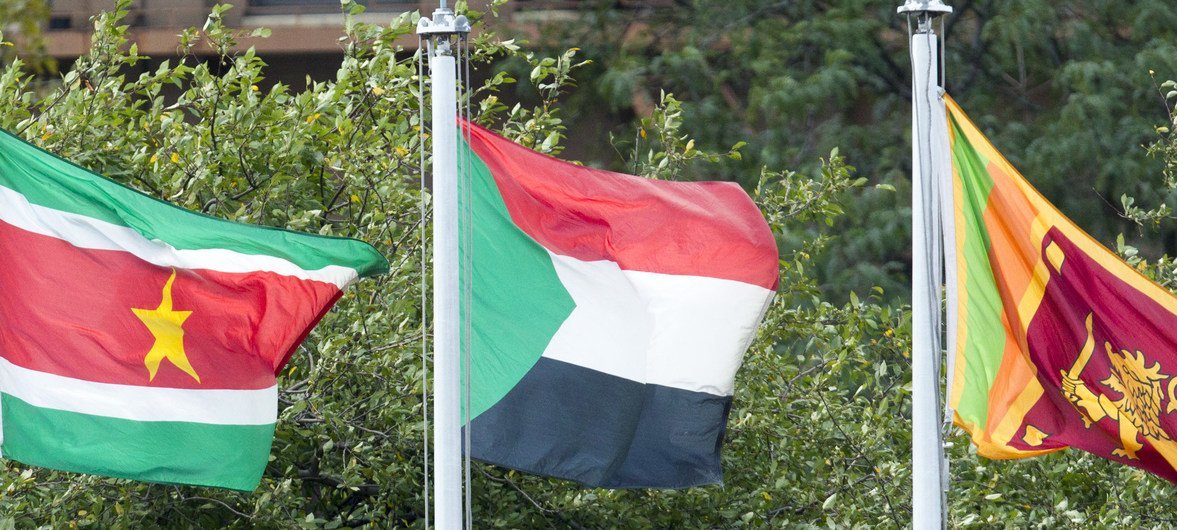
The flag of the Republic of the Sudan (centre) flying at UN headquarters in New York.


28 December 2018

Human Rights


The excessive use of force during large-scale demonstrations against food and fuel shortages in Sudan is alarming, and an infringement on the right of peaceful assembly, said UN independent experts on Friday.


The two human rights experts highlighted reports of escalating violence on the part of Sudan’s security forces, which media reports say has led to the deaths of at least 19 demonstrators in the past nine days, and the use of tear gas on Friday against protesters near the capital, Khartoum.

“The right to freedom of peaceful assembly is an inherent element of democracies,” said Clement Nyaletsossi Voule, the Special Rapporteur on peaceful assembly and association.


I strongly urge the Sudanese security forces to exercise the utmost restraint to avoid the escalation of violence and take immediate measures to protect the right to life of the - UN expert, Aristide Nonosi

He expressed deep concern over reports that government security forces were using live ammunition during the protests. “The Government should respond to legitimate grievances of the Sudanese people,” he added.

Meanwhile, Aristide Nononsi, the UN Independent Expert on the human rights situation there, said that the use of lethal force was unacceptable when controlling demonstrations.

“Dissent must be tolerated and not restrained with excessive force which can lead to loss of life” he spelled out. “I strongly urge the Sudanese security forces to exercise the utmost restraint to avoid the escalation of violence and take immediate measures to protect the right to life of the demonstrators.”

The experts also voiced concerned over reports of arbitrary arrests and detentions of an unidentified number of protesters, including students and political activists.

“We call on the Sudanese authorities to release those detainees,” they asserted. “We also urge the authorities to carry out independent and thorough investigations and to ensure that security forces handle protests in line with the country’s international human rights obligations.”

The rights experts reminded the Government that in May 2016 it had pledged to foster an environment that supports inclusive dialogue, and legal reforms which would promote respect for human rights and fundamental freedoms. “The events of recent days do not demonstrate this commitment,” they stressed.

The experts underscored their readiness to cooperate with the Sudanese authorities to work towards a State where human rights are central, and the rule of law is upheld.

According to news reports, some protesters have been calling for an end to President Omar al-Bashir's 27-year rule, pointing out that in 2018, some goods have more than doubled in cost, while inflation has risen to nearly 70 per cent amid sharp falls in the value of the Sudanese pound.

Special Rapporteurs and independent experts are appointed by the Geneva-based UN Human Rights Council to examine and report back on a specific human rights theme or a country situation. They are not paid for their work.

Secretary-General António Guterres, who is also following the developments with concern, appealed "for calm and restraint" and called on the authorities "to conduct a thorough investigation into the deaths and violence."

The UN chief extended his condolences to all those who have lost loved ones, and emphasized the need to safeguard freedom of expression and peaceful assembly.


https://news.un.org/en/story/2018/12/1029441
http://creativecommons.org/licenses/by/3.0/legalcode
THE COMMITTEES: From the colonies to the space race - past, present, future converge in Fourth Committee


NASA/Johnson

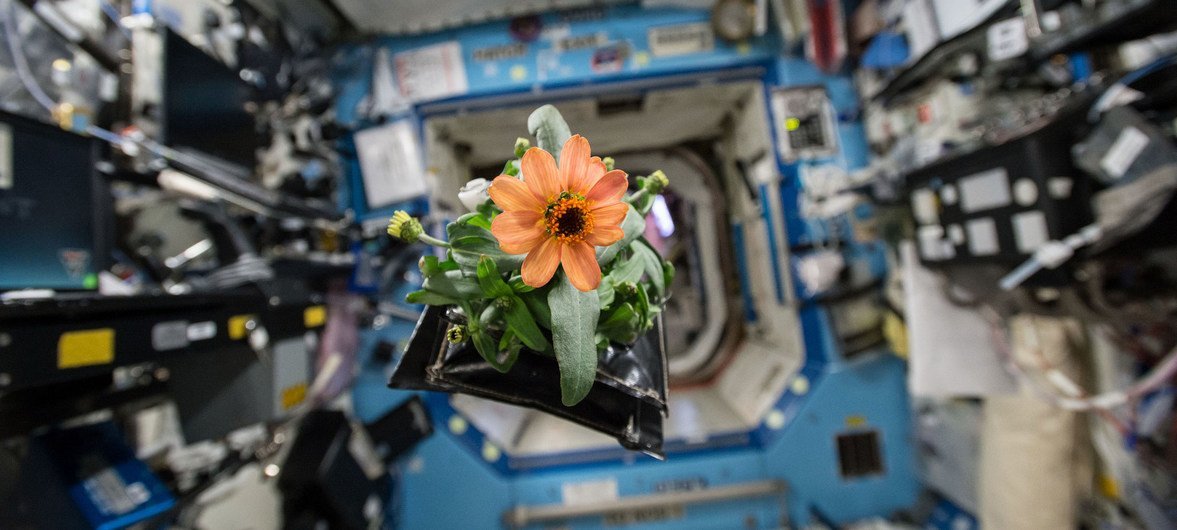
A Zinnia plant pillow floats in zero-gravity, on board the International Space Station. The football pitch sized space platform was built through combined efforts European countries, represented by the European Space Agency; the US Space Agency, NASA; Japanese space agency, JAXA; Canadian space agency, CSA; and the Russian space agency, Roscosmos.


28 December 2018

UN Affairs


A timeline that stretches from the colonial past, through the present, and into the future for the final frontier in space, defines one of the United Nations General Assembly’s most versatile Main Committees – the Fourth Committee.


In this feature series on the work of the General Assembly – the UN body which comprises representatives from all 193 Member States – UN News takes an in depth look into the Fourth Committee.

While its official UN name sketches out its historic role, the agenda before the Special Political and Decolonization Committee, spells out the very diverse range of issues that it covers today.

Initially mandated to address decolonization in the post-World War Two era, the Fourth Committee took on “Special Political” responsibilities in the 1990’s, following the independence of most colonies and all the territories which began under the administration of the UN Trusteeship Council was complete.

That list of territories included Western Samoa, Tanganyika, Rwanda-Urundi, and what was then Togoland, which was split between British and French administration.

The Special Political remit, substantially broadened the scope of the Committee to include international cooperation in the peaceful uses of outer space, the comprehensive review of UN peacekeeping operations, as well as UN special political missions – which do not have uniformed peacekeepers on the ground. The committee even has the job of looking at ways to “revitalize” the work of the General Assembly.

The original decolonization role continues alongside the newer responsibilities, clearly indicating the Committee’s commitment to seeing the world’s remaining colonial territories liberated.

UN Photo/Yutaka Nagata

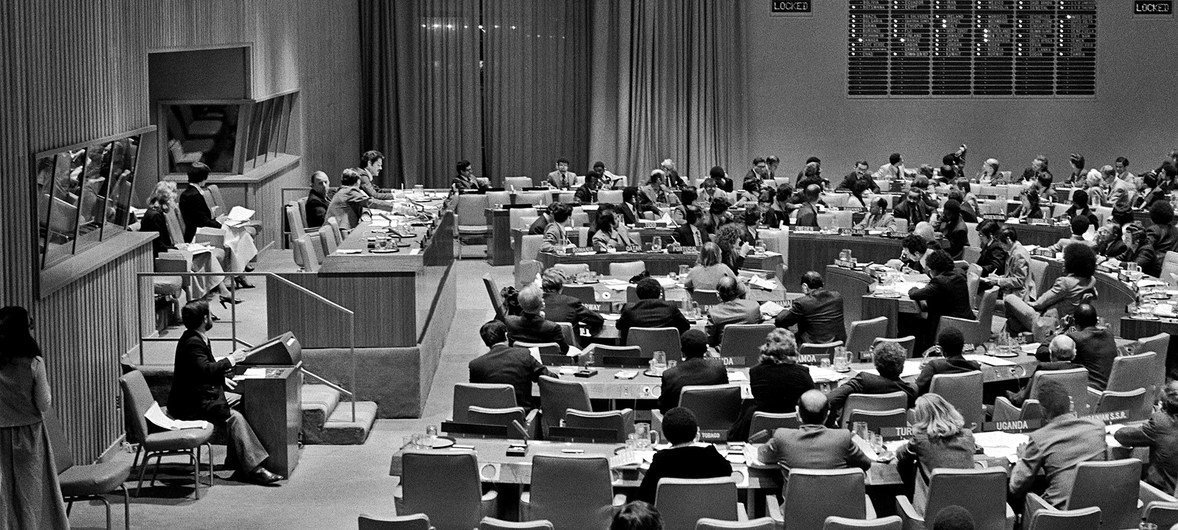
At this meeting in November, 1978, the Fourth Committee discussed the matter of the Rhodesian Internal Settlement; the Oil Embargo against South Africa, and adopted drafts on Southern Rhodesia.
Officials

The Fourth Committee started its work on 4 October, following the conclusion of the annual high-level general debate of the General Assembly.

At its first meeting, the body elected Ambassador Dee‑Maxwell Saah Kemayah, Sr., the Permanent Representative of Liberia, as the Chair, and Faisal Nasser M. Alhakbani (Saudi Arabia), Dániel Goldea (Hungary), and Michael O’Toole (Ireland), as Vice-Chairs.

Luis Mauricio Arancibia Fernández (Bolivia) was elected the Rapporteur, tasked with preparing the report of the Committee.

In its meetings, the Committee was supported by the Fourth Committee secretariat, led by Secretary Sangeeta Sharma.

Lesser known fact: Fourth comes after First

It’s counter-intuitive, but in many UN documents, the Fourth Committee is listed after the First Committee.

Historically, an unnumbered “Special Political Committee” used to be listed right after the First Committee, which deals with issues related to disarmament and international security. In 1993, the General Assembly decided to merge the “Special Political Committee” with the then Fourth Committee, with its focus on trusteeship and decolonization.

This merger created what is now known as the “Special Political and Decolonization Committee,” officially listed in the second place of the Main Committees, after the First.

UN Photo/Ariana Lindquist

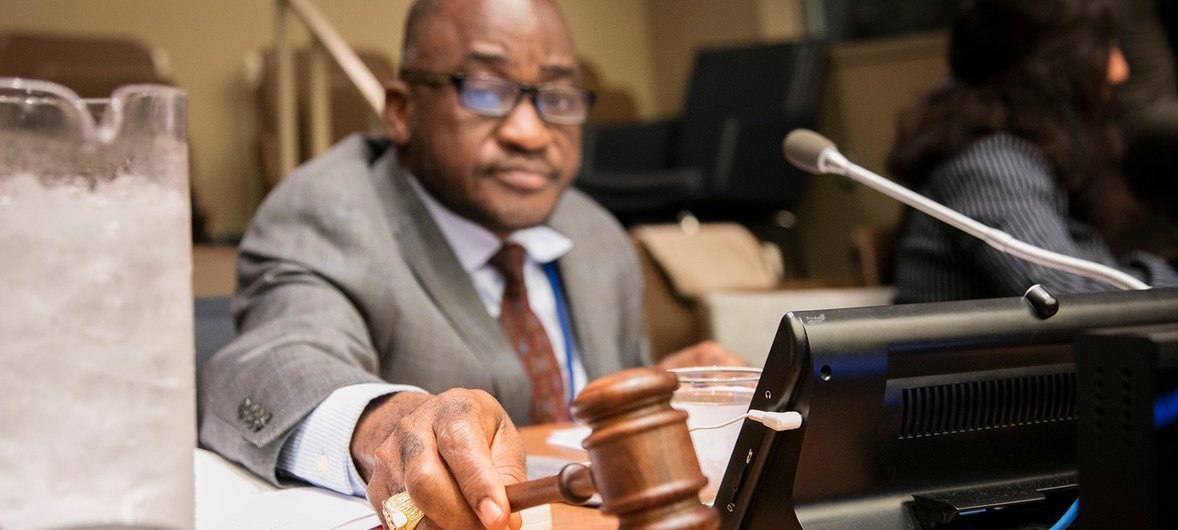
Dee Maxwell Saah Kemayah of Liberia, Chair of the Fourth Committee, convenes a discussion during a formal meeting in October, 2018.

What was on the agenda this year?

One of the key items on the agenda – decolonization – dates back to the scramble by European powers to carve out empires in the Americas, Africa and Asia. While most of the former European possessions are now independent UN Member States, some territories remain classified by the UN as ‘Non-Self-Governing Territories.’

The list of these territories is not universally endorsed, and this year, the Committee discussed the status of American Samoa, Anguilla, Bermuda, the British Virgin Islands, the Cayman Islands, French Polynesia, Guam, Montserrat, New Caledonia, Pitcairn, Saint Helena, Tokelau, the Turks and Caicos Islands, the US Virgin Islands and Western Sahara. Details can be found here.

The Committee also looked into economic and other activities in Non-Self-Governing Territories, study and training facilities for people living there, and the implementation of the Declaration on the Granting of Independence to Colonial Countries and Peoples.

UN Photo/Manuel Elias
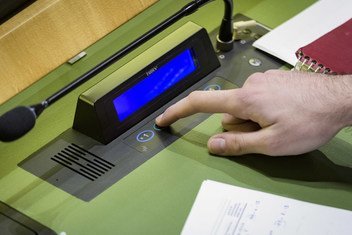
A delegate casts their vote on a report of the Fourth Committee, at a plenary meeting of the General Assembly.

Alongside, the Committee also debated assistance to Palestine refugees, and their properties and revenues; Israeli settlements and activities in the Occupied Palestinian Territory, and the operations of the UN Relief and Works Agency for Palestine Refugees in the Near East (UNRWA), adopting nine texts, which were forwarded to the General Assembly for its consideration. More details here and here.

Concerning, UNRWA, the Assembly voiced “deep concern” over the agency’s critical financial situation, caused by structural underfunding as well as rising needs and expenditures resulting from deteriorating socioeconomic and humanitarian conditions.

In addition, the Committee also looked into the peaceful uses of outer space, recommending that States which have not yet become parties to the international treaties governing the uses of outer space ratify or accede to those instruments and incorporate them into national legislation, as well as urging States, in particular those with major space capabilities, to help prevent an arms race in outer space.

The recommendations, made by the Fourth Committee, in form of draft resolutions and decisions, were tabled before the General Assembly for its consideration. On 7 December, the Assembly adopted 36 resolutions and 4 decisions, which began life in the Committee.

UN Photo/Ariana Lindquist

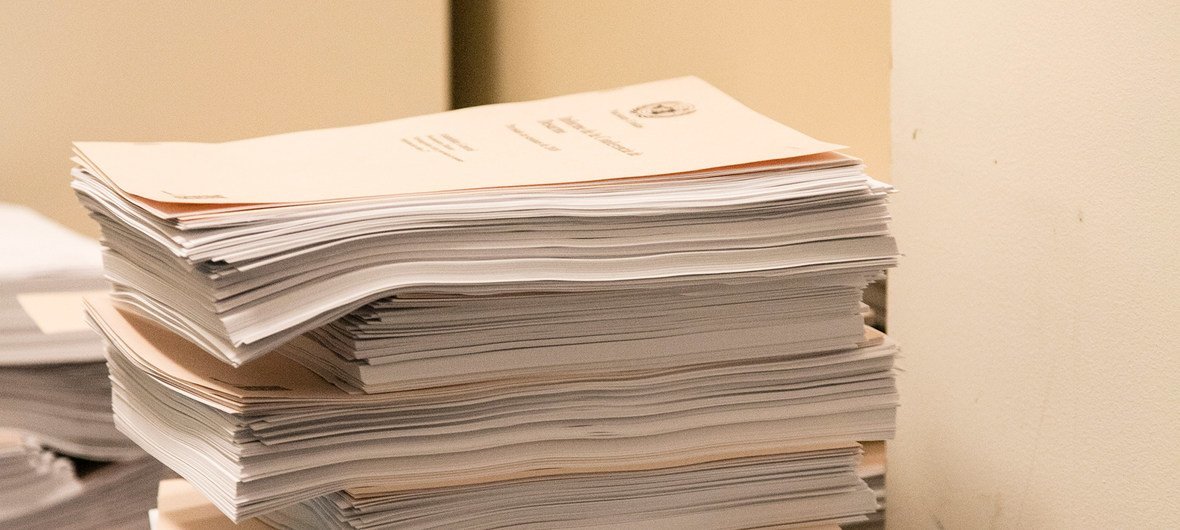
A stack of documents during a meeting of the Fourth Committee in 2018.
Find resources, navigating the UN system, to reach Fourth Committee resources

The Fourth Committee, like other Main Committees, uses UN PaperSmart, the Organization’s online platform providing delegates access to core documents. For delegates, Committee information, speaker lists, requests (and other resources) are available through the e-deleGATE portal.

On the UN Official Document System, Fourth Committee documents are numbered using the pattern “A/C.4/<session number>/<document number>.” For example, the document A/C.4/73/1, contains the agenda items allocated to the Committee. All official documents are issued in the six main languages.

Official and open meetings of the Committee are carried live in UN Web TV.

Additional information can be found at the Committee’s website, https://www.un.org/en/ga/fourth/


https://news.un.org/en/story/2018/12/1029481
http://creativecommons.org/licenses/by/3.0/legalcode
Children suffering ‘atrocities’ as number of countries in conflict hits new peak: UNICEF


© UNICEF/Thomas Nybo

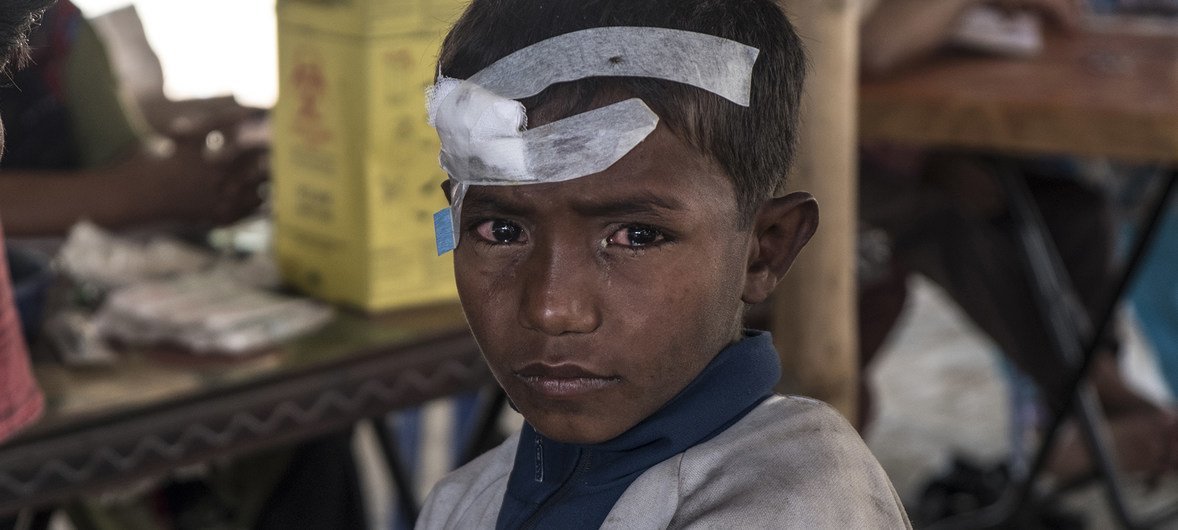
6 year old Rohingya refugee, Yasin, rests after arriving at a registration center for newly arrived Rohingya Refugees in Teknaf, Bangladesh, on 6 February 2018. His father says that they fled to Bangladesh after soldiers in Myanmar came to their house and beat his son when he was unable to tell them of his whereabouts.

28 December 2018

Human Rights

The world “has failed” to sufficiently protect children caught up in conflict and millions more are at risk of harm, the United Nations Children’s Fund (UNICEF)revealed on Friday, adding that national leaders need to hold perpetrators of violence more accountable.


The agency’s Director of Emergency Programmes, Manuel Fontaine, said that “children living in conflict zones around the world have continued to suffer through extreme levels of violence over the past 12 months, and the world has continued to fail them.”


Today, more countries are involved in conflict than at any other time in the past three decades.

Parties to conflicts “have been committing atrocities with near-total impunity, and it is only getting worse,” he added. “Much more can and must be done to protect and assist children.”


A closer examination shows grave human rights abuses in countries at war; including using children as human shields, and recruiting them to fight – two of the six grave violations identified and condemned by the Security Council in 2005.


Rape, forced marriage and abduction have become “standard tactics” in Syria, Yemen, the Democratic Republic of the Congo, Nigeria, South Sudan, and Myanmar, UNICEF has said; while the killing and maiming of children due to conflict has continued unabated. 

The numbers

Five thousand children in Afghanistan were either killed or maimed within the first three-quarters of 2018. Children there make up 89 percent of civilian casualties from explosive remnants of war, such as unexploded shells, mortars or grenades. 

Violent uprisings this year in Cameroon’s north-west and south-west areas, have often targeted schools, students and teachers. Eighty people were abducted from one school alone in November, and 93 villages to date have been destroyed due to conflict. 

Two out of three children in the Central African Republic need humanitarian assistance; many have been displaced, separated from their parents, and live in a state of chronic malnutrition. 

Rohingya refugees in Myanmar – including many children - face widespread restrictions to their movement, hampering access to health and education services in central Rakhine State. 

In Somalia, more than 1,800 children were recruited by parties to the conflict within the first nine months of the year. The number abducted were 1,278. 

A crumbling education system in Eastern Ukraine has forced 700,000 boys and girls to learn in dangerous and fragile conditions; sitting in classrooms pock-marked with bullet holes and playing in schoolyards with unexploded ordnance.


UNICEF published these findings along with other statistics demonstrating how conflict is depleting children’s livelihoods and the possibility of a prosperous future.


Helping increase protection


Warring parties must immediately abide by international law to end violations against children, UNICEF has urged, in a plea to end this “moral crisis of our age.”


“Children living through conflict are among the least likely to be guaranteed their rights. Attacks on children must end,” Mr. Fontaine said, reminding the international community that 2019 marks the 30th anniversary of the landmark Convention on the Rights of the Child, which recognizes the rights of children to grow up in a safe and nurturing environment.


UNICEF is working to deliver lifesaving aid to the world’s most vulnerable children; including health, education and protection services, and water, nutrition and sanitation supplies.


With the agency’s help:

833 children recruited into armed forces in Nigeria were released in October. 

6,000 separated or unaccompanied children in South Sudan have been reunited with their families since conflict broke out five years ago. 

Thousands of Rohingya refugee children have received psychosocial support and mental health.
And in Iraq, 

UNICEF is working to develop services for women and children affected by gender-based violence.


http://creativecommons.org/licenses/by/3.0/legalcode
https://news.un.org/en/story/2018/12/1029461